After far too many rounds of delay and indecision, during which I repeatedly put off buying my Thanksgiving flight home (my sincerest apologies, Mom), I ultimately found myself left with a single viable option: the Pennsylvanian, Amtrak’s long and steady route connecting New York City and Pittsburgh in a journey that stretches across nine hours and twenty minutes of rail travel. This time, I paid $316 for the round-trip fare—a price that, despite being higher than some past tickets, felt justified by the ease and reliability of the train. To my own surprise, I’ve grown not only accustomed to this cross-state journey but quite fond of it. After nearly a dozen rides in the last five years, I’ve evolved into a genuine admirer of train travel—someone who finds satisfaction and even a sense of nostalgia in the gentle rhythm of wheels on rails.
Beyond personal preference, a variety of external factors have nudged me toward the rails rather than the skies. In recent years, frequent flight interruptions—brought on by issues such as the government shutdown—and the endless, dust-filled airport construction back home have made air travel more exhausting than efficient. Consequently, the idea of settling into a comfortable train seat, free from the commotion and unpredictability of airports, has grown steadily more appealing. Though the Amtrak journey is hardly perfect—the hours can be long, and delays are not unheard of—it provides a level of convenience and calm that commercial flights rarely match. From skipping the nerve-wracking security checks to enjoying a quiet window seat all to myself, my affection for train travel has solidified through experience. Below are the four core reasons I continually choose the train over the plane.
1. There are no security lines or airport hassles
I’ve been trapped in endless airport security lines too many times to count—those nerve-shattering waits that stretch well beyond an hour, often leaving travelers exasperated before they even reach their gate. By comparison, arriving at the train station feels refreshingly simple. At Moynihan Train Hall in Manhattan, my experience is streamlined and almost serene. I arrive, locate the departure board, and wait for my track number to be announced—typically about fifteen minutes before departure. Then, with none of the chaos of boarding groups or gate changes, I proceed directly to the platform and step aboard when the train pulls in. There’s no removal of shoes, scanning of liquids, or juggling of digital boarding passes involved. The absence of airport-style procedures means I can comfortably show up about thirty minutes before the train departs and still have time to settle in without stress. Boarding itself tends to move quickly, thanks to train attendants who coordinate passengers so that boarding lines are distributed evenly between cars. The entire process replaces the frenzy of air travel with a quiet, efficient rhythm that feels almost luxurious in its simplicity.
2. I don’t have to worry about size restrictions or checking too many bags
Anyone who’s ever had to surrender a beloved souvenir—a newly purchased perfume or an expensive lotion—because it exceeded TSA’s arbitrary liquid limits knows the heartbreak of flying’s strict baggage rules. Trains, mercifully, eliminate that problem altogether. One of the small but meaningful pleasures of Amtrak travel is the freedom from liquid restrictions. Toiletries, water bottles, and full-sized items can all come along without a second thought. It may seem like a minor detail, but for someone who has spent countless airport security checks silently hoping their toiletry bag passes inspection, it’s a liberating difference.
Amtrak also maintains a baggage policy that’s surprisingly generous compared to most airlines. Each passenger can bring one personal item, two carry-ons, and two checked bags—all entirely free of charge. Even if additional bags are necessary, the cost remains modest at only $20 per extra piece. The experience of traveling with everything I need, without fearing surprise fees or the anxiety of an overstuffed overhead bin, adds a quiet sense of ease to the beginning of any trip.
3. There aren’t assigned seats, and I usually have a row to myself
Perhaps one of the greatest unspoken blessings of Amtrak’s Pennsylvanian route is the open seating policy. Without assigned seats, passengers can choose their spot—an arrangement that almost always allows me to secure a full row for myself. Over the past year alone, I’ve taken this particular train five times and failed to find an empty row on only one occasion. That small slice of solitude—an entire row of space that’s truly mine—feels like a luxury rarely found in modern travel.
Midway through the journey, there’s typically a two-to-four-hour stretch where cell service drops entirely, disconnecting everyone from the digital noise of modern life. Rather than viewing this as an inconvenience, I embrace it as an opportunity—a chance for deep work and uninterrupted thought. During those hours of quiet isolation, I turn my attention to writing, planning, or organizing the ideas that usually get lost in the rush of daily routines. Having my own row allows me to spread out my laptop, notes, chargers, and coffee without worrying about intruding on anyone’s space. The physical comfort of extra room combines with the mental clarity that comes from a forced digital break, together forming one of the most productive and peaceful segments of my week.
4. It’s a beautiful train ride
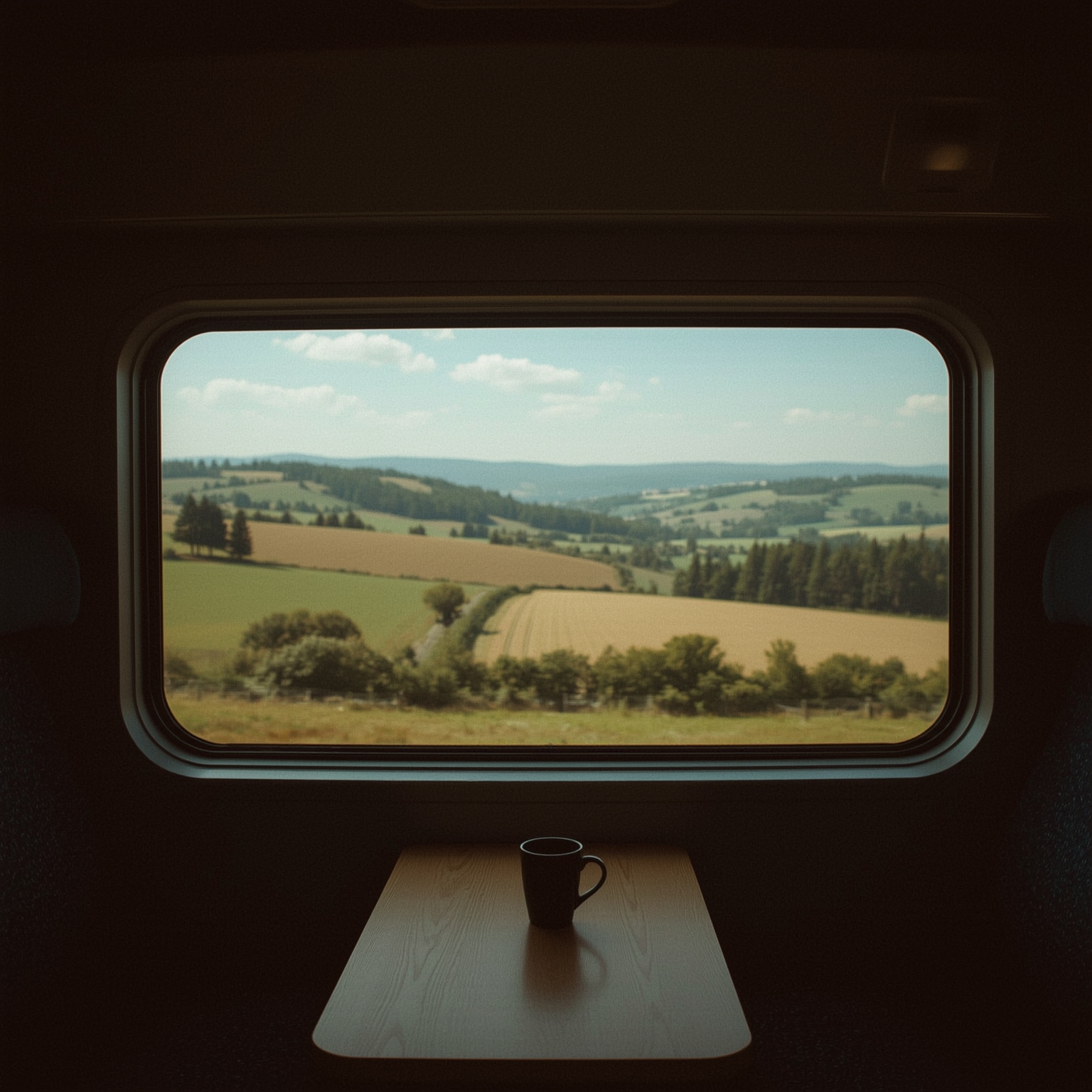
Finally—and perhaps most memorably—the journey itself is scenic in a way that few flights could ever rival. While I often intend to focus on my work or use the time to reassess personal and professional goals, the vast, ever-changing views beyond the train’s windows repeatedly steal my attention. Fields, rivers, and foothills roll by in mesmerizing succession, tinted by the golden hues of sunrise or the fading blush of sunset. The most iconic point of the trip arrives approximately halfway through: the historic Horseshoe Curve in Altoona, Pennsylvania. This 220-degree railroad bend, completed back in 1854, remains an engineering marvel and a breathtaking sight. I’ve watched that curve in every season—winter’s snow, spring’s new greenery, summer’s endless light, and autumn’s fiery palette—and each time it fills me with quiet awe.
Of course, train travel is not without its flaws. The ride can be bumpy in places, the café car hours unpredictably inconsistent, and somewhere around hour six, time can begin to stretch in a way that tests patience. But despite those imperfections, the experience as a whole remains uniquely restorative. When I have the hours to spare, I’ll always choose the train over the plane. Those nine hours provide not just transportation, but a rare gift of stillness and reflection—a journey that allows me to reset before arriving at my final destination.
Sourse: https://www.businessinsider.com/amtrak-versus-flying-train-plane-holiday-travel-less-stressful-2025-11