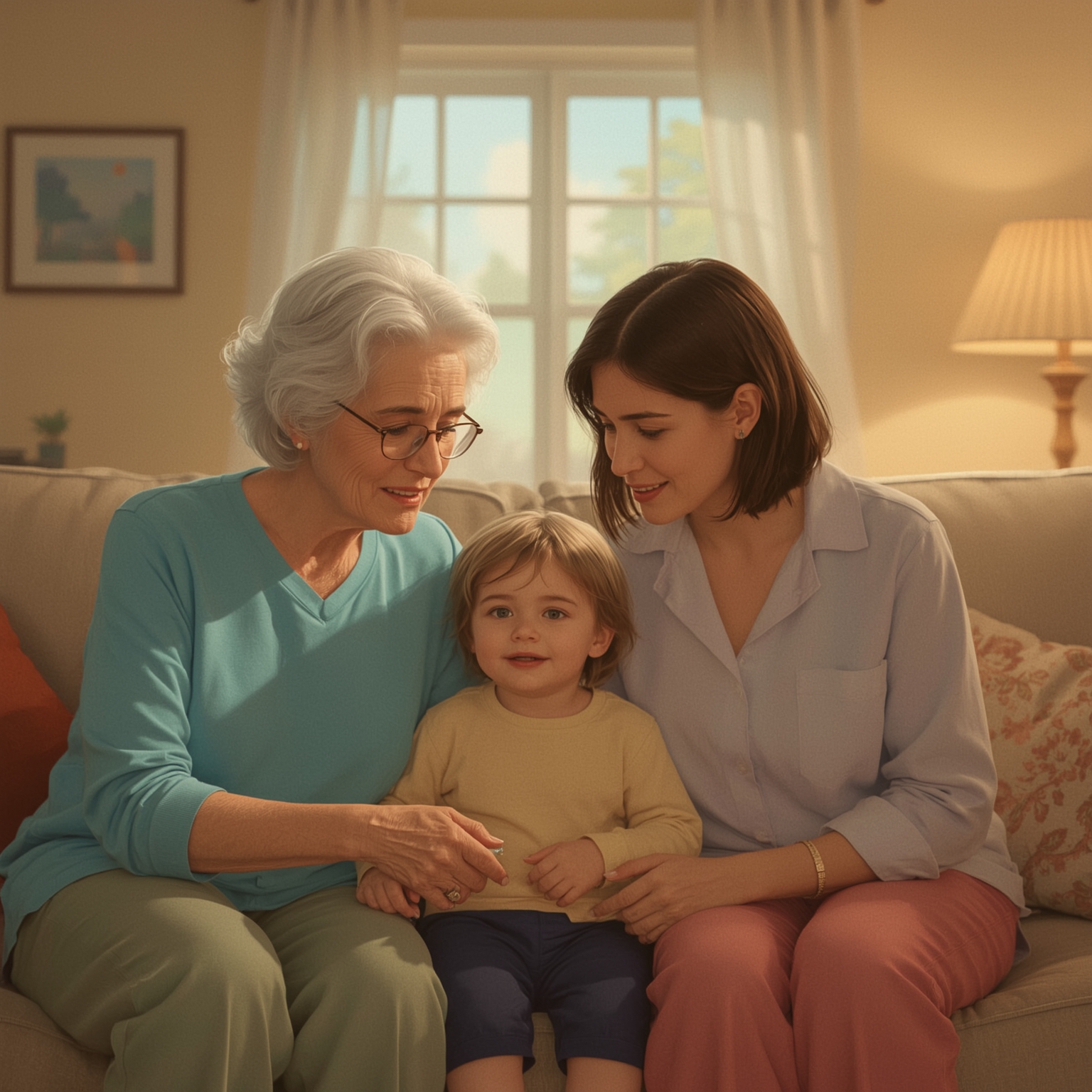
This narrative originates from an extended and heartfelt conversation with Lamia Scott, a forty-three-year-old flight attendant residing in Dallas, Texas. The story has been carefully refined and condensed for clarity while preserving its emotional integrity. Lamia speaks with openness about her evolving relationship with her mother, Marvia—a woman she has always cherished not only as a parent but also as her closest confidant. Marvia’s intelligence, empathy, and unwavering affection made her a consistent source of comfort and wisdom, shaping the foundation of their bond.
Their connection was so profound that Lamia chose to live just across the street from her mother, in an apartment complex that made their daily lives seamlessly intertwined. Her nine-year-old son, Braxton, adored being surrounded by his grandmother’s presence. The three of them shared countless ordinary yet deeply meaningful moments together—quick visits for morning coffee, help with childcare after Lamia’s shifts, and spontaneous dinners filled with laughter. As a single mother balancing work and home, Lamia felt immense gratitude for her mother’s dependable support and the way Marvia doted on Braxton. The affection between grandmother and grandson was mutual, a joyful exchange that brought light into their tightly knit family routine.
However, life began to change subtly but unmistakably. Marvia, once known for her discipline and health-conscious habits cultivated over years of coaching softball, began displaying small but concerning shifts in behavior. About three years ago, Lamia noticed that her mother’s once razor-sharp memory seemed to falter. Forgetfulness slipped into their days—it began with misplaced objects and repeated questions but soon expanded into instances of confusion and irritability that seemed wholly unlike her. There were occasions when Marvia would call Lamia, eagerly requesting that Braxton come over for a visit, only to seem bewildered or startled when they arrived. “What are you doing here?” she would ask, a question that revealed growing disorientation and broke Lamia’s heart.
The emotional strain deepened as Marvia’s demeanor changed in public. Outings that used to bring pleasure, such as dining at local restaurants, often ended abruptly with her lashing out at waitstaff or crying without apparent reason. The woman who had once been patient, spirited, and kind was behaving in ways no one—including herself—could fully understand. Lamia became increasingly worried, especially after a frightening discovery: she returned home one day and smelled gas filling her mother’s house. Walking in through the garage, Lamia could tell immediately that something was wrong. Marvia had unknowingly left the stove on, entirely unaware of the danger she was in. That moment solidified Lamia’s fear that this was not a matter of simple forgetfulness but something far more serious.
Convincing her mother to seek medical attention was, however, extraordinarily difficult. Marvia, proud and independent, refused to acknowledge that anything unusual was happening. Only after persistent encouragement did she meet with her physician, who then referred her to a neurologist. In December 2023, the devastating yet clarifying diagnosis arrived: Alzheimer’s disease, specifically Alzheimer’s with agitation. While the confirmation brought indescribable sadness, it also explained what Lamia had been witnessing and ushered her into the next stage of their shared journey.
For Lamia, the news was not entirely unexpected. She had seen this path before—her maternal grandmother had faced the same illness, and for twelve years Marvia herself had been the devoted caregiver. Remembering the emotional and physical demands her mother had endured, Lamia realized with sobering clarity what lay ahead. Within three weeks of receiving the diagnosis, she made the decisive choice to move herself and Braxton out of their rental apartment and into Marvia’s home. Living together under one roof seemed not only practical but necessary, ensuring constant companionship and safety for her mother while preserving their family’s sense of unity.
Braxton, delighted to share a household with his beloved nana, initially reveled in the arrangement. Yet, even at nine, he perceived the subtle ways she had changed. He began to comment, with a mix of confusion and sadness, that she often repeated herself or suddenly raised her voice. “Why does Nana hate me?” he asked one day, unable to reconcile her moments of agitation with his memories of her warmth. Lamia, determined to help him understand, explained gently that Nana’s anger was not truly anger but a symptom of her illness—a reflection of Alzheimer’s and the frustration it caused. In time, Braxton began to view himself not merely as her grandson, but as a participant in her care team, proud to contribute in any way that eased her days.
In the daily rhythm of caregiving, both mother and son learned patience and adaptability. There were moments when Lamia’s own exhaustion slipped into her words—times when, frustrated by repetition, she’d sigh and say, “Mom, you just said that five seconds ago.” And yet, in those same moments, Braxton often demonstrated remarkable emotional intelligence for a child his age. With calm reassurance, he would turn to his grandmother and say, “Nana, it’s OK. You can ask me again. Let’s figure it out together.” His instinct for gentleness and redirection impressed Lamia deeply, reminding her that empathy, when nurtured early, becomes a source of strength that transcends years.
The most unnerving challenge, however, came when Marvia’s tendency to wander became hazardous. Lamia would come home to find her mother missing, her cell phone ringing uselessly from another room. Sometimes, Marvia would take the car and drive aimlessly for miles, disoriented and unable to recall how she ended up wherever she stopped. Those terrifying incidents prompted Lamia to implement safety measures—installing a tracking application on her mother’s phone and adding a Ring camera to monitor entrances. Though such precautions provided a measure of security, they also underscored the painful reality that independence was slipping out of Marvia’s grasp.
In facing these ongoing challenges, Lamia has learned the profound importance of community. She often reflects on the adage that “it takes a village,” and in her case, the expression has proven utterly true. Neighbors have stepped forward with kindness, keeping watchful eyes and contacting her whenever they see Marvia wandering or appearing lost. In addition, the support organization Alzheimer’s Agitation has become an invaluable resource, offering guidance, counsel, and connection to others enduring the same struggles. Through these networks, Lamia finds solace in realizing that she is not alone on this journey.
Despite the outpouring of help, balancing her many roles—as caregiver, mother, and professional—often feels overwhelming. There are days when fatigue and guilt intertwine; days when Lamia remembers her mother’s tireless years caring for her own parent and wonders whether she measures up to that example. When work demands she be away for long stretches, Lamia relies on in-home care services and occasionally exercises her rights under the Family and Medical Leave Act (FMLA) to take time off.
Still, even amid exhaustion and moments of doubt, her love remains the guiding force. She recognizes that caregiving, though demanding, is also an expression of gratitude—a chance to give back to the woman whose steadfast devotion formed the heart of her family. As she looks at Braxton, who continues to show astonishing patience and compassion beyond his years, Lamia feels reassured that love, education, and empathy can turn even the hardest chapter into one of shared growth. In caring for her mother, she is not just managing an illness; she is preserving a legacy of tenderness, resilience, and unbreakable familial connection.
Sourse: https://www.businessinsider.com/son-and-i-moved-into-moms-house-after-got-sick-2025-11