Every year, approximately twenty million travelers from around the world make their way to Venice, Italy, drawn by its legendary canals, historic allure, and romantic atmosphere. Yet this perpetual influx transforms the city’s narrow lanes and picturesque bridges into congested arteries of movement, where visitors shuffle shoulder to shoulder across weathered stone crossings, press through labyrinthine alleyways thick with souvenir stands, and angle for the perfect gondola selfie amid the densely packed waterways. For well over a decade, the relentless phenomenon of overtourism has placed immense pressure on the lives of ordinary Venetians, complicating daily routines and straining the balance between local culture and global fascination.
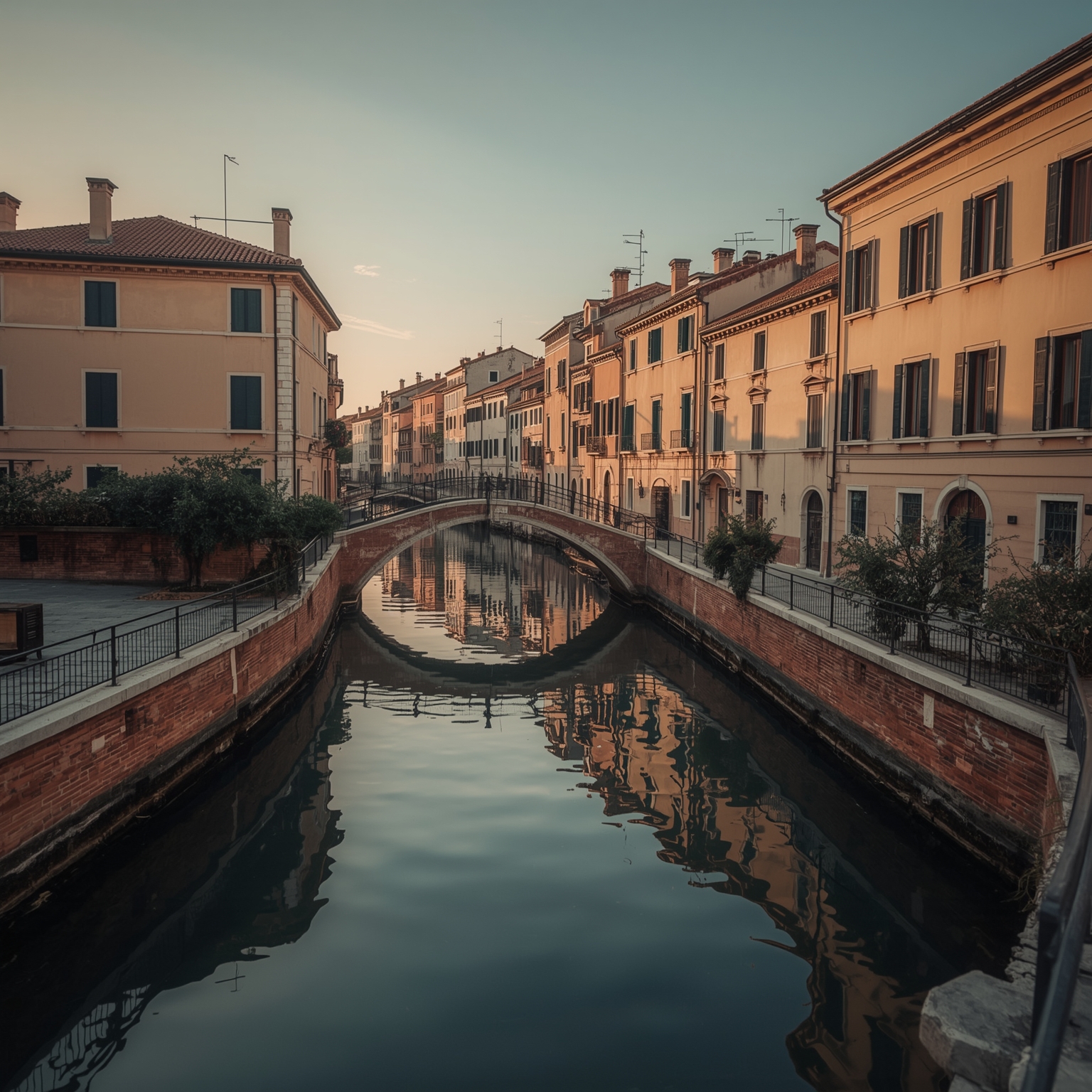
However, not far away—less than a two-hour journey from Venice—lies a quieter alternative that retains much of the same maritime spirit yet remains remarkably untouched by mass tourism. This haven is the town of Comacchio, an Italian treasure often described as Venice’s lesser-known twin because of its intricate network of canals and islands. In this charming locale, the streets are replaced by waterways that weave gracefully through clusters of colorful historic houses, creating the impression of a floating city suspended in time. While echoing Venice’s elegance and charm, Comacchio differs profoundly in ambiance; it is a hidden gem, tranquil and unspoiled, a place where authenticity thrives. Bologna-based travel writer Andrea Chierici vividly captured its essence when he told *Business Insider* that Comacchio possesses an almost otherworldly calm—a timeless, serene atmosphere untroubled by the throngs, cacophony, and regimented tour groups that dominate more commercialized destinations.
Among the many wonders surrounding Comacchio, one of the most breathtaking is its proximity to the Po Delta Park, a vast natural reserve encompassing the Comacchio Lagoons. This expansive wetland network ranks among Italy’s largest and forms a vital component of a UNESCO-recognized biosphere reserve celebrated for its ecological richness and visual poetry. Representatives from *Comacchio Experience*, a locally owned tour company, emphasize that a visit to this region is an essential part of discovering the soul of Comacchio. As one explained, the lagoon stretches so far that its opposite banks are invisible across the shimmering expanse, evoking the illusion of an inland sea. Yet appearances deceive—beneath the water’s gentle surface lie submerged banks and remnants of ancient fishing huts once inhabited by generations who lived by the rhythm of the tides.
Within Po Delta Park, nature reveals herself in vibrant abundance: elegant waterbirds glide over salt marshes, and among them, the radiant pink flamingos lend a surreal beauty to the vista. Both Chierici and the *Comacchio Experience* representative recommend exploring this landscape slowly and immersively—whether by walking or cycling along the winding nature trails or by embarking on a tranquil boat tour through the lagoons, where each bend of water unveils new colors and textures. For moments of deep relaxation, the tour operator further suggests visiting the nearby wild beaches, whose pristine sands contrast with Italy’s busier coastal resorts. Unlike popular seaside destinations dominated by rows of umbrellas and the thump of beachside music, these stretches of coast offer silence and space, a refreshing return to simplicity where the sound of the waves replaces the noise of crowds.
Comacchio’s identity is also profoundly culinary, rooted in centuries-old traditions tied to its waterways. Eel, the town’s hallmark delicacy, has shaped its gastronomy, economy, and cultural memory for at least a millennium. Andrea Chierici insists that for food enthusiasts, the main reason to visit is to taste this emblematic fish—prepared and celebrated through local festivals that mark the changing seasons. As explained by a representative of *Comacchio Experience*, eel fishing once formed the foundation of the community’s livelihood. For nearly a thousand years, the people of Comacchio have harvested these prehistoric fish, which naturally migrate to the lagoons from the far-off Sargasso Sea. Only in the past seventy years have other industries and professions begun to accompany this ancient trade.
Visitors eager to savor this delicacy can find it featured in numerous culinary forms: grilled to smoky perfection, stewed in traditional sauces, delicately layered into risottos, or even served in local sandwiches. Among Chierici’s recommendations is *Al Cantinon*, an elegant restaurant renowned for blending refinement with regional authenticity. While the eel’s peak season occurs in the autumn months, the town’s fishing heritage includes preservation techniques that allow locals to enjoy it year-round. Importantly, sustainability lies at the heart of this tradition—the fishermen of Comacchio release smaller eels to sustain the population’s life cycle, ensuring the species continues its long transoceanic journey to and from the Po Delta. As Chierici explained, this balance between human enterprise and ecological respect maintains a living link between the town’s past and its modern culinary identity.
Positioned conveniently in northern Italy, Comacchio also serves as a wonderful base for exploring nearby historic centers. Within roughly an hour’s drive lie the art cities of Ravenna, Bologna, and Ferrara—each steeped in architectural splendor and cultural heritage. For shorter excursions, Chierici recommends visiting Pomposa, famous for its ancient abbey, and Tresigallo, a small town celebrated for its striking rationalist architecture, both within half an hour’s reach.
For travelers crafting an itinerary, there are numerous engaging ways to experience Comacchio’s charms. A sunset boat tour, according to both experts, provides perhaps the most enchanting perspective of the town as it glows under golden light reflecting off its serene canals. Bird enthusiasts will find joy in guided tours of the Po Delta Park, where flamingos and other rare waterfowl can be observed in their natural habitat. To delve into the town’s maritime traditions, touring the *Manifattura dei Marinati*—the historic eel processing factory—offers insight into how this iconic fish has been prepared and preserved across generations. Culinary explorers should sample eel prepared in as many variations as possible at beloved restaurants such as Vasco e Giulia, La Barcaccia, and Al Cantinon. In autumn, visitors can join the *Sagra dell’Anguilla*, an annual food festival that celebrates the eel through banquets, music, and local pride. And for those who eventually feel drawn toward Venice itself, the famous city remains just about ninety minutes away, making Comacchio not merely an alternative destination but an ideal complement to a grander northern Italian journey.
Sourse: https://www.businessinsider.com/comacchio-italy-undiscovered-europe-hidden-gem-like-venice