One of the most universally recognized conventions in modern monster cinema is the unspoken rule that the beast should never be flaunted under the revealing glare of daylight. Keeping a creature obscured—lurking in shadows, half-seen through smoke or rain—has long been regarded as a technique for preserving mystique and tension, something audiences are as conditioned to expect as filmmakers are to deliver. The practice was evident in Gareth Edwards’ *Godzilla*, which received a somewhat tepid response, and in Guillermo del Toro’s exuberantly stylized *Pacific Rim*, a spectacle that, despite its memorable fusion of mechs and kaiju, never earned the continuation fans hoped for. Both directors adhered to the genre’s shadow-bound principle, though with markedly different results. Del Toro’s film, cloaking its enormous combatants in the murky gloom of stormy night battles, used partial visibility to heighten the sense of mass and cool menace—the silhouettes of towering machines and beasts merging into a choreography of colossal gestures. Edwards, conversely, frustrated many viewers by stretching suspense to near exhaustion; his film teased audiences with oblique glimpses of monsters that almost never occupy the full frame in clear daylight, transforming the experience into an exercise in restraint that some found stifling rather than suspenseful. Within the canon—good or bad, blockbusters or curios—few filmmakers have dared to discard this invisibility clause by boldly revealing their creatures under direct sunlight. Fewer still have done so with conviction and artistry. Yet Bong Joon Ho is no ordinary filmmaker.
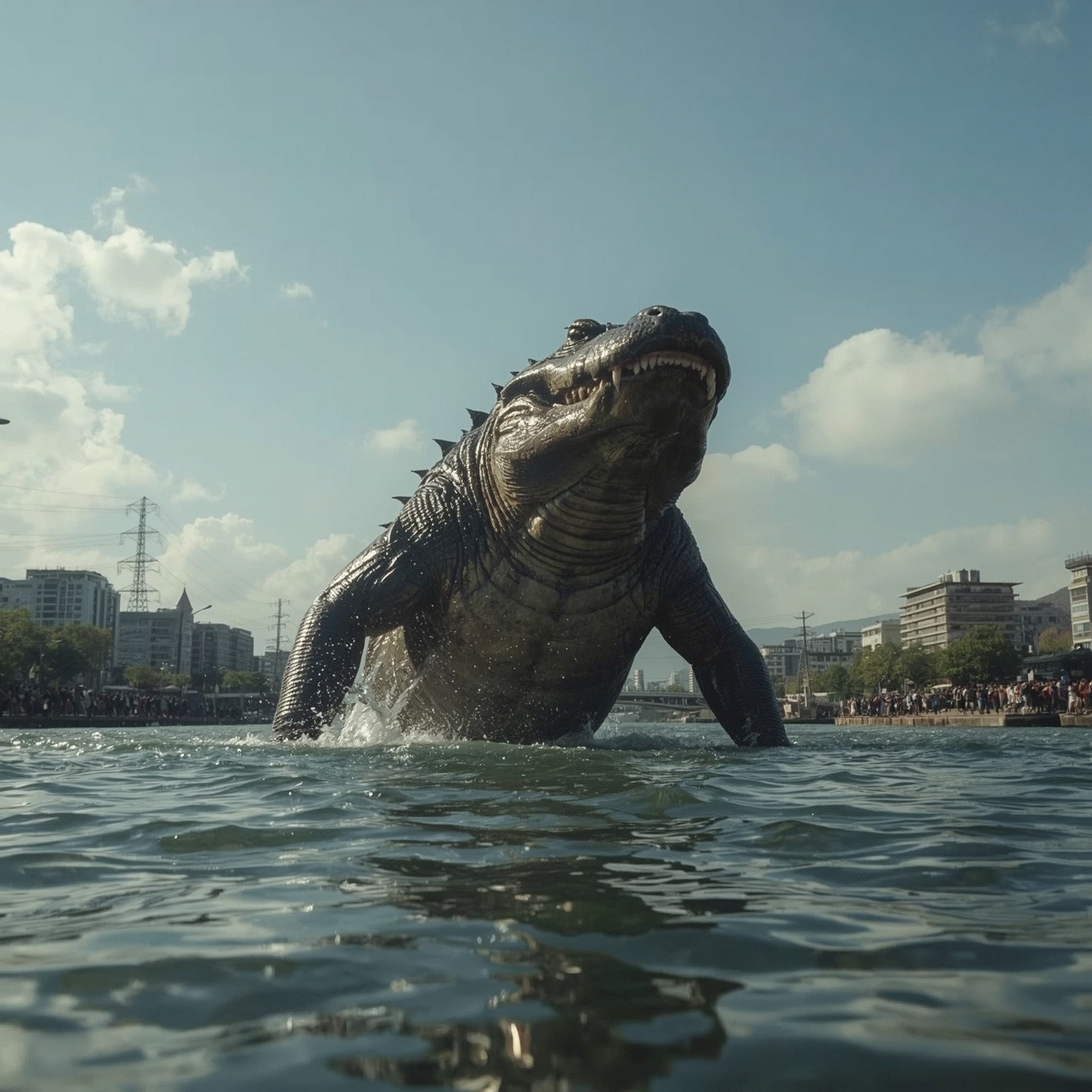
The sheer audacity of Bong Joon Ho’s Academy Award–winning vision is vividly illustrated in his 2006 masterpiece *The Host*, a work that openly defies this long-accepted cinematic taboo. From its first minutes, the film tears up the genre’s rulebook: instead of slowly building toward the creature’s grand revelation, Bong serves what most directors cautiously reserve for the finale. The story begins not with mystery but with exposure, immediately answering every possible question about what this monster is and what it can do. The opening sequence, deceptively brief yet dense with information, depicts a group of American military doctors—one of them played by a pre-*Walking Dead* Scott Wilson—engaging in thoughtless, real-world–inspired malpractice: pouring vast quantities of toxic formaldehyde into Seoul’s Han River. This act of negligence, based on an actual environmental scandal, births the film’s amphibious abomination. Before viewers can settle into narrative expectations, a mutant tadpole-like creature emerges, disrupting a tranquil day by the riverside. Sunbathers and vendors alike scatter in terror as an unimaginable horror slithers and lunges from the water. Chaos erupts in full daylight, a choice as narratively rebellious as it is visually striking.
Yet Bong Joon Ho is not content with mere shock or carnage. He stages the monster’s first rampage with surgical precision. Amid the panic and violence, he delineates the creature’s distinct physiology and behavioral quirks: a ghastly cross between fish, lizard, and nightmare. Its grotesquely elastic form, armored with sinewy strength, moves not with ponderous dignity but with startling agility. This amphibious terror wields a whip-like prehensile tail as both weapon and grappling device, allowing it to swing nimbly from bridge to bridge before plunging back into the Han River, dragging its victims to an underwater lair nestled in the city’s sewer arteries. Within a single sustained scene, Bong establishes both the creature’s lethality and its eerie intelligence, crafting a predator that is not bound by the genre’s typical nocturnal confines. Its voracious instincts and unpredictable motion transform it into a primordial force—half King Kong, half Godzilla—compressed into a smaller, swifter, and unnervingly plausible urban threat. The precision of its design and the audacity of its introduction mark it as one of cinema’s most impressive creature constructions in decades.
While many monster movies falter by investing all their energy in the spectacular while neglecting the human heartbeat at the story’s core, *The Host* evades that pitfall entirely. It distinguishes itself through a cast of characters who embody relatable imperfection and familial dysfunction rather than archetypal bravery or melodramatic heroism. The Park family anchors the narrative with chaotic sincerity: Park Gang-du, played with disarming vulnerability by Song Kang-ho, is the feckless, sleepy-eyed son whose failures seem as habitual as breathing. His brother, Park Nam-il (Park Hae-il), a diligent yet luckless salaryman, personifies resignation and quiet frustration, while their sister, Park Nam-joo (Bae Doona), an archer whose precision falters under pressure, brings both grace and vulnerability to the family dynamic. Presiding over them is their aging father, Park Hei-bong (Byun Hee-bong), whose weary patience and steadfast affection attempt to hold the frayed household together amid financial struggle and emotional drift. These characters bicker, insult, and miscommunicate with comic honesty; they are, in Bong’s vision, not cinematic paragons but people—flawed, stubborn, recognizably human. Viewed through them, tragedy carries extra weight because their suffering feels immediate and unvarnished.
Their unity coalesces around the most personal of crises: the kidnapping of Gang-du’s young daughter, Park Hyun-seo (Go Ah-sung), who is seized by the monster and spirited away to its subterranean nest. This abduction becomes the emotional engine propelling the film toward both horror and redemption. In caring for Hyun-seo and desperately attempting to retrieve her, the Parks evolve from a fragmented family of misfits into a reluctant band of heroes. Bong transforms the traditional monster narrative into something intensely human. What begins as a tale of ecological horror expands into a story of love, guilt, resilience, and the quiet, clumsy heroism that surfaces when ordinary people confront extraordinary calamity. Viewers who first leaned forward for a glimpse of the creature soon find themselves leaning even further to root for the family themselves, their clashing personalities giving rise to humor amid grief and absurdity within despair.
Layered within this family saga, Bong also threads a sharp political undercurrent. The story hints at American culpability—both literal and metaphorical—in the environmental blunder that spawns the monster, reflecting longstanding tensions surrounding South Korea’s history of U.S. military presence. The film subtly indicts bureaucratic indifference and global hierarchy, revealing how political systems exploit disasters for convenience or control. Yet Bong never allows sociopolitical allegory to suffocate the emotional pulse. His narrative remains equal parts tragedy, satire, and spectacle, weaving tones that few directors dare to blend.
Ultimately, *The Host* stands as a cinematic rarity—a film that refuses to choose between levity and horror, spectacle and intimacy. Bong’s decision to expose his creature in open daylight becomes a declaration of confidence, a daring visual statement that demolishes genre convention while inviting the audience to marvel without mediation. That this was Bong’s first foray into the monster genre makes the achievement even more breathtaking. Nearly two decades later, the film’s visual effects retain their integrity, its textures and compositions surprisingly modern, its emotional resonance undimmed. Where many monster films strain for grandeur only to collapse beneath their own ambition, *The Host* manages to be grand and grounded simultaneously—heart-wrenching, terrifying, poignant, and wry, in perfect equilibrium.
In a cinematic landscape where most entries in the genre aim merely for incremental spectacle, Bong’s *The Host* remains a unicorn—an atmospheric powerhouse of both intellect and emotion. It dares to let us see everything, both the monstrous and the human, in plain sight. And perhaps that transparency, both literal and narrative, is what ensures its enduring legacy. For in defying the shadows, Bong Joon Ho illuminated what truly matters in monster storytelling: not only the fear of the creature, but the heart that beats in those who face it.
Sourse: https://gizmodo.com/the-host-bong-joon-ho-kaiju-monster-movie-2000692140