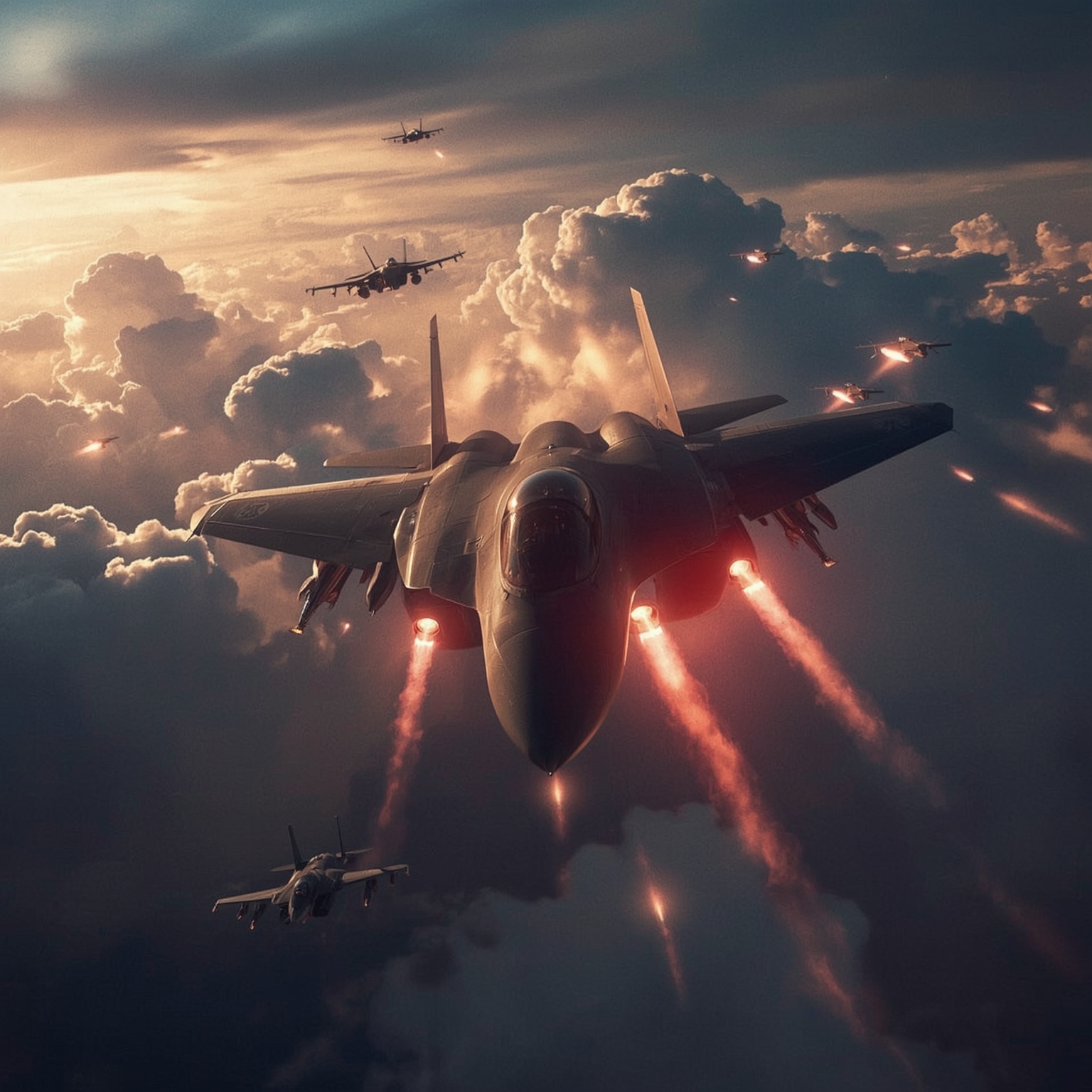
A Ukrainian aviation unit entrusted with operating one of the nation’s scarce Dassault Mirage 2000 aircraft has conveyed that this French-engineered fighter jet has demonstrated an almost unparalleled degree of effectiveness in countering Russia’s airborne weapons. According to their detailed account, the Mirage—an embodiment of European aeronautical precision—has consistently achieved near-perfect interception rates, attaining approximately ninety-eight percent success when engaging hostile drones and missiles threatening Ukrainian skies.
This revelation emerged in a video released by the Ukrainian Air Force on Wednesday, which prominently featured the Mirage 2000, a fourth-generation multirole fighter of French origin. Within the footage, a pilot—whose identity remained deliberately undisclosed for security reasons—and several ground technicians stationed at a forward-deployed airstrip provided in-depth commentary on the jet’s performance. The pilot, seated inside the compact single-seat cockpit of a Mirage 2000-5 variant, praised the aircraft’s reliability and combat effectiveness. Speaking with restrained confidence, he affirmed that the jet’s interception success rate against incoming threats stands at an extraordinary ninety-eight percent, underscoring the impressive outcome of Franco-Ukrainian defense collaboration. His face was deliberately obscured, emphasizing the operational secrecy surrounding Ukraine’s air defense operations.
Current projections indicate that Ukraine is scheduled to obtain close to twenty of these advanced fourth-generation fighters as France gradually phases them out of its own operational fleet. At present, however, Kyiv’s available inventory remains modest—believed to comprise approximately five or six aircraft following the confirmed loss of one Mirage in July. These fighters, valued both for their sophistication and rarity, form a critical component of Ukraine’s limited but evolving pool of Western-supplied air assets. For the Ukrainian Air Force, every Mirage represents a strategic asset primarily deployed to defend national infrastructure and population centers from Russia’s persistent cruise missile and drone onslaughts.
In the same video, a technician identified only as Dmytro performed a detailed demonstration of one of the Mirage’s principal armaments in these missions: the Magic 2 infrared-guided air-to-air missile. This missile system, renowned for its agility and precision, was presented as a vital component in intercepting high-speed aerial threats within relatively short engagement ranges. Resting his hand on the weapon, Dmytro confidently asserted that it had exhibited exceptional field performance, noting that its probability of achieving a successful kill against hostile targets approaches one hundred percent. His composure reflected both professionalism and pride in successfully adapting legacy Western technologies to meet Ukraine’s urgent defense needs.
The Air Force also released several cockpit-recorded clips capturing the dramatic moments when Mirage 2000s neutralized their targets. These visual confirmations served as evidence of the aircraft’s operational success. According to the crew of the featured jet, their Mirage had already destroyed no fewer than a dozen Russian Kh-101 cruise missiles—long-range, subsonic precision-strike weapons typically launched from strategic bombers deep within Russian territory. Dmytro added that, while six victory markings had been painted on the fuselage to signify confirmed kills, the actual number of intercepted missiles was considerably higher. Such stenciled symbols have become both a source of morale and a quiet testament to the aircraft’s battlefield efficacy.
A particularly revealing detail surfaced when the crew mentioned that the video was filmed at the third airstrip from which they had operated within a single week. This constant relocation reflects Ukraine’s deliberate strategy of dispersing its fighter jets across multiple temporary bases, thereby diminishing their vulnerability to Russian missile strikes. By avoiding repeated returns to centralized airfields, these tactics significantly complicate enemy intelligence efforts and enhance the survivability of high-value aircraft like the Mirage 2000.
Nevertheless, despite their strong endorsement of the Mirage’s performance, the Ukrainian aircrew emphasized that the nation’s defensive capabilities still require more versatile, long-range interception options. The Magic 2 missile, while precise and well-suited for close aerial combat, is fundamentally a short-range system introduced during the 1980s. It was never designed to engage the increasing waves of drones and cruise missiles launched in massed volleys—a tactic the Kremlin has heavily relied upon to exhaust Ukrainian defenses. The pilot explained that Ukraine urgently needs an intermediate-range weapon system—one that would provide a balanced compromise between cost-efficiency and effectiveness—allowing pilots to combat Russia’s high-volume aerial barrages more economically and sustainably.
He elaborated further that Russian forces frequently unleash hundreds of explosive drones and long-range missiles in coordinated attacks on Ukrainian infrastructure, occasionally pausing to stockpile weaponry before executing renewed large-scale strikes. Facing such relentless pressure, Ukrainian aviators are compelled to innovate, refine tactics, and adapt their aircraft to multiple combat roles.
Toward the conclusion of the Air Force’s presentation, the pilot speculated about potential future transitions toward more advanced French models, such as the Rafale. He emphasized that, given both aircraft originate from Dassault Aviation, Ukrainian pilots already experienced on the Mirage 2000 would require considerably less time to retrain for the Rafale compared with transitioning to an entirely different foreign fighter platform. The Rafale, often recognized as one of Europe’s most capable multirole fighters, represents not merely a technical upgrade but a long-term cornerstone in Ukraine’s plan to strengthen and modernize its air fleet.
This concept aligns closely with Ukraine’s broader vision for a comprehensive overhaul of its Air Force over the coming decade and beyond. Earlier in the month, President Volodymyr Zelenskyy disclosed that his government had signed a letter of intent to purchase up to one hundred Rafale F4 aircraft by the year 2035. Although this preliminary agreement does not guarantee the acquisition of the full fleet, it nevertheless symbolizes an ambitious step toward integrating top-tier Western technology into Ukraine’s defense structure. Alongside the prospective Rafale procurement, Kyiv also intends to incorporate American F-16 Fighting Falcons and Swedish Gripen fighters, creating a diversified, interoperable air arsenal designed to safeguard its skies far into the future. Through these efforts, Ukraine seeks not only to reinforce its strategic air defense but also to ensure the survival and effectiveness of its air power in the evolving theater of modern warfare.
Sourse: https://www.businessinsider.com/ukrainian-mirage-pilot-98-percent-effectiveness-intercepting-russian-drones-missiles-2025-11