This narrative originates from an intimate and reflective conversation with professional clown Eric Zander-Hussey, affectionately known in the entertainment world as EZ. The account presented here has been thoughtfully refined and edited for both clarity and concision, while preserving the vivid essence of his story and the emotions it evokes.
The tale begins in 2010, at a vibrant clown convention filled with the sounds of laughter, honking horns, and swirling colors. It was amid this kaleidoscope of joy that Kolinda and I were first introduced. What made the meeting unforgettable was not only the serendipity of it but also the fact that we were both completely disguised in our full clown regalia – faces painted white and bright, oversized shoes squeaking on the convention floor, each of us embodying the spirit of whimsy and theatrical delight. Beneath the greasepaint and the exaggerated smiles, however, two kindred hearts recognized something familiar in one another.
My own journey with clowning had commenced decades earlier, in 1988, when I made the deliberate choice to enroll at clown college — an institution dedicated to preserving and teaching the artistry, precision, and physical discipline of professional clowning. Upon graduating, I was fortunate enough to be hired by one of the most famous and demanding troupes in American entertainment history, the Ringling Brothers and Barnum & Bailey Circus. That opportunity launched a career that carried me from massive tents to dazzling stages. Eventually, I found myself performing at Circus Circus in Las Vegas, mastering comedic timing before audiences from all over the world, and later bringing laughter to communities in North Carolina as the official clown for McDonald’s. Over those years, I learned that comedy, when delivered through the language of pantomime, slapstick, and gentle absurdity, could reach a universal audience far beyond words.
Kolinda — or “Kozy,” as I have always affectionately called her — followed a professional path that initially seemed removed from circus life. She worked passionately in early childhood education, teaching and nurturing young minds. Yet, by a happy twist of fate, her workplace unofficially invited her to don festive attire and play an elf one Christmas season. Later, they invited her once again to take on the role of a clown during a school event. It was during those spontaneous performances that she discovered a captivating truth about herself: she had an innate gift for clowning. Before long, she began entertaining locally — delighting children at daycares, animating birthday parties, and adding cheer to town festivals. Each performance deepened her affection for the craft until she took the next decisive step: enrolling in a formal clown training course. That marked the genesis of a vibrant second career, one that harmoniously blended her nurturing teacher’s heart with playful performance.
About a year after our fortuitous meeting at that first clown convention, Kozy and I began dating, drawn together by shared humor, mutual respect, and a deep understanding of what it meant to live a life built around the joy of others. By 2013, we were married — two performers united not only in love but in laughter itself.
One of the most memorable moments early in our marriage came when we decided to merge households. The process was nothing short of comical: instead of dishes and décor, we found ourselves combining piles of clown equipment. Seventeen identical rubber ducks, eighteen dove pans used in magic acts, countless props that exploded or transformed on cue, over a dozen bright red noses, palettes of makeup in every imaginable hue, and no fewer than eight pairs of oversized clown shoes. Every corner of our home seemed to contain an echo of the circus. It became necessary to pare down, to recycle what we could, yet even after our efforts, we laughingly found ourselves the proud custodians of seventeen entire bins filled exclusively with clown gear. It was a testament to our shared devotion to the craft.
Kozy and I often said that we were made for this life — both of us born not just with a talent for performance but with an instinctive desire to spread happiness wherever we went. We lived by one of the oldest expressions in the clowning world: “Get back to work.” For clowns, this mantra encapsulates the resolve to keep performing even when circumstances are demanding, because joy itself is the mission.
Eventually, Kozy moved with me to North Carolina, taking on a role that, while initially described as an assistant’s part, soon grew into something far greater. Her natural charisma and comedic intuition soon reshaped the act. Audiences began to see us as a duo, each enhancing the other’s timing and emotional resonance. At fifty years old, determined to keep expanding her artistry, Kozy decided to learn how to walk on stilts — a physical skill requiring immense focus and courage. That single decision perfectly captured her spirit: she was the sort of person who faced challenges with enthusiasm and grace, transforming them into memorable moments of wonder.
When our children eventually graduated from high school and set out to build their own lives, it felt like a natural moment for us to embark on a new chapter. We began touring together full-time, sometimes spending nearly forty weeks out of the year on the road. Our performances took us across the United States and beyond, into Europe and Asia, where language barriers dissolved in the face of shared laughter. Wherever we went, we became, in a sense, the emotional center of each show—two clowns whose humor flowed from authenticity and affection. Those years were exhilarating; the rhythm of travel, rehearsal, and performance bound us together in an all-encompassing companionship. Yet, when I reflect honestly, I cannot claim that sharing so much time simply made our relationship stronger. That strength, instead, came from something deeper and far more enduring.
Our bond has always derived from what we call the “clown’s heart” — an inner compass guided by generosity, empathy, and the desire to ease others’ burdens through humor. To hold a clown’s heart is to constantly give, to sense when others need comfort, and to radiate warmth without condition. When two individuals share that same essence, their connection becomes inherently resilient. They uplift one another in the same way clowns uplift their audiences, fostering a beautiful reciprocity of joy.
Then, in 2020, when the global pandemic suddenly halted live entertainment, our lifestyle was brought to a standstill. The absence of direct, close-knit contact with audiences — the very soul of clowning — forced us to reevaluate our future. During that quiet period, we began envisioning what life might look like beyond the circus arena. Once the restrictions finally lifted and we returned briefly to touring, we both realized that the endless travel no longer appealed to us as it once had. For the first time in decades, we yearned to put down roots: to enjoy a steady neighborhood, attend casual social gatherings, join a bridge club, and eat dinner before 11 p.m. We wanted, simply, to experience the gentle rhythm of an ordinary life.
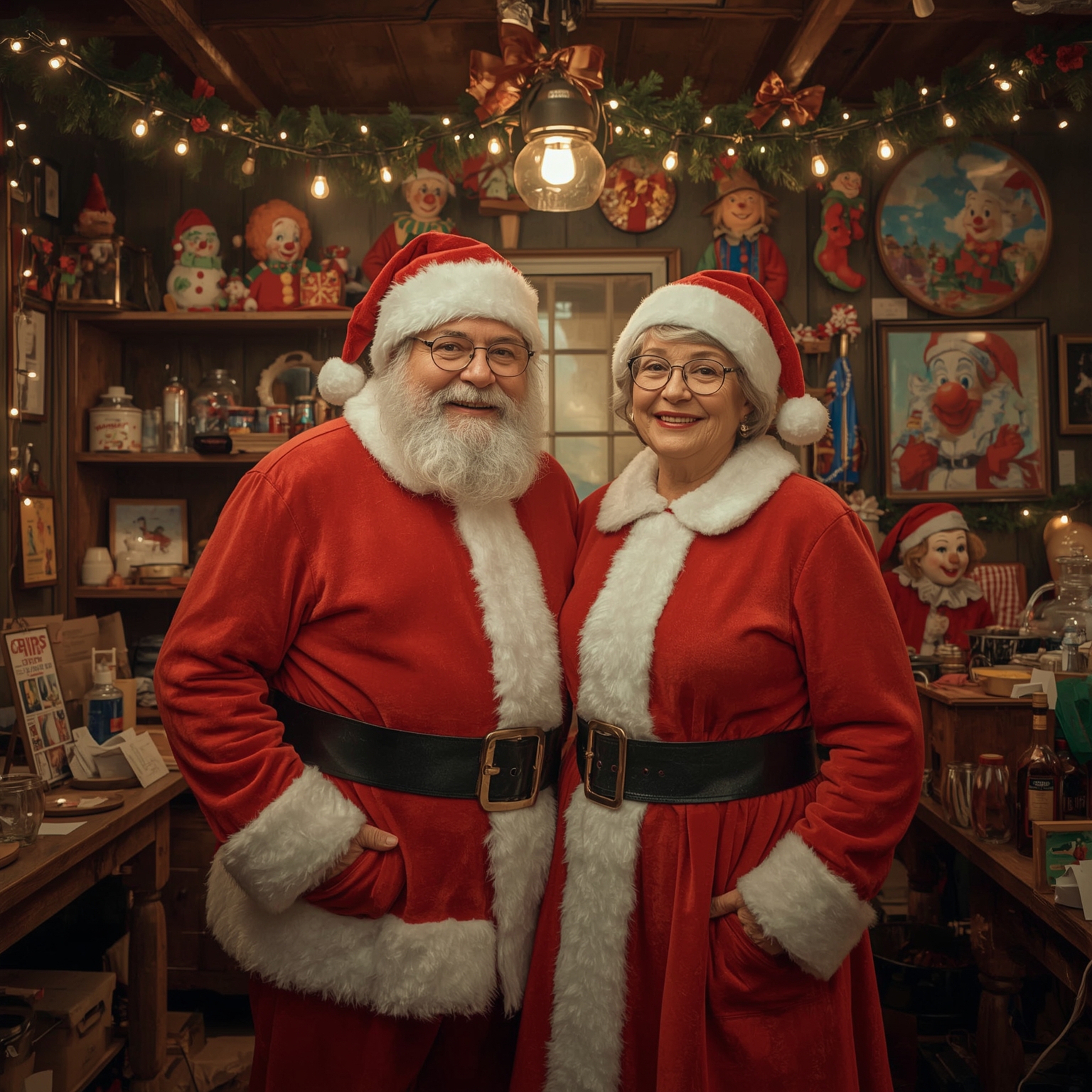
By then, I had grown a long, snow-white beard — initially as part of my evolving stage appearance — but soon it suggested a new identity. The transformation inspired a plan for our future: I would become Santa Claus, and Kozy would join me as Mrs. Claus every Christmas season. What began as a playful experiment turned into our joyful retirement dream. Inevitably, the beard altered my traditional clown look, marking a symbolic transition from one chapter of performing life to another.
We both came to understand that it was time to step back, to grant our bodies and spirits the rest they had earned. In early November of that year, after six remarkable seasons with the Loomis Brothers Circus, we gave our final touring performance. The show was emotionally charged — laughter mingling with tears as we exchanged goodbyes with friends and colleagues who had become our extended family. It was the closing act of one era and the prelude to another.
Today, we look forward with enthusiasm and peace to what lies ahead: occasional teaching engagements, modest performances close to home, and, above all, the joy of taking on the roles of Mr. and Mrs. Claus during the holiday season. Even away from the stage, we cannot suppress the instinct to bring light into everyday life. Whether shopping for groceries, strolling down the street, or chatting with strangers, we carry that irrepressible clown spirit within us — the compulsion to brighten someone’s day, to elicit a smile, to remind others of simple happiness.
In truth, retirement from the circus has not changed who we are. The makeup and oversized shoes may now rest quietly in their bins, but the essence remains untouched. Because being a clown is not something one merely performs — it is a way of being, a lifelong commitment to joy, generosity, and connection. In that sense, we will always be clowns, no matter what costumes we wear.
Sourse: https://www.businessinsider.com/life-as-clowns-taught-me-about-love-and-partnership-2025-11