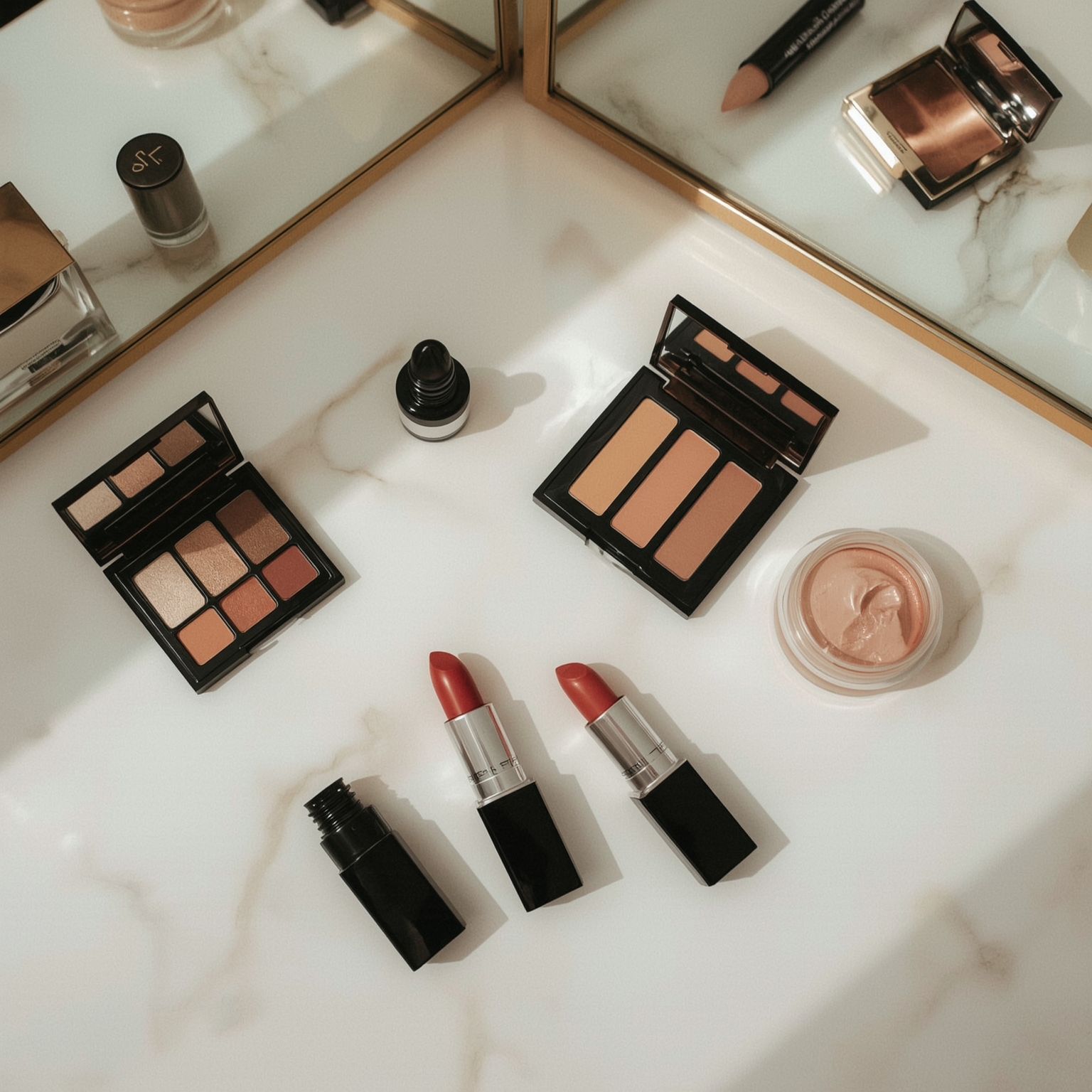
Charlotte Tilbury, now 52, openly reflects on her lifelong relationship with confidence, explaining that she has rarely found herself struggling with self-doubt or the lingering sense of inadequacy that many describe as imposter syndrome. Appearing on a recent episode of the “Aspire with Emma Grede” podcast, the renowned makeup artist and successful beauty entrepreneur spoke candidly about the origins of her steadfast self-belief. Tilbury attributed much of her inner assurance to her “visionary” parents, whose guidance and parenting philosophy provided a nurturing environment that encouraged authenticity and emotional strength from her earliest years.
During the conversation, Tilbury emphasized that she views personal authenticity as a cornerstone of both happiness and success. She expressed genuine bewilderment at the concept of imposter syndrome, admitting that she has never quite understood its grip on so many accomplished individuals. Her parents, she explained, deliberately chose to enroll her in a Rudolph Steiner school—a form of education deeply rooted in Rudolf Steiner’s Waldorf philosophy, which promotes a holistic, experience-based approach to learning that values creativity, individuality, and emotional development alongside traditional academics. This environment, she believes, allowed her to develop a strong sense of identity, confidence, and independence.
Tilbury fondly recalled how her parents’ philosophy shaped her formative years. “My parents always told me to be myself,” she recounted, describing this consistent message as a kind of family mantra. They reminded her, again and again, that imitation or pretense was unnecessary and counterproductive. As a young girl navigating different social groups, Tilbury admitted there were moments when she—like many adolescents—experimented with different identities, attempting to fit into various circles. However, her parents were quick to discourage any such departures from authenticity, guiding her gently but firmly back to her true self. Their philosophy mirrored the age-old adage that honesty, both with oneself and with others, is indeed the best policy. In Tilbury’s view, remaining authentic and transparent in one’s actions not only fosters genuine relationships but also cultivates inner empowerment and emotional stability.
Reflecting on her lifelong sense of assurance, Tilbury shared that her innate confidence felt more like an intrinsic trait than a learned behavior. “I think I was kind of born this way,” she mused, before adding that her mother’s loving encouragement played a monumental role in reinforcing that mindset. With characteristic warmth and humor, she recalled her mother showering her with constant praise during childhood—simple affirmations that carried profound influence. “Thank God for Mommy,” she said with a laugh. “She always told me I was fabulous, and because she believed it, so did I.” It was precisely this consistent positive reinforcement that laid the foundation for Tilbury’s resilient self-image, one that would later serve her well in the intensely competitive beauty industry.
As the founder of her namesake luxury beauty brand, established in 2013, Tilbury has often noticed patterns among other entrepreneurs’ stories. She observed that many visionary leaders seem to share a similar origin: a parent or mentor who instilled deep-seated confidence early in life. “When I listen to entrepreneurs speak about their journeys,” she reflected, “there’s almost always one parent or figure who tells them they’re amazing—and that belief becomes a defining force in their lives.” For Tilbury, that truth has proven timeless. Now a mother of two sons, she strives to pass on the same sense of self-assurance and perseverance, encouraging them to approach every challenge with effort, integrity, and optimism—always leading with their best foot forward.
Tilbury’s sentiments align with those of other accomplished women who also claim not to identify with imposter syndrome. In 2018, acclaimed writer and producer Shonda Rhimes shared a similar perspective in an interview with Refinery29, explaining that she had never felt like an imposter largely because of her upbringing. Rhimes credited her mother as a defining influence—an unwavering example of competence, independence, and empowerment. Watching her mother work tirelessly and achieve her goals instilled in Rhimes a natural understanding that there were no boundaries to what she could accomplish. “I never believed there was anything I couldn’t do,” she explained, “because I had a mother who did everything and parents who believed in me.” Her story underscores the transformative power of parental belief and the lasting psychological advantages of early encouragement.
Likewise, media icon Oprah Winfrey shared a nearly identical viewpoint in a 2023 interview with People magazine, revealing that she had to research the term “imposter syndrome” simply to grasp what others meant by it. Raised by a father who emphasized composure and constancy, Winfrey learned to maintain an even emotional temperament regardless of her circumstances. Her father’s signature phrase—“Get your coat”—represented a grounding reminder after every success, indicating that no matter how well she performed, life continued in steady rhythm. Winfrey explained that she neither experiences extreme highs nor debilitating lows; instead, she maintains a balanced perspective that allows her to stay resilient. “No matter what I’m going through,” she reflected, “I know I’m going to come out of it and be okay.”
Taken together, these women’s experiences present a compelling portrait of confidence as something both inherited and cultivated—a composite of early environment, parental influence, and personal outlook. Their stories remind us that self-belief, though intangible, is one of the most powerful assets a person can possess. It is not merely an absence of doubt, but the presence of trust: in one’s upbringing, one’s capabilities, and one’s essential worth.
Sourse: https://www.businessinsider.com/charlotte-tilbury-makeup-beauty-imposter-syndrome-parenting-influence-2025-11