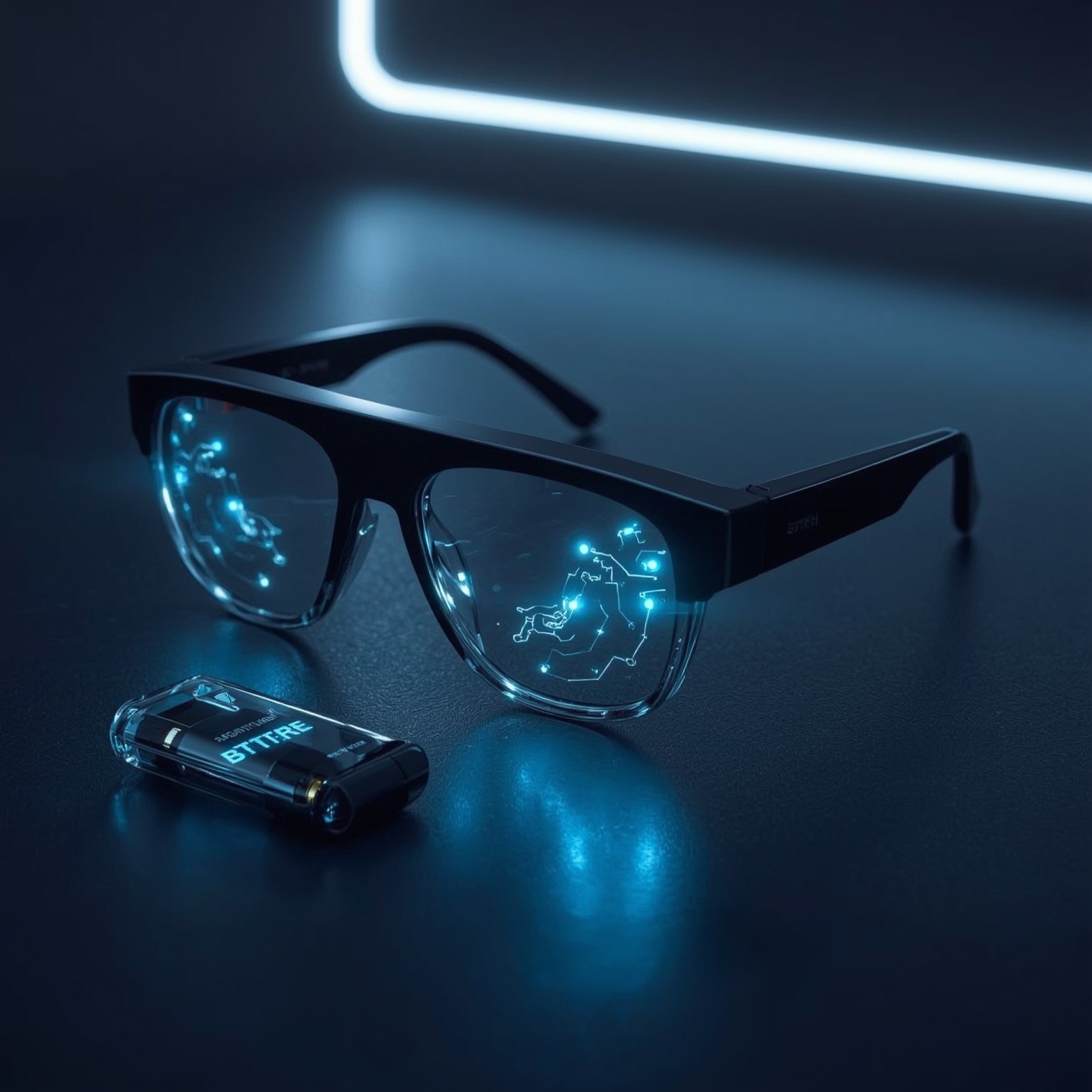
Chinese technology conglomerate Alibaba has officially entered the increasingly competitive landscape of artificial intelligence–driven wearable devices, making a notable debut in the smart glasses segment on Thursday with the launch of its pioneering Quark headsets in China. This strategic move underscores the company’s ambition to position itself at the forefront of next‑generation consumer technology. One of the standout features of the Quark glasses—and a decisive differentiator from rival models—is their ingeniously designed battery system. Unlike many competing devices that require charging downtime, the Quark headsets incorporate interchangeable, swappable batteries that allow users to maintain continuous operation throughout the entire day, effectively eliminating the inconvenience of limited mobility due to power restrictions.
The Quark AI glasses line comprises two distinct versions, each designed to meet specific consumer preferences and functional needs. The premium S1 model serves as the flagship edition, offering sophisticated technological enhancements, while the more casual variant, the G1, is crafted with everyday use and lifestyle versatility in mind. Both come in a range of tasteful colors and an assortment of lens configurations, catering to users who prioritize style as much as practicality. According to Alibaba, the defining distinction between the two versions lies primarily in their optical design: the S1 utilizes clear micro‑OLED display lenses, which deliver higher visual clarity and brightness, thereby enhancing tasks such as reading holographic data overlays or navigating augmented‑reality instructions. Pricing for these advanced wearables starts at 3,799 yuan (approximately 537 USD) for the S1 and 1,899 yuan (about 268 USD) for the G1, reflecting their respective market positioning and capabilities.
Both configurations are engineered with an impressive suite of integrated technologies intended to optimize user performance and comfort. Each headset includes bone‑conduction microphones—an audio transmission method that conducts sound vibrations through the skull rather than through traditional ear channels—enabling clear communication even in noisy environments. The glasses are also equipped with embedded cameras for real‑time visual capture and interactive applications. Most notably, the Quark models feature a dual‑battery architecture that can be physically swapped, ensuring up to twenty‑four hours of uninterrupted power supply. This hardware system is powered by Alibaba’s proprietary artificial intelligence model, known as Qwen, and synchronized through a dedicated companion app. These elements collectively enable the user to interact with the device intuitively, controlling functions through either vocal commands or tactile gestures, thus creating a hands‑free, seamlessly connected experience.
In an effort to fully integrate the wearables within its broader digital ecosystem, Alibaba has announced that the Quark AI glasses will natively connect with several of its flagship applications. These include e‑commerce platforms such as Taobao and Alipay, as well as major Chinese music‑streaming services including QQ Music and NetEase Cloud Music. The practical implications of such integration are significant: users can expect real‑time translation in multilingual contexts, instant product recognition for on‑the‑spot price comparison while shopping, intuitive navigation features for travelers, and even automated meeting transcription for professional settings—all processed through AI‑assisted computation.
According to a report from Bloomberg, international versions of the Quark glasses are anticipated for release next year, although Alibaba has yet to specify which overseas markets will receive them first. The forthcoming global distribution underscores the company’s intent to expand its influence beyond the domestic Chinese market and to participate in shaping international standards for wearable artificial intelligence devices.
With this launch, Alibaba is staking its claim in an emerging and rapidly evolving sector that many analysts view as the next major frontier for consumer electronics. The introduction of the Quark glasses represents an attempt not merely to compete but to define the possibilities of AI‑enhanced wearables. Although Meta currently maintains a lead in this domain with its widely recognized Ray‑Ban‑branded smart eyewear, the field is becoming increasingly crowded. Tech giants like Apple and other high‑profile innovators—among them Sam Altman in collaboration with designer Jony Ive—are all accelerating development efforts to capture a share of what could become the most transformative consumer technology category since the smartphone. In this context, Alibaba’s entry signals both confidence and strategic foresight, positioning the company to participate decisively in what many consider the next wave of ubiquitous, AI‑powered personal devices.
Sourse: https://www.theverge.com/news/831354/alibaba-quark-smart-glasses