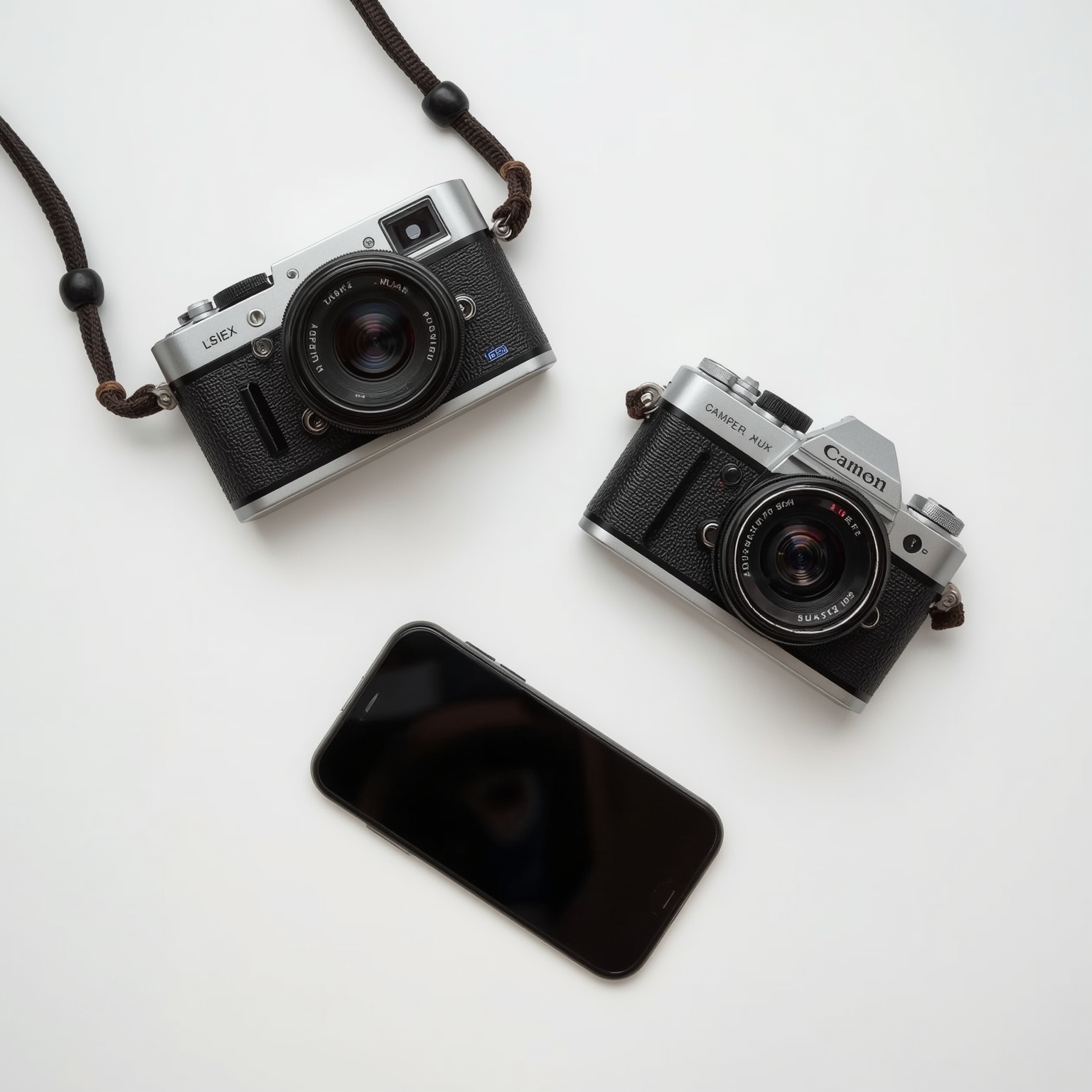
Throughout my professional career as a photographer, I have immersed myself in an extensive array of photographic disciplines. My experience spans from crafting intricate editorial photo essays designed to tell compelling human stories, to meticulously composed product photography where lighting precision and technical mastery are paramount. Beyond client work, my personal explorations have led me into landscapes, travel scenes, and candid street photography—fields that require spontaneity, patience, and a keen eye for fleeting moments. Through years of practice across such diverse genres, one profound realization has consistently surfaced: every photographer, regardless of specialization or level of expertise, benefits from having three distinct types of cameras within their creative arsenal. By “types,” I am not referring to brands such as Sony or Canon, or even sensor formats like full-frame or APS‑C. Instead, what I mean delves deeper—these cameras each embody unique approaches to creating images. They shape how we think, move, and capture the world, empowering us to achieve our finest work across every kind of visual storytelling.
Interestingly, these three categories need not exist as three separate physical devices. Depending on one’s preference and resources, the characteristics of all three can exist across two cameras or even converge into a single, highly versatile machine. What matters is not how many units you possess, but whether your gear meets the creative, functional, and emotional needs associated with each category. To clarify this concept further, let us explore the first of these essential archetypes: what I call the **Workhorse**.
### The Workhorse
The Workhorse camera is the dependable backbone of your professional toolkit—the no‑nonsense machine that consistently accomplishes whatever photographic challenge you throw at it. Typically, it is a model loaded with cutting‑edge technology: rapid processors, swift and highly accurate autofocus systems, impressive burst speeds, advanced image stabilization, and often an interchangeable lens mount offering immense flexibility. In many cases, this camera features a full‑frame sensor, though that specification is secondary to its defining trait—reliability under pressure. It is the all‑purpose instrument professionals turn to for weddings, portraits, car shoots, commercial advertising, pet photography, and everything in between. This is the camera that delivers results every time, under any circumstance, with remarkable precision and predictability.
In my own work, the Canon R5 currently occupies that central role. Its blend of high speed, outstanding resolution, articulating touchscreen, robust build, and exceptional video capabilities make it an all‑round performer that instills confidence on every assignment. Prior to the R5, my workhorse lineage included the Canon 5D Mark IV and earlier, the Canon 6D—each one serving steadfastly in its era. Yet, the brand or model name matters less than what the camera symbolizes: a trusted instrument you can depend upon when the stakes are high. For another photographer, this might be the Sony A7R V, Nikon Z8, or Panasonic Lumix S5 II. Whether released in 2005 or 2025, a true workhorse possesses timeless qualities: durability, adaptability, and consistency. However, such capability comes with trade‑offs. These cameras are often bulky, weighty, and expensive, and while the wide range of compatible lenses is liberating, it can occasionally feel overwhelming when simplicity is desired. That is precisely why the second category exists—the **Everyday Carry**.
### The Everyday Carry
If the Workhorse is a powerhouse, the Everyday Carry is its agile, ever‑ready counterpart. Compact, lightweight, and easily accessible, this camera invites spontaneity, making photography effortless and joyful rather than methodical. This category includes small digital cameras—typically fixed‑lens compacts—that slip unobtrusively into a jacket pocket or hang comfortably around the neck during a lazy afternoon stroll through an unfamiliar city. Exemplary models include Fujifilm’s X100 series, the Ricoh GR III, or the Leica Q3. Even older cameras like Sony’s RX1R remain gems in this domain. Personally, I have a particular fondness for my Leica Q3, which accompanies me practically everywhere. It may not be tiny, yet it excels at being unobtrusive, stylish, and effortlessly capable.
This camera shines during travel or social occasions—the sort of moments where carrying a large kit would distract from the experience itself. Picture packing light for a weekend camping trip: you might not bring your full professional setup, but you still want to capture spontaneous images around the fire or candid portraits of friends laughing in the fading light. The Everyday Carry ensures you never miss those unrepeatable moments. It hangs lightly around your neck as you explore winding cobblestone streets in an old Italian town or disappears into your bag until that perfect beam of sunlight filters through a café window. With this camera, photographic creativity becomes second nature; the barrier between observing and capturing nearly vanishes.
This is the tool for quick reactions, informal documentation, and social storytelling—images that prioritize emotion and atmosphere over perfection. You might find that it is the camera responsible for most of your personal memories, even if it seldom produces the technically “best” photographs in your portfolio. Those prized artistic creations tend to belong to the last and most personal category—the **Artful One**.
### The Artful One
Unlike the pragmatic Workhorse or the nimble Everyday Carry, the Artful One is not defined by specifications, speed, or convenience. Instead, it is defined by how it *makes you feel*. This is the camera that sparks imagination simply by its tactile presence, the one that compels you to slow down, observe, and create deliberately. It’s often the camera you reach for when undertaking a purposeful photographic journey—driving hours to a remote location just to chase a fleeting sunset or experiment with composition in solitude. The Artful One may lack the cutting‑edge features of modern flagships, but it rewards you with inspiration, encouraging a meditative approach to image‑making that transforms the act of taking a photograph into an act of artistry.
This category often includes film cameras—either 35 mm or 120 medium format—whose analog workflow inherently demands patience and discipline. Shooting on film encourages photographers to think before pressing the shutter, because every frame carries tangible cost and consequence. Alternatively, the Artful One could take the shape of a modern digital medium‑format body like the Fujifilm GFX series or, for me, the enchanting Hasselblad 907X 100C. That compact, modular cube of a camera exudes character; when I used it, the experience was so exhilarating that returning it afterward felt like parting with a cherished creative companion. Its X‑Pan panoramic mode, in particular, provided an expansive visual playground that helped shape one of my most successful images—an image later shortlisted for a major UK photography award.
Sometimes, the Artful One is a surprise discovery—a camera you never planned to own. I, for example, did not realize how deeply film photography would engage me until I impulsively purchased a Mamiya 645 Pro from a fellow enthusiast in a random car park exchange. To my delight, that purchase rekindled my love for slow, intentional craftsmanship. This archetype often requires openness and curiosity; the most profound creative connections come when we least expect them. Yet over time, this camera might come to represent the essence of your artistic identity.
### Three Types, One Camera
When you combine these three archetypes—the Workhorse, the Everyday Carry, and the Artful One—you achieve complete creative balance. Together, they address every facet of photographic practice, from professional reliability and portability to emotional inspiration. Yet, you do not necessarily need three separate devices. Many photographers find that one thoughtfully chosen camera can embody all three aspects in different situations. For instance, during a recent assignment in Sicily, my Canon R5 effortlessly fulfilled all roles: it functioned as my dependable workhorse during demanding shoots, my compact yet capable everyday camera while strolling quaint streets, and my artistic companion as I explored light and texture for personal pleasure. Conversely, my Leica Q3 steps in as a quintessential everyday and travel camera—accompanying me across the Arctic regions of Sweden, through ferries bound for remote Scottish islands, and into bustling European cities. Every time I pick it up, it reinvigorates my enthusiasm for photography; after all, few tools inspire as much reverence among image‑makers as a beautifully engineered Leica.
Recently, I have also rediscovered the tactile pleasure of analog photography, and that renewed curiosity culminated in adopting the medium‑format Mamiya 645 as the Artful One of my present trio. These three cameras together form my personal “holy trinity,” a configuration that aligns seamlessly with the evolution of my craft. Naturally, as my career progresses and technology advances, the exact models may change. However, the fundamental structure remains constant: I will always seek a tool that serves as my Workhorse, one that remains within reach as my Everyday Carry, and one that inspires creativity as my Artful One. Mastering photography is as much about understanding yourself as it is about mastering equipment, and these three types of cameras act as mirrors reflecting every dimension of your creative soul.
Sourse: https://www.cnet.com/tech/computing/i-learned-every-photographer-needs-these-three-types-of-cameras/#ftag=CAD590a51e