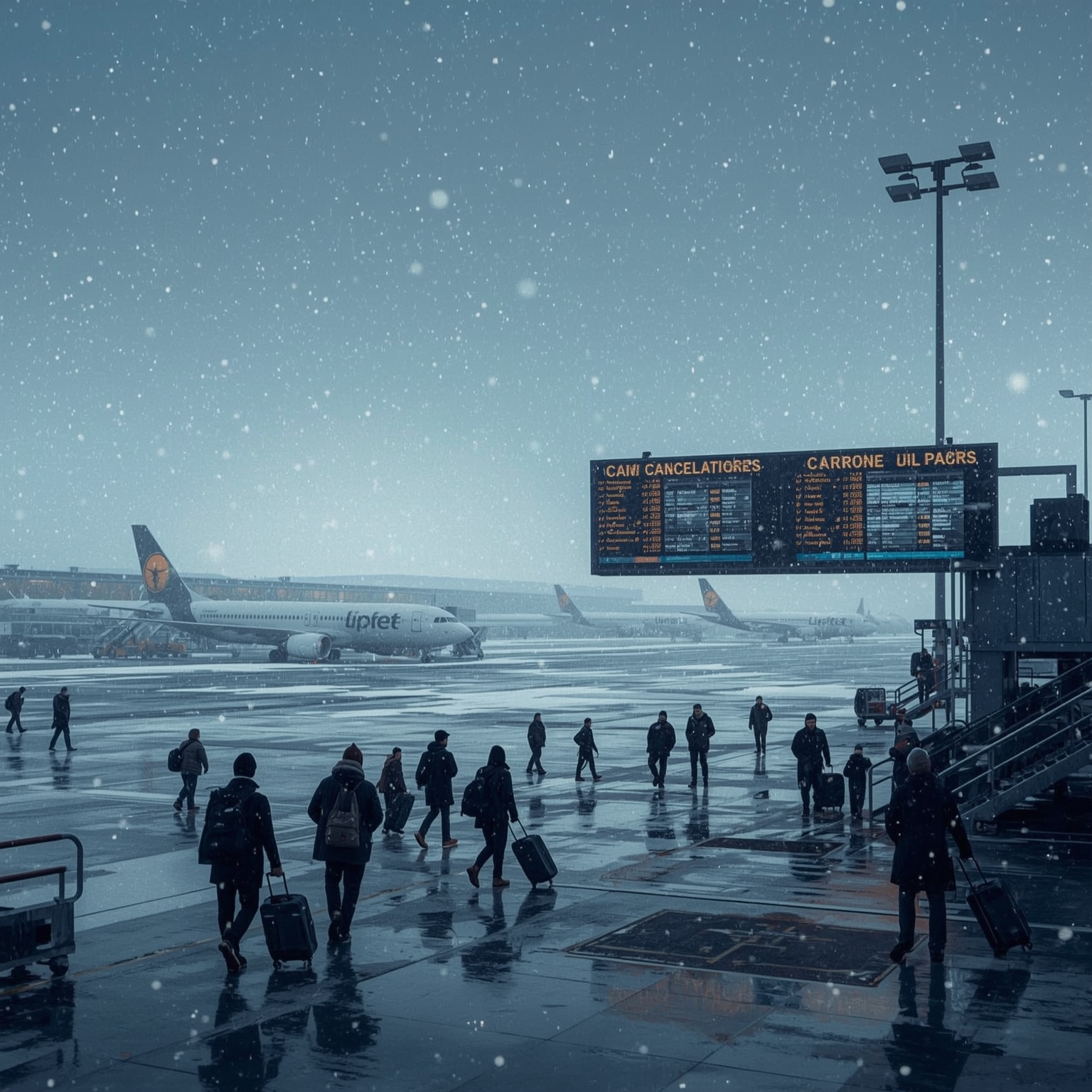
On Sunday, air travel across the United States was thrown into disarray as a powerful snowstorm swept through the Midwest, forcing airlines to cancel or delay hundreds of flights. The disruption marked one of the most significant travel setbacks of the busy Thanksgiving weekend, a period that historically sees record passenger volumes and heightened logistical strain on the nation’s transportation networks.
Chicago’s O’Hare International Airport, one of the largest and busiest airline hubs in the world, bore the brunt of these cancellations. As of late Sunday morning — approximately 11 a.m. Eastern Time — around 240 flights arriving at or departing from O’Hare had been scrapped, according to data from flight-monitoring service FlightAware. In addition to these cancellations, hundreds of other flights in and out of the Chicago metropolitan area were delayed, leaving thousands of travelers stranded in terminals or forced to await further updates from airlines. The city’s smaller but still active Midway Airport also experienced notable disruptions, with seven additional flights canceled and many more delayed.
The cancellations on Sunday followed an even more chaotic Saturday, during which approximately 1,500 flights were grounded after the snowstorm first descended on the region. Heavy snowfall combined with powerful, gusting winds created treacherous conditions across the Chicago area, obscuring visibility, blanketing runways, and making de-icing operations increasingly difficult. As one of the principal aviation crossroads in the United States, Chicago’s delays and cancellations had a cascading effect, causing ripple disruptions at airports nationwide as crews, aircraft, and passengers were displaced from their scheduled routes.
The timing of this storm could not have been worse for travelers. The weather disturbance struck just as millions of Americans were returning home from Thanksgiving celebrations, typically one of the busiest travel periods of the entire year. The Transportation Security Administration (TSA) had anticipated a record-breaking surge in passengers during the week following the holiday, forecasting that between November 25 and December 2, more than 17.8 million individuals would be screened through airport security checkpoints. Of those, over three million passengers were expected to fly on Sunday alone — a number that now faces significant disruption due to the winter weather.
Meteorologists from the National Weather Service (NWS) warned that the storm’s impact would likely extend beyond the weekend. In an updated advisory, the agency noted that a period of accumulating snow was projected to continue from Monday afternoon into the evening hours in the Greater Chicago region. This extended snowfall, the NWS cautioned, could further complicate the Monday afternoon commute and potentially cause lingering hazards during Tuesday morning’s rush hour. For local residents and travelers alike, the outlook underscored the importance of preparing for challenging and potentially hazardous road and air travel conditions over the next several days.
Meanwhile, forecasters at the Weather Prediction Center suggested that the same storm system, after moving eastward, could reorganize and bring another round of winter weather to portions of New England and the Mid-Atlantic states later in the week. These early predictions indicate the potential for widespread regional impacts, ranging from snowfall and freezing rain to significant travel delays along major northeastern corridors.
In short, what began as a typical post-holiday travel rush has evolved into a nationwide test of endurance for travelers and airline operators alike. As snow continues to fall across the Midwest and weather systems progress toward the Atlantic coast, passengers are urged to monitor flight updates closely, allow extra travel time, and exercise patience amid one of the busiest — and now, most challenging — travel weekends of the year.
Sourse: https://www.businessinsider.com/flights-canceled-chicago-snowstorm-ohare-midway-delays-2025-11