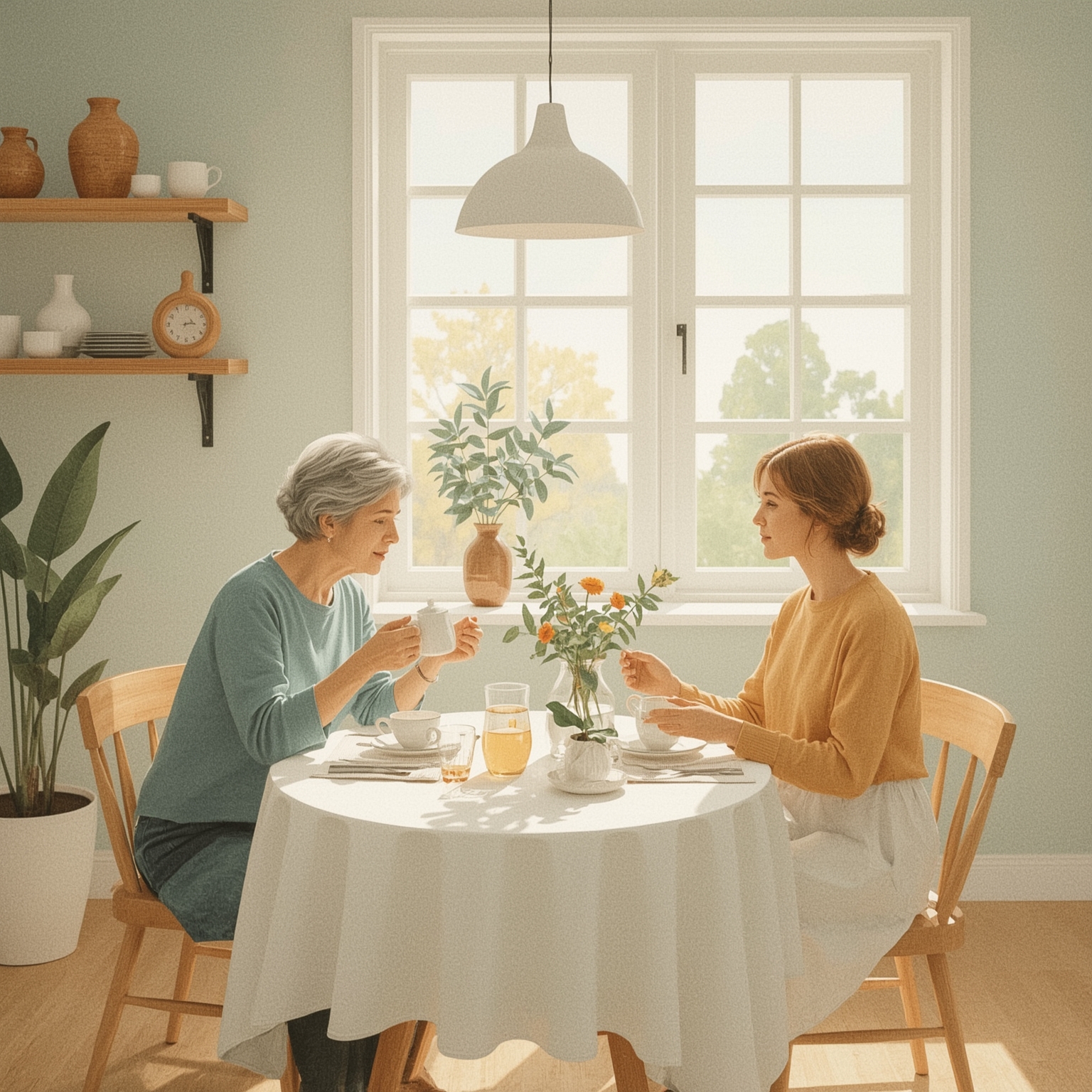
A little more than two years ago, I found myself waking up in the same bedroom that had once framed the dreams and uncertainties of my childhood—a space I had not occupied for over thirty years. Yet this was no nostalgic weekend visit or fleeting return to the familiar walls of my family home. At forty-one, I made a deliberate, life-altering decision to move in with my eighty-eight-year-old grandmother, lovingly known to me as Mamaw, as any true Texan grandchild might affectionately call her. This choice was neither impulsive nor purely sentimental; it was a conscious step into a new chapter of connection, duty, and love.
For years, my family had quietly anticipated that there would come a time when Mamaw could no longer live independently. Her stubborn yet endearing insistence on remaining in the home she had built her life around was something we all respected, even as it complicated practical matters. When the moment finally arrived, I offered to move in—not out of obligation, but because it truly made the most sense. As the one among us without a spouse, children, or a mortgage, my life was the most flexible. Unlike my mother, whose roots were deeply planted and whose responsibilities made relocation difficult, I could step in where she could not, easing the family’s burden while ensuring Mamaw’s wish to stay in her home was honored.
There was also a deeper layer of personal history at play in that decision. During my earliest years, Mamaw, my mother, and I had shared this same home, forming a small but tightly knit household of three generations under one roof. In many ways, Mamaw was not simply a grandmother but a second parent, grounding me with her wit, warmth, and discipline. Some of my fondest memories are of evenings spent with her, watching old Hollywood musicals that she adored, or learning complex card games far beyond a seven-year-old’s grasp—traditions that taught me both the joy of companionship and the quiet intelligence embedded in play. Returning to live with her now, in midlife, felt oddly circular, as though life had folded back on itself in a gentle act of symmetry.
My current living arrangement with Mamaw is less a burden and more a rediscovery. Naturally, there are challenges—moments of frustration and fatigue that arise from the daily realities of caregiving—but there is also an undeniable sweetness in being able to offer her care and comfort in the very rooms where she once cared for me. My family, ever pragmatic, has built what I fondly refer to as our own version of the ‘sandwich generation,’ balancing responsibilities across ages and circumstances. When a recent layoff complicated my employment situation, it coincided almost perfectly with Mamaw’s growing need for more consistent assistance. My mother now visits most weekdays, managing home health appointments, doctor visits, and physical therapy sessions so that I can focus on freelance projects and my ongoing job search. Together, we’ve constructed a rhythm that blends practicality with tenderness—a shared effort rooted in love rather than duty.
Despite the meaningfulness of this arrangement, I do not pretend that it has been easy. Living with Mamaw requires patience and adaptability. There are days filled with medical routines—home health checkups, physical therapy sessions, and endless reminders about meals and hydration—often interwoven with my own work calls and deadlines. Yet even amidst the exhaustion, there is laughter. I never set out to be anyone’s hero, nor do I view my choice as a saintly act deserving of praise. Quite simply, I enjoy being with her. Our relationship thrives on humor and companionship, though it’s occasionally tested when she refuses to eat lunch or uses my cat snoozing in her lap as a reason to skip her exercises. Still, in the grand balance of things, these small battles are eclipsed by the joy of everyday moments—the kind that remind me why I made this choice in the first place.
These days, our favorite pastime is watching television together. I’ve introduced her to the gentle charm of ‘The Great British Bake Off,’ whose combination of sincerity and creativity appeals even to her old-fashioned sensibilities, and to the sharp intensity of playoff hockey, which, surprisingly, she finds exhilarating. She has also developed a fascination with my marathon sessions of playing ‘Animal Crossing,’ amused by the serene world of pixelated island life. Through these shared experiences—small yet profoundly connective—we’ve built a bridge between our generations, blending the old and the new into a quiet, enduring companionship.
Of course, reality persists in the background. The last two years have witnessed noticeable changes in Mamaw’s health. Now at ninety, she moves more slowly, tires more easily, and occasionally drifts into reflection with a look that contains both serenity and fragility. These transformations are reminders of time’s relentless passing and of the limited span of years we have left together. Yet they also bring a certain gratitude—a recognition that every conversation, every shared meal, and every ordinary afternoon carries extraordinary weight.
Our lives have woven together repeatedly through the decades, bound by circumstance, affection, and a mutual steadfastness that neither distance nor difficulty could fracture. Mamaw has been a constant presence in my life—supporting me more times than I could ever tally—and now it is my quiet privilege to return that devotion in kind. Caring for her feels less like repayment and more like continuation: a full-circle expression of the love she instilled in me. And, perhaps most simply of all, there’s comfort in the small rituals we share—like our nightly tradition of watching ‘Jeopardy!’ side by side, both shouting answers at the screen and laughing when neither of us gets them right. In those moments, there is no caregiver or patient—just two generations, bound by years, love, and habit, treasuring the time that remains.
Sourse: https://www.businessinsider.com/single-at-forty-moved-in-with-superager-grandma-caregiver-2025-11