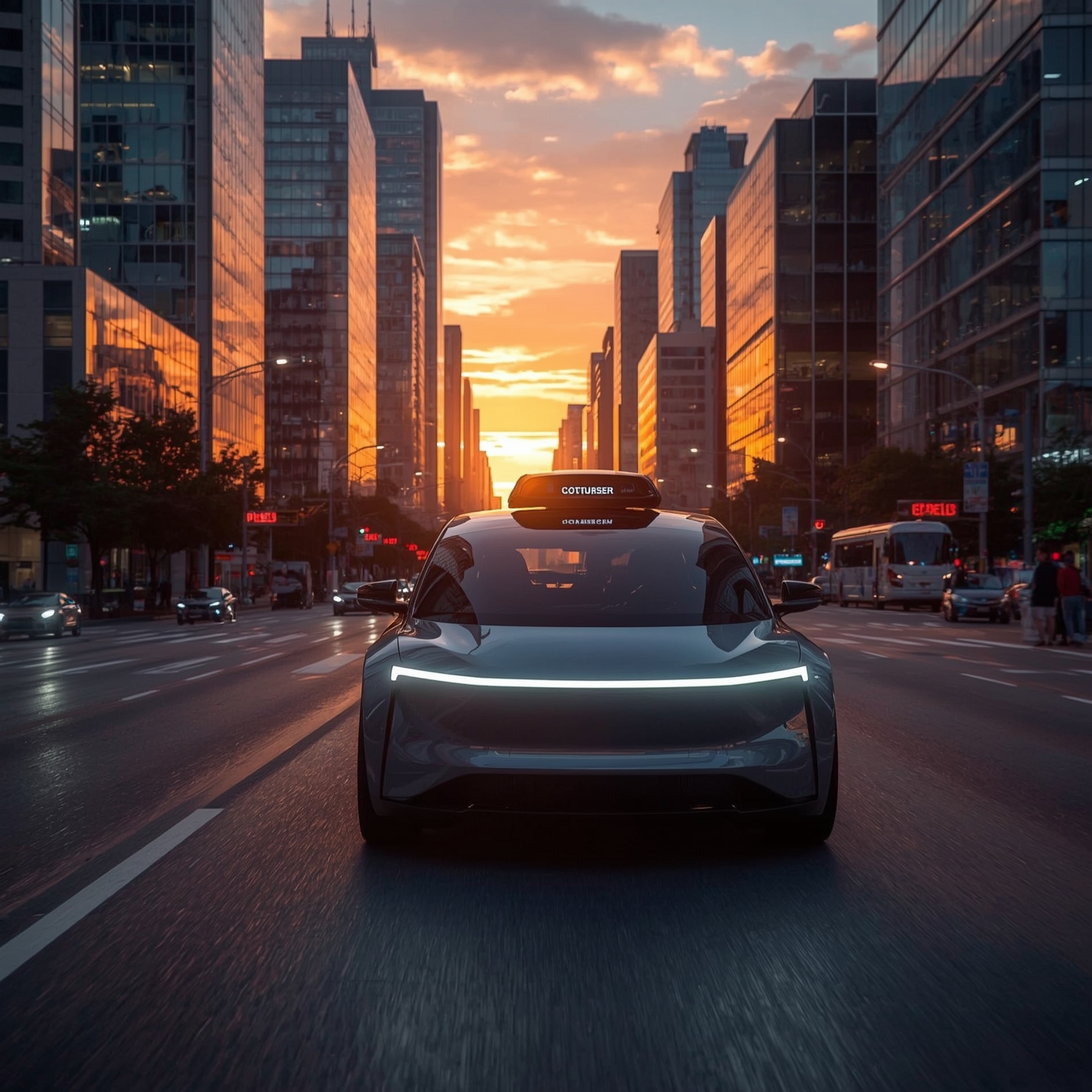
Dallas has now become the newest American metropolis to join the steadily expanding network of cities offering Uber’s robotaxi services. In a significant announcement made on Wednesday, the global ride-hailing leader revealed that users in Dallas will now have the ability to summon self-driving vehicles directly through the Uber app. These autonomous vehicles have been engineered by the innovative startup Avride, marking another milestone in the intensifying technological race among companies vying to deploy robotaxis across the United States. What once seemed futuristic is now increasingly tangible, as major players accelerate efforts to establish dominance in the emerging field of autonomous mobility.
The fleet of robotaxis introduced in Dallas consists of Hyundai Ioniq 5 electric vehicles, each integrated with Avride’s proprietary self-driving technology—a suite of advanced sensors, machine-learning algorithms, and precision-navigation systems designed to ensure consistent safety and reliability. During the early stages of deployment, these vehicles will not yet operate independently of human input; rather, a trained human safety monitor will occupy the driver’s seat, standing ready to intervene if necessary. Uber has emphasized that the inclusion of these human stewards represents an interim operational measure designed to build public confidence and validate system stability. The company noted that fully autonomous, driverless operations are anticipated to arrive at an unspecified future date once all regulatory and technical thresholds are satisfied.
For Uber’s Dallas customers, this development translates into new travel options directly within the familiar interface of the Uber app. Riders who request a vehicle might be paired with a self-driving robotaxi, yet retain full discretion to switch to a conventional, human-operated car whenever they choose. This dual-availability approach balances innovation with accessibility, enabling the public to gradually acclimate to the presence of autonomous vehicles on city streets without feeling forced into adoption. It also showcases Uber’s intention to make the transition toward autonomy as seamless and user-centered as possible.
The launch in Dallas arrives at a time when the introduction of robotaxis across the United States is gathering remarkable momentum. Cities from the West Coast to the Southeast are witnessing test programs evolve into commercial offerings at what industry observers describe as a breakneck pace. With Dallas now joining that roster, it becomes the third U.S. city where Uber has rolled out self-driving ride-hailing services, standing alongside Austin and Atlanta—both of which feature Uber’s strategic collaboration with Waymo, another giant in the autonomous vehicle sphere.
Waymo, which is owned by Google’s parent company Alphabet, has been conducting extensive research and public trials in self-driving technology for many years. After refining its operational models through comprehensive testing, the company has recently intensified expansion efforts. It declared renewed plans to launch autonomous ride-hailing services in multiple major cities, including Dallas, Miami, Houston, San Antonio, and Orlando. These forthcoming additions will complement its existing markets in San Francisco, Los Angeles, Phoenix, Austin, and Atlanta. Remarkably, as of Tuesday, Waymo confirmed that it has already initiated fully driverless robotaxi operations in Dallas—signaling a new chapter in the city’s transportation infrastructure and amplifying the competitive atmosphere surrounding urban mobility innovation.
Uber’s current approach to automation represents a pragmatic evolution of its original self-driving ambitions. After previously discontinuing internal plans to independently develop robotaxis, the company has shifted to a collaboration-based strategy. Rather than shouldering the immense technical and financial burdens of autonomous vehicle development alone, Uber now partners with specialized autonomous technology firms—among them Waymo and Avride—to integrate their vehicles into its globally recognized mobility platform. This cooperative arrangement allows Uber to maintain a strong foothold in the autonomous sector while simultaneously leveraging the advanced research, engineering expertise, and fleet-management capabilities of its partners. Nevertheless, this alliance-oriented model also positions Uber in direct competition with those same partners in certain overlapping markets, including San Francisco and other key innovation hubs.
The company’s collaborative vision extends well beyond the territorial boundaries of the United States. Internationally, Uber has forged alliances with prominent autonomous driving pioneers such as China’s Pony.AI and WeRide, signaling a broad and inclusive strategy for global adoption. In fact, only last week, Uber introduced fully driverless WeRide robotaxis through its app in Abu Dhabi, underscoring both the rapid internationalization of autonomous transport and Uber’s determination to remain at the forefront of this technological revolution. Together, these efforts illustrate how the company continues to blend strategic partnerships, cross-market innovation, and forward-thinking deployment tactics to facilitate an era in which autonomous mobility is no longer a distant aspiration but a fast-approaching reality poised to redefine modern transportation.
Sourse: https://www.businessinsider.com/uber-launches-self-driving-taxis-dallas-robotaxi-2025-12