Jensen Huang, the visionary founder and chief executive officer of Nvidia—the company widely regarded as the most successful force in the realm of artificial intelligence—recently offered a perspective on the future of work that diverges considerably from the widespread anxieties dominating public discourse. According to Huang, AI technology should not be viewed solely as a threat poised to render human labor obsolete; rather, he believes it will redefine employment by giving rise to entirely new and often unexpected professions. While prominent experts such as Geoffrey Hinton, frequently dubbed the “godfather of AI,” have cautioned that the accelerating pace of technological progress could result in sweeping job losses and exacerbated social inequality, Huang advocates for a more balanced, and even optimistic, interpretation of what lies ahead.
In a conversation featured on *The Joe Rogan Experience* podcast released on Wednesday, Huang articulated his belief that the roles most likely to endure the AI revolution are those that transcend mere mechanical tasks—jobs that integrate human judgment, creativity, and contextual understanding in ways machines cannot easily replicate. “The question is, what is the job?” he asked rhetorically, emphasizing that a role must represent a holistic endeavor, a synthesis of interconnected responsibilities, not just a checklist of discrete duties. He illustrated this with an example drawn from the medical field: radiology. While artificial intelligence can already examine and interpret medical imagery—such as X-rays and CT scans—faster and often more accurately than human specialists, the total number of practicing radiologists has not declined. Huang explained that this is because the core purpose of their profession is not simply to analyze a picture but to diagnose and understand disease within the broader context of patient care. The image interpretation, he said, serves merely as a single step in a more complex, purpose-driven process aimed at improving human health.
Nevertheless, Huang acknowledged that employment consisting solely of repetitive, narrowly defined tasks remains particularly vulnerable to automation. Occupations built around pure function—where human contribution is limited to performing simple, repetitive motions—could indeed be supplanted by machines. With a touch of humor, he noted that if a person’s primary responsibility is merely to chop vegetables, then a Cuisinart—or a comparably efficient kitchen device—would inevitably become the more economical and consistent alternative. Yet even as he admitted that many might be displaced in such scenarios, Huang redirected the conversation toward the opportunities emerging alongside technological change.
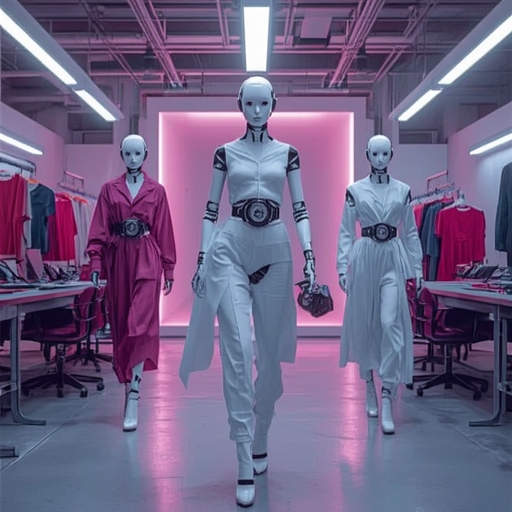
As artificial intelligence matures, he argued, it will not merely dismantle existing industries but catalyze the birth of new ones—especially as robotics becomes fully integrated into daily life. Once robots reach mainstream adoption, a vast ecosystem of support professions will become necessary to maintain, operate, and personalize these machines. Huang envisages an entire sector devoted to manufacturing, servicing, and even customizing robots. Amused by his own prediction, he offered a particularly imaginative example: the advent of “robot apparel.” Just as humans express individuality through fashion, he speculated that people may one day seek to differentiate their robotic companions through specialized outfits or decorative elements. “You’re going to have robot apparel,” he remarked with laughter, suggesting that this could evolve into a full-fledged fashion industry catering not to people, but to their mechanical counterparts. When Rogan pressed him further, asking whether even such creative work might eventually be automated by other robots, Huang conceded with a knowing smile: “Eventually.”
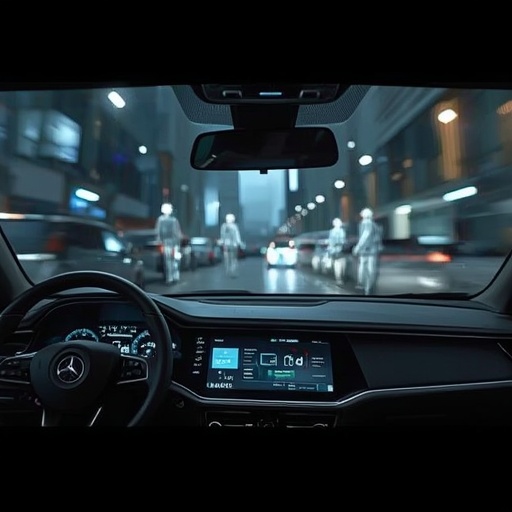
Huang’s musings align with observations made by other technology leaders who foresee that the so-called robot revolution will spawn professions that today’s society can scarcely imagine. Echoing this sentiment, David Risher, CEO of the ride-hailing company Lyft, speculated in November that the proliferation of autonomous “robotaxis” could spawn an entirely new position—the “car-tender.” He envisioned this role as a blend of service, hospitality, and entertainment, where individuals might mix drinks, share stories, or act as personable guides for passengers inside automated vehicles, transforming commuting into an experience rather than a simple transport service.
Despite his enthusiasm, Huang admitted during the podcast that even he—the man at the forefront of AI’s development—cannot predict with confidence the ultimate trajectory of the technology or fully grasp its final purpose. “I don’t think anybody really knows,” he confessed, emphasizing that technological revolutions rarely unfold as abrupt, world-altering moments. Instead, he anticipates a gradual, evolutionary process in which progress accumulates in small but significant increments. Humanity, he suggested, will likely adapt continuously as AI becomes an increasingly sophisticated and pervasive partner in intellectual and creative endeavors.
Drawing on historical precedent, Huang asserted that society’s recurring unease toward transformative technologies—from the printing press to electricity to the internet—has rarely stopped innovation. If anything, public concern tends to drive careful and responsible advancement. In AI’s case, he argued, this collective vigilance is actively steering the development of safer, more transparent systems. “If history is a guide,” Huang remarked, “all of this concern will be channeled into making the technology safer.” In his view, the global conversation surrounding ethics, accountability, and regulation is not a hindrance but a safeguard ensuring sustainable progress.
Huang also highlighted how recent breakthroughs have endowed modern artificial intelligence with increasingly reflective and self-regulating capabilities. Contemporary AI models, he explained, now conduct research prior to responding, evaluate the reliability of their own answers, and employ auxiliary tools to refine outcomes—all of which collectively help decrease errors and so-called “hallucinations.” Looking ahead, he predicted that forthcoming leaps in computational power, up to a thousandfold improvement, will be directed toward deepening AI’s introspection, reasoning, and capacity for deliberate analysis. Rather than simply producing faster results, the next chapter of AI advancement, in Huang’s view, will emphasize greater reflection and critical thought, ultimately guiding the technology toward becoming not only more powerful, but also more discerning, safe, and profoundly human in its assistance to society.
Sourse: https://www.businessinsider.com/jensen-huang-joe-rogan-experience-episode-robot-clothes-ai-jobs-2025-12