For more than two years, BMW has sustained a steady campaign of anticipation, releasing an ongoing stream of glimpses and partial revelations about its upcoming electric vehicle architecture known as the Neue Klasse. These teasers have arrived in the form of sleek design previews, cutting-edge technology showcases, and carefully orchestrated engineering briefings. After such a prolonged buildup, it’s understandable that the initial thrill might wane somewhat, and indeed, after countless conversations with BMW engineers delving into intricate details—ranging from the dashboard-spanning display interface to the comprehensive reworking of the vehicle’s active safety mechanisms—and even having had the privilege to briefly take the wheel of an early prototype, one might begin to grow desensitized to the marketing crescendo surrounding this launch. Yet all of that persistent stirring of expectations has led to what some might call the least sensational segment in automotive form—the crossover SUV. Despite that, after spending an extensive day driving the finished iX3, it became clear that this was not just another entry in a familiar field but a notable leap forward. The new iX3 stands as a multidimensional milestone in BMW’s electric transformation, an SUV that not only revitalizes the company’s EV ambitions but may also prove compelling enough to help resuscitate broader industry demand in an era defined by wavering electric vehicle enthusiasm.
In the world of automotive engineering, a vehicle’s platform serves as its backbone—the indispensable foundation that supports modularity and efficiency across multiple designs. The Neue Klasse, literally translated as “New Class,” represents BMW’s most ambitious reimagining of this concept: a dedicated electric architecture designed specifically for propulsion by electricity rather than adapted from traditional internal-combustion roots. This approach allows for rapid innovation without repeatedly reinventing essentials like the chassis architecture, suspension geometry, or integrated software frameworks. The iX3 takes the honor of introducing this bold platform to the public—its form that of a compact SUV comparable in footprint to BMW’s familiar X3, yet underpinned by thoroughly fresh engineering principles. The new design places the battery pack deep within the floor pan for stability while distributing two electric motors between the front and rear axles, achieving inherent balance and all-wheel-drive capability. While this configuration might sound conventional in contemporary EV design, it marks a pivotal shift for BMW, whose prior electric offerings often occupied modified combustion platforms rather than purposed-built electric frameworks.
Underneath its cleanly sculpted panels lies an electrical powertrain defined by impressive numbers: a usable 108.7-kilowatt-hour battery that fuels a combined 463 horsepower and 476 pound-feet of torque, channeled to all four wheels. Provisional estimates suggest a range approaching 400 miles per charge, surpassing even Tesla’s longest-range Model Y by some 40 miles—although formal EPA verification remains pending. BMW engineers emphasize that the true marvel resides not merely in raw figures but in the underlying electrical architecture, now refined through the employment of highly efficient motors and silicon-carbide inverters—technologies that improve conductivity and reduce energy loss. Charging performance exemplifies this progress: the iX3 can accept up to 400 kilowatts, provided a sufficiently powerful source is available. Significantly, this marks BMW’s first integration of the North American Charging Standard (NACS) plug, enabling compatibility with Tesla’s extensive Supercharger network.
Stepping into the cabin reveals the centerpiece of BMW’s technological expression—the sweeping Panoramic Vision display that spans the entire dashboard with a pillar-to-pillar presence. Imagine an ultra-wide heads-up projection that simultaneously serves as a digital instrument cluster and as an interactive information array. The left side conveys essential driving data, while the central and right sections provide up to six configurable areas for media, navigation, efficiency analytics, or even infotainment hubs like Spotify. Augmenting this enormous interface is a true 3D heads-up display projecting vital driving information above the Panoramic Vision, along with a purposefully shaped 17.9-inch touchscreen—high in pixel density and substantial in presence. The collective array at first can feel overwhelming, as though you’ve stepped into a concept car made real, yet thoughtful ergonomics render it intuitive and nonintrusive after brief acclimation. Moreover, BMW permits selective deactivation of visual elements, ensuring that the experience can be as immersive or as minimalist as the driver prefers.
Far beyond aesthetics, the in-car ecosystem synergizes with an enhanced My BMW mobile application. This software advancement extends vehicle interactivity well beyond the driver’s seat, enabling remote parking from outside the vehicle, real-time visualization of both interior and exterior through 3D modeling, and even direct synchronization of music playlists between devices. Passengers, too, may interface with the system via their own phones, transforming the driving environment into a shared digital space wherein entertainment and control coexist seamlessly.
Still, to grasp the iX3’s most transformative improvements, one must experience them while driving. Traditionally, advanced driver-assistance features—such as lane-centering or automatic braking—have been criticized for being unintuitive, often requiring abrupt steering interventions to reclaim manual control. BMW’s latest Highway Assistant shatters this tension by allowing smooth transitions between autonomous and human inputs. The system can sustain highway navigation autonomously but immediately yields control at a light touch of the steering wheel. There’s no intrusive resistance, no need for forceful overrides; and once the driver relaxes their grip, the automated guidance resumes effortlessly. Intelligent lane-change functionality extends this harmony further: glance at the side mirror and the iX3 will smoothly maneuver into the next lane on its own. Should the driver prefer to handle it manually, the system assists by activating turn indicators automatically, preserving fluidity.
An additional refinement allows the driver to decelerate fully—even to a complete halt—without disengaging the guidance system. Upon releasing the brake, the iX3 gracefully resumes motion and reaccelerates, evidencing a partnership between human intention and machine precision rather than a contest for dominance. This collaborative behavior might initially unsettle drivers accustomed to either full manual authority or rigid automation, yet within minutes the arrangement feels natural. The entire interface between man and machine becomes symbiotic, capable of handling complex highway patterns and dense traffic in an almost conversational rhythm.
Venturing off major highways onto winding country roads underscores just how cohesive the iX3’s mechanical and software integration truly is. Its dual motors guarantee constant all-wheel traction, though power distribution dynamically adjusts depending on the selected driving mode. In “Personal,” the SUV assumes a calm and intuitive temperament, delivering secure grip and predictable handling that make aggressive maneuvering feel composed rather than chaotic. Switch to “Sport,” and its behavior evolves—the rear motor asserts itself, introducing a subtle, playful rotation of the tail under heavy acceleration, a nostalgic nod to BMW’s rear-wheel-drive heritage. The ride combines agility and comfort, cushioned yet responsive, with steering that exhibits both precision and gratifying tactile engagement—qualities long celebrated in the brand’s DNA.
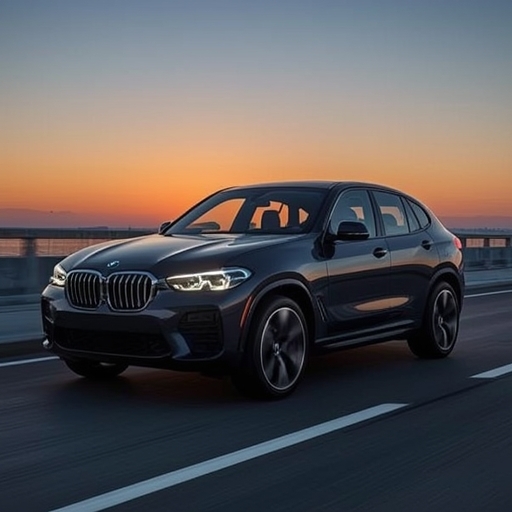
There is a certain poetic irony here: the iX3, a symbol of BMW’s technological reinvention, simultaneously channels the authentic driving spirit that established its reputation decades ago. It reaffirms the company’s craftsmanship in harmonizing performance with refinement. Nevertheless, challenges remain. The matter of design, for instance, is polarizing. BMW’s recent aesthetic language has been bold, sometimes divisive, and the iX3’s sharp contours and assertive stance will not please every traditionalist. Yet, over the span of a day’s drive, its proportions and confident minimalism grow easier to admire, especially from its rear aspect where its electrified identity merges with understated elegance.
Pricing adds another dimension of tension. While official figures are pending, BMW forecasts an initial price near $60,000 for the 2026 iX3—roughly ten thousand dollars higher than the base gasoline-powered X3. Without the benefit of federal EV incentives, that price divergence could test consumer willingness, despite the vehicle’s clear technological advantages. However, for those who value progress, sustainability, and sophistication, the distinction between these two models is far more than monetary. The iX3 effectively redefines what an SUV of its size and pedigree can be—spacious, swift to charge, liberating from range anxiety, and rewarding to drive. It stands not merely as an electric evolution but as an embodiment of BMW’s vision for its next era. In a market eager yet hesitant about electrification, the iX3 makes a persuasive case that the Neue Klasse was worth the wait.
Sourse: https://www.theverge.com/transportation/837394/bmw-ix3-first-drive-neue-klasse-specs-price