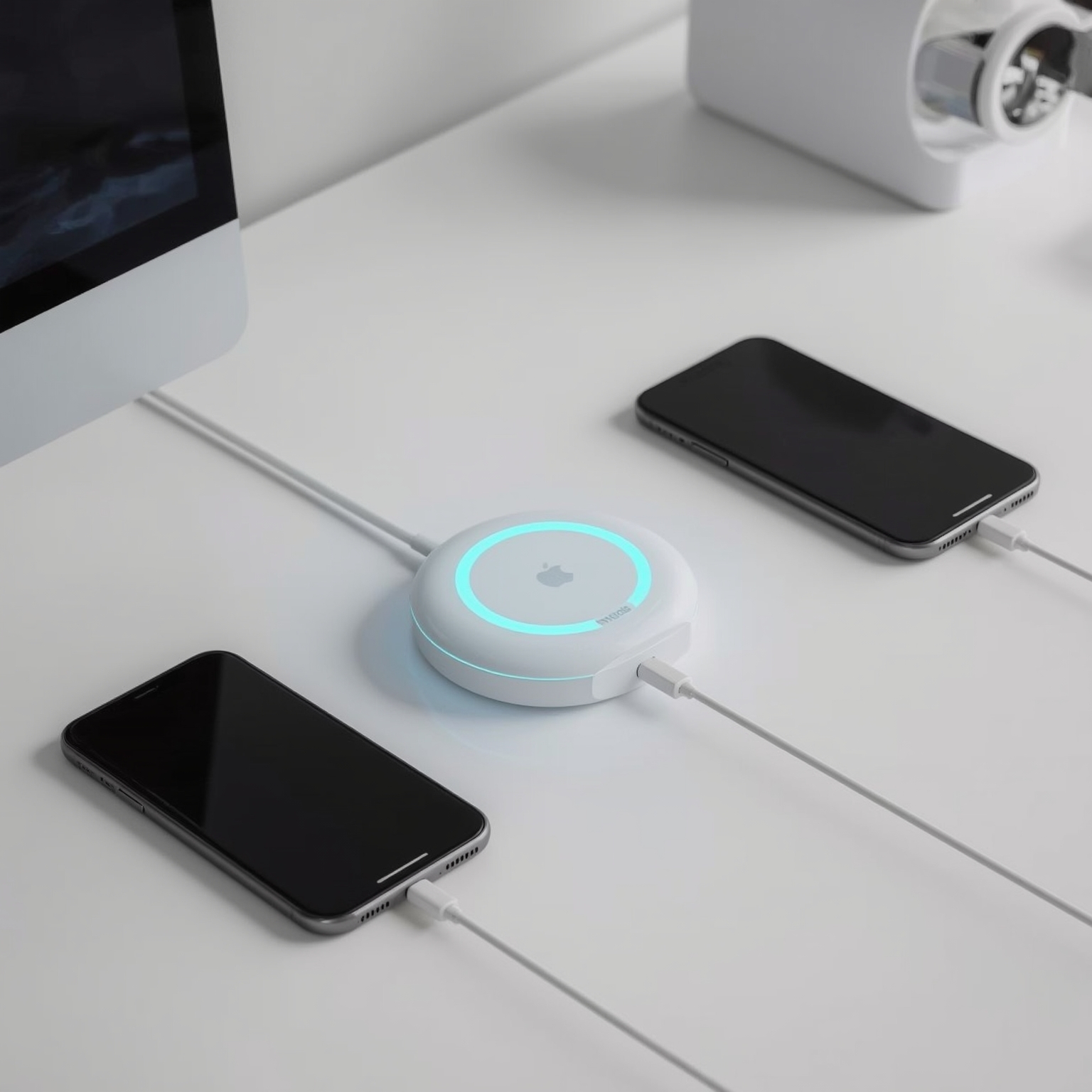
Approximately one year ago, Apple unveiled an upgraded iteration of its MagSafe charging puck, a wireless charging accessory specifically engineered to supply its then‑new iPhone 16 lineup with a significantly improved power rate of 25 watts. While this higher‑speed charging was a notable advancement for users of the newest flagship devices, Apple imposed certain limitations when the same puck was paired with other hardware. For example, older generations of iPhones, as well as compatible accessories outside Apple’s most recent product releases, were restricted to slower charging speeds, capped at a maximum of 15 watts. This created a situation in which only the latest Apple devices could truly benefit from the enhanced performance of the updated puck, while legacy devices remained constrained by the earlier standard.
Today, Apple has introduced yet another refinement of the MagSafe Charger, and this model represents a more substantial leap in terms of compatibility and future‑proof integration. The refreshed version now fully embraces the Qi 2.2 wireless charging standard. This development means that charging at the elevated 25‑watt speed is no longer reserved exclusively for Apple’s own latest devices but is now extended to a wider ecosystem of technology that supports the same wireless standard. As a result, owners of other premium smartphones, such as Google’s Pixel 10, can take advantage of the faster wireless experience when using Apple’s charger. The update, which was noted and confirmed by publications like *MacRumors* and *9to5Mac*, therefore reflects Apple’s gradual but meaningful alignment with broader industry specifications rather than maintaining a completely closed ecosystem.
Interestingly, the product’s existence was not a complete surprise. Initial evidence of the new charger surfaced several months back, when a filing appeared on the website of Taiwan’s National Communications Commission, essentially revealing its development before Apple’s official announcement. Now that it has formally launched, customers can purchase the device through Apple’s official online store. The company is offering two configurations: a version with a one‑meter USB‑C cable priced at $39, and a longer two‑meter cable edition available for $49. This tiered approach provides consumers with the option to select whichever length best suits their charging environment, whether it be a portable arrangement for travel or a more permanent setup at home or the office.
It is worth recalling that Apple’s initial move to introduce 25‑watt wireless charging with the iPhone 16 family came slightly ahead of the official finalization of the Qi 2.2 specification, which was only formally ratified earlier this year. Because Apple had developed its own hardware in advance of the standard, faster performance was at first only achievable through Apple’s in‑house MagSafe solution. Third‑party wireless chargers, even high‑end models, could not match the speed because the updated standard had not yet been rolled out. However, with the iPhone 17 lineup now explicitly built with Qi 2.2 compatibility, and with most iPhone 16 models gaining the same ability once the upcoming iOS 26 software is installed, the new situation is far more flexible. These devices are no longer dependent solely on Apple’s puck for maximum efficiency; instead, they can take advantage of any modern charger that conforms to the revised Qi 2.2 guidelines, thereby increasing consumer freedom and promoting broader industry adoption of common standards.
There is, however, one notable caveat. Customers considering an upgrade to the iPhone Air should be aware that Apple has limited its wireless charging performance to a ceiling of 20 watts. Unlike the Pro and standard iPhone 17 models, which can reach the full 25‑watt benchmark under the Qi 2.2 standard, the Air will not deliver the same level of efficiency. This distinction subtly reinforces the tiered nature of Apple’s product lineup, reserving the absolute fastest charging capabilities for its higher‑end devices while still offering respectable, yet slightly reduced, performance on more accessible models.
Sourse: https://www.theverge.com/news/776411/apple-magsafe-charger-qi2-2-wireless-charging-25w