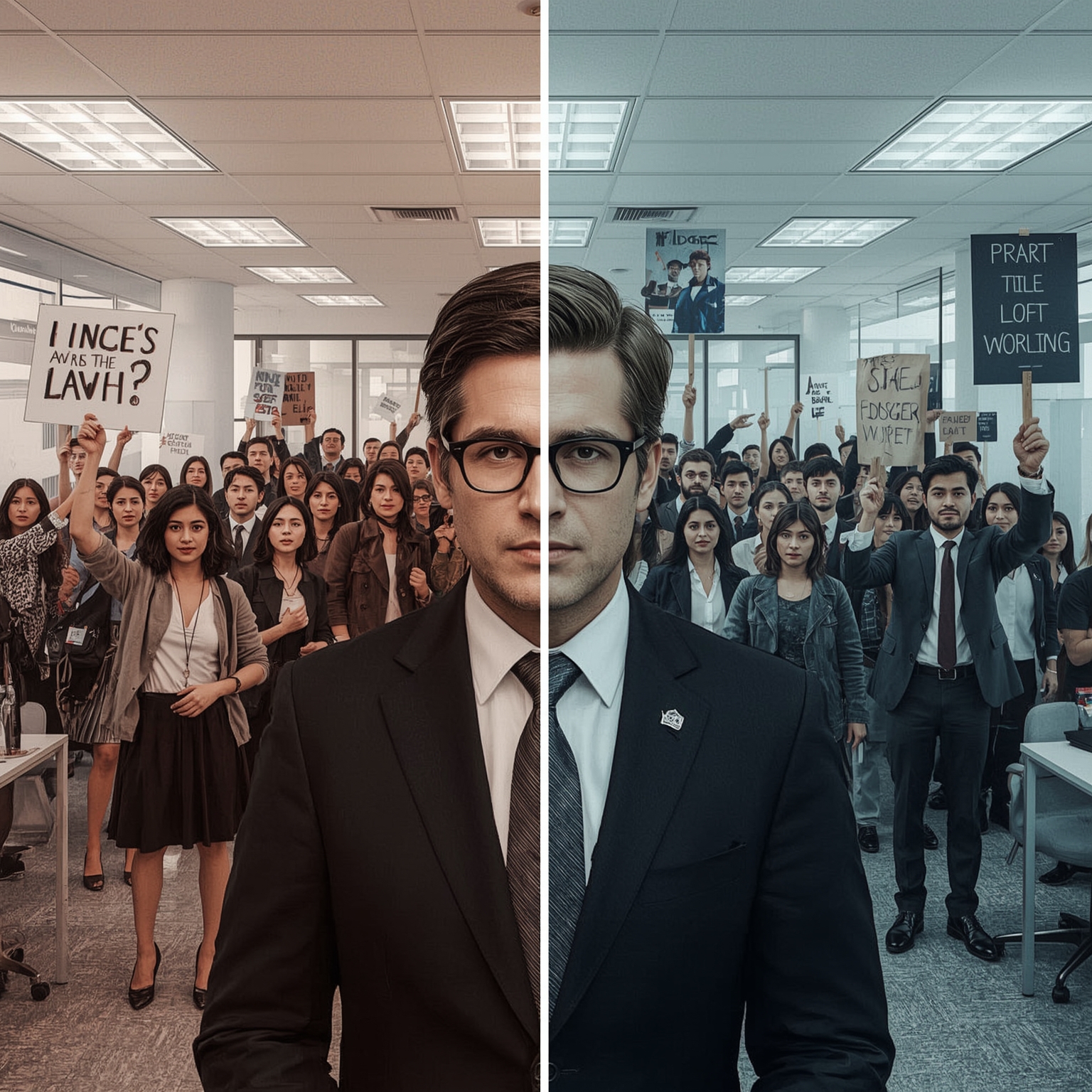
Microsoft President Brad Smith delivered an unusually direct and uncompromising message to his workforce in response to recent internal activism concerning the war in Gaza: employees who participated in protest actions within his office could not expect to retain their positions at the company. His comments came during a closed-door staff meeting on Thursday, where he firmly defended the controversial decision to terminate several employees involved in disruptive demonstrations. Smith explained that, given the seriousness of the allegations surrounding Microsoft’s technology and its potential role in the region, the company had retained the prestigious legal firm Covington & Burling to independently examine whether any company systems had been misapplied for surveillance operations targeting Palestinians.
For months leading up to this meeting, Microsoft has faced recurring, and lately more confrontational, protests from employees who have urged the company to reassess—if not sever altogether—its ties with the Israeli military, which remains engaged in intensive operations in Gaza. The tension escalated dramatically in late August when a group of demonstrators entered Brad Smith’s personal office and staged a sit-in, refusing to leave. Microsoft’s leadership reacted decisively: four employees who directly participated in these disruptive occupations, both in Smith’s office and elsewhere on the corporate campus, were subsequently dismissed.
In his remarks, Smith drew a very clear distinction between lawful expression of dissent and acts he considered unacceptable breaches of workplace norms. He reminded employees that those talented enough to gain employment at Microsoft should also understand the basic expectation that storming into private offices, forcefully occupying buildings, and seizing control of corporate space is incompatible with remaining employed. The protests, he argued, extended far beyond peaceful demonstration: participants trespassed on restricted property, rearranged and barricaded Microsoft-owned furniture, and thereby compromised both office functionality and workplace security.
Among the terminated staff was Riki Fameli, a software engineer who had been contributing to Microsoft’s Azure Storage team. Fameli later shared with Business Insider a critique of Smith’s framing of events, suggesting that the president’s definition of acceptable protest seemed limited to quiet petitioning or the use of official corporate channels—methods which, according to Fameli, had repeatedly proven ineffectual. Employees advocating on this matter, Fameli asserted, had come to regard those formal mechanisms as bureaucratic dead ends that stifled rather than facilitated meaningful dialogue.
During the same internal meeting, Smith attempted to ease the concerns of employees who worried that the company was overlooking potential human rights implications. He emphasized that Microsoft remains committed to upholding both international human rights standards and the integrity of its contractual obligations, all while safeguarding the well-being of its staff. To address the unfolding controversy more systematically, Smith pointed out that the company is designing new mechanisms by which employees may confidentially report concerns. These include situations in which workers suspect that Microsoft’s technology is being exploited by customers for purposes such as mass surveillance, internal misconduct within the workplace, or clear violations of the firm’s established standards of business conduct.
Smith explicitly referenced an investigative article published by The Guardian on August 6, which alleged that a specialized unit within the Israeli Defense Forces had been relying on Microsoft’s Azure cloud infrastructure to conduct comprehensive surveillance operations directed at Palestinians. He acknowledged that the piece introduced Microsoft’s leadership to information not previously known within the company. Smith categorically maintained, however, that Microsoft’s policies do not permit its products or services to be used in ways that facilitate widescale surveillance of civilian populations.
He further noted that, in addition to implementing new reporting mechanisms, the company is strengthening its commitment to sustained dialogue with internal employee resource groups. Specific examples he cited included both Jews at Microsoft and Palestinians and Allies at Microsoft, signaling a dual effort to encourage nuanced, respectful engagement across different perspectives within the workforce. Through these expanded conversations, Smith hopes to foster understanding and provide employees with more constructive avenues to voice their ethical concerns.
Ultimately, the events at Microsoft illustrate the tension deeply embedded in modern corporate life, where large global organizations must continually balance respect for employee activism, the responsibilities of corporate governance, and the far-reaching ethical implications of operating in conflict zones.
Sourse: https://www.businessinsider.com/microsofts-exec-addresses-protests-over-ties-to-israeli-military-2025-9