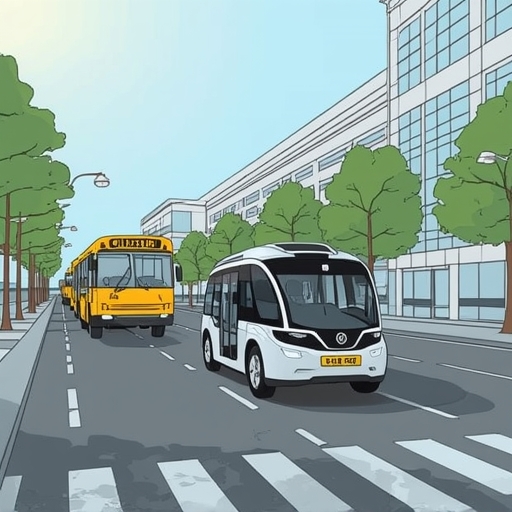
The National Highway Traffic Safety Administration (NHTSA) has recently intensified its scrutiny of Waymo, the autonomous vehicle division owned by Alphabet, requesting a comprehensive array of information regarding the company’s self-driving technologies and operational procedures. This request follows alarming reports from the Austin Independent School District, which alleged that Waymo’s robotaxis had unlawfully passed stopped school buses on no fewer than nineteen occasions during the current academic year. Such incidents, if accurate, raise serious concerns about the interaction of autonomous driving systems with some of the most protected and sensitive elements of roadway safety — school buses engaged in the pickup and drop-off of children.
In a formal correspondence dated December 3, regulators from the NHTSA specifically sought detailed technical documentation about Waymo’s fifth-generation autonomous driving software, along with a breakdown of its real-world operational parameters. The letter, first brought to public attention through exclusive reporting by Reuters, was delivered roughly two months after the federal safety agency had initiated a formal investigation into Waymo’s conduct. That inquiry aims to determine the extent to which the company’s driverless vehicles adhere to traffic laws and safety protocols when operating in the vicinity of stationary school buses displaying stop signs and flashing lights.
The inquiry originated within the NHTSA’s Office of Defects Investigation (ODI), the division responsible for identifying potential risks or failures in vehicle performance that could endanger the public. The ODI’s initial examination was prompted in October when investigators reviewed a video depicting a Waymo robotaxi in Atlanta maneuvering around a halted school bus that was actively unloading children. The bus had its stop sign extended and signal lights flashing — clear indicators to surrounding traffic that all movement must temporarily cease. Despite these warnings, the footage reportedly shows the autonomous vehicle passing perpendicularly in front of the bus, approaching from its right side before executing a left turn that took it around the front of the bus and onto the next street.
In response to that event, Waymo explained that its system had encountered an unusual situation: the school bus, according to the company, was partially obstructing the entrance to a driveway. As a result, the robotaxi’s sensors and cameras allegedly lacked a clear line of sight to the bus’s flashing lights and stop sign. Following an internal review, Waymo rolled out a software update across its fleet, designed to refine the performance of its perception and decision-making systems in similar environments. The company asserted that these updates would enable its vehicles to better detect and appropriately react to stationary school buses in complex traffic conditions.
Despite these assurances, troubling reports of further unlawful passes have persisted. The Austin Independent School District claims that since the onset of the 2025–26 school year, there have been nineteen separate occasions in which Waymo’s autonomous vehicles have ignored the legally required stop around school buses engaged in student boarding or disembarking. In a letter to Waymo, district representatives highlighted that at least five of these violations occurred after the company’s most recent software patch, issued on November 17. This finding has led local officials to question both the sufficiency and the timeliness of Waymo’s attempted corrective measures.
In an email statement addressing these concerns, Waymo reiterated that safety remains its foremost priority and defended its overall track record. The company cited internal metrics demonstrating significant safety improvements compared to human drivers: specifically, a fivefold reduction in collisions involving injuries and a twelvefold decrease in pedestrian injury incidents. These statistics, Waymo argues, illustrate the transformative potential of autonomous technology to enhance roadway safety and reduce human error, which remains the prevailing cause of most traffic accidents.
Nonetheless, the Austin School District remains unconvinced. School officials have formally requested that Waymo suspend the operation of its autonomous vehicles during specific high-risk time windows — the early morning and late afternoon hours when children are most likely to be traveling to and from school. In a strongly worded letter dated November 20, the district urged the company to halt its driverless operations from 5:20 a.m. to 9:30 a.m. and again from 3:00 p.m. to 7:00 p.m., until the company can conclusively demonstrate that its software has achieved full legal compliance and no longer endangers student safety. “Waymo’s software updates are clearly not functioning as intended, nor progressing at the pace required,” the district stated, emphasizing the immediate need for an operational pause until a verified and fully effective solution can be confirmed.
Just four days after the district’s letter, federal investigators within the ODI issued a follow-up letter to Waymo, acknowledging their awareness of the school district’s complaints. The agency sought clarification on three critical points: whether Waymo had complied with the district’s demand to temporarily cease operations; whether its recent software modifications adequately mitigated the root safety issues; and whether the company intended to consider a recall of affected systems or vehicles if further risk was identified. These questions underscore the growing intersection of regulatory vigilance and emerging autonomous technology — a space where the boundaries between innovation and accountability are being continuously tested.
In its most recent public statement, Waymo reaffirmed its dedication to ongoing improvement, expressing its intent to continue collaborating closely with the NHTSA and other oversight bodies. The company underscored its mission to become “the world’s most trusted driver,” pledging that each software iteration will move closer toward achieving a level of safety and reliability exceeding that of human drivers. Although Waymo maintains that its performance already surpasses human benchmarks in several measurable categories, federal regulators and local authorities are determined to verify these claims through rigorous oversight, ensuring that innovation does not outpace the imperatives of public safety and the rule of law.
Sourse: https://techcrunch.com/2025/12/04/feds-ask-waymo-about-robotaxis-repeatedly-passing-school-buses-in-austin/