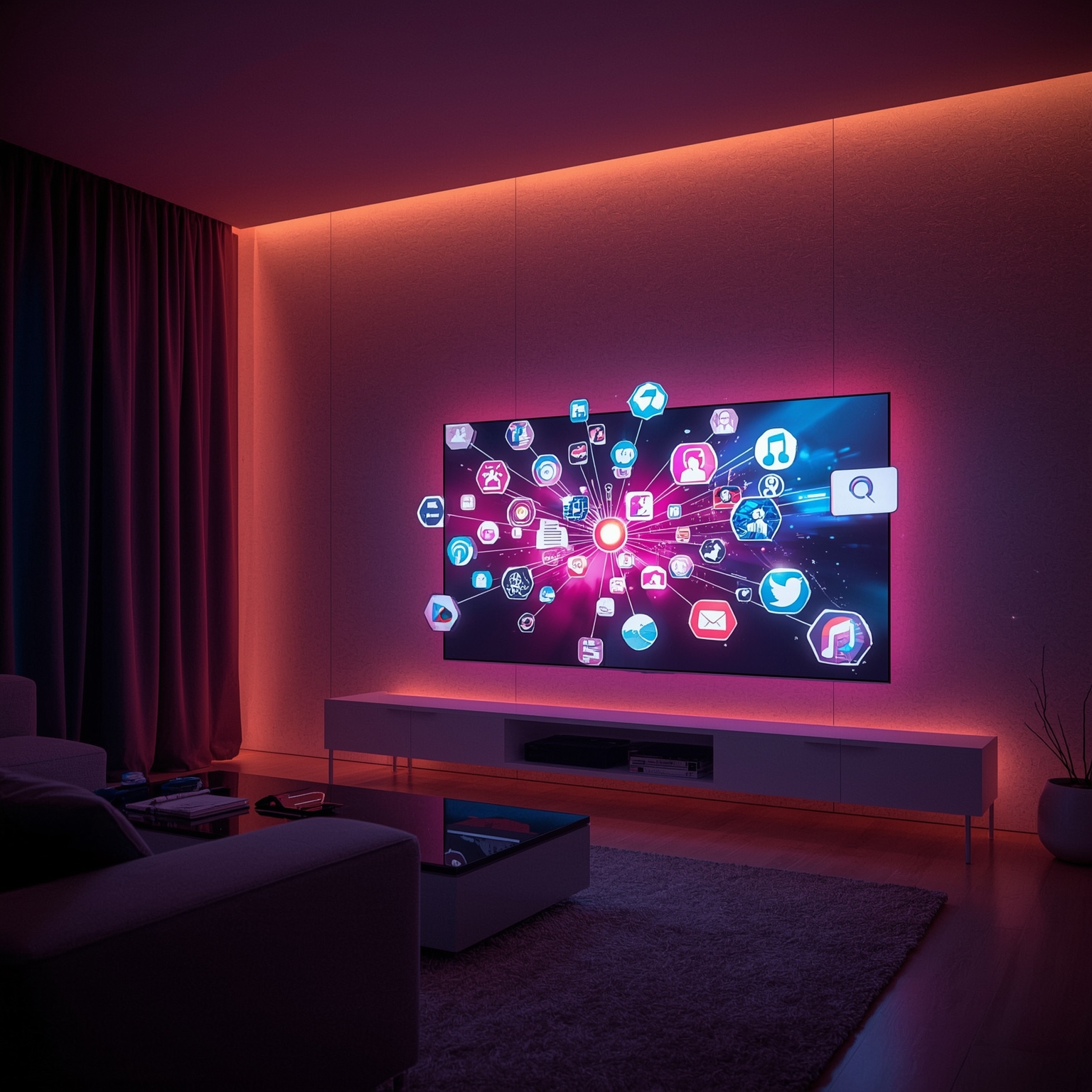
Are you weary of encountering the same handful of advertisements every time you settle in to stream your favorite shows or movies? For many viewers, the endless repetition of three or four commercials feels monotonous and disruptive. According to Roku, however, this unpleasant cycle may soon come to an end. The company, best known for producing smart TVs and streaming devices, is preparing a major transformation of its advertising model. Its vision is to introduce a dramatically broader and more varied pool of advertisers, such that the ads you see while streaming will resemble the diversity and unpredictability of the content that fills your Instagram feed. This new approach could introduce viewers to brands they have never heard of, and in some cases, to promotional videos that appear uncanny or eerily synthetic.
The foundation of this dramatic evolution lies in Roku’s embrace of generative artificial intelligence. Dan Jedda—who serves as both Chief Financial Officer and Chief Operating Officer of the company—has publicly outlined these ambitions on multiple occasions, including recent discussions at investor conferences hosted by Citi and Bank of America. Jedda emphasized that the days of relying on only several hundred major advertisers are numbered. Rather than a closed circle of roughly two hundred companies purchasing the bulk of advertisements, he envisions a marketplace where as many as one hundred thousand different advertisers will be vying simultaneously for the attention of streaming audiences.
Anyone seeking a glimpse into the future of television advertising would do well to observe Roku closely. As a publicly traded company that focuses almost exclusively on smart TVs and streaming services, Roku is required to disclose more data than corporate giants like Amazon or Google, whose television efforts are only one facet of their sprawling business empires. Furthermore, Roku holds the leading market position within the United States. Jedda proudly noted that Roku devices are responsible for more than one-fifth of all television viewing across the nation. To put that dominance into perspective, Roku’s smart TVs and streaming products can now be found in over half of all American broadband-enabled households. Confident in continued growth, Jedda even predicted that the number of households using Roku for streaming would soon exceed one hundred million.
The company’s proprietary streaming platform, The Roku Channel, has likewise been flourishing. Over the past year, the amount of time audiences spent watching it increased by a striking eighty percent. While Jedda acknowledged that the pace of expansion might moderate somewhat going forward, he still projected sustained growth in the range of fifty-five to sixty percent annually. According to metrics from Nielsen, the Roku Channel has reached a scale where, in terms of total television viewing in July, it commanded 2.8 percent of national share. This placed it ahead of highly recognized platforms such as Peacock and HBO Max—a sign that Roku is becoming a serious contender within the broader streaming universe.
Naturally, the growth in viewing hours has produced a parallel increase in advertising opportunities. Yet Roku has struggled to keep up with the pace of demand among advertisers. Jedda candidly explained to investors that while the supply of available ad inventory was rising rapidly, only about half of that inventory was actually being sold. Consequently, a significant portion of potential advertising space remains untapped. Roku’s strategy for filling these gaps involves opening the doors of streaming advertising to smaller players: local car dealerships, family-owned shops, neighborhood restaurants, and an array of other community-based enterprises known collectively as small and medium-sized businesses, or SMBs.
Historically, such SMBs have been effectively excluded from the connected TV advertising space. Instead, their digital marketing budgets have been channeled toward search ads or promotional campaigns on platforms like Facebook, Instagram, and Google. Roku now intends to redirect some of these expenditures toward television, enabling those same businesses to reach consumers in their living rooms. Central to this effort, the company is building self-serve tools that simplify the process of buying ad slots. Yet for many smaller enterprises, the obstacle extends beyond ad purchasing; producing a polished television commercial traditionally required resources, expertise, and budgets far out of reach for local businesses.
This is where generative AI becomes crucial. Jedda explained that artificial intelligence can dramatically lower the barrier to entry by enabling the creation of professional-grade video ads in a matter of minutes. A small restaurant, for example, could generate a high-quality spot without hiring a costly production team, thereby entering an advertising market once reserved for corporate giants. Roku has already begun integrating generative AI directly into its self-service platforms, offering businesses a seamless way to create, produce, and broadcast their own commercials.
Importantly, Roku is not alone in exploring this frontier. Other companies have recognized the potential of AI-driven ad creation. For instance, Magnite—a major player in the digital advertising world—recently acquired the startup Streamr, which claims to have already empowered thousands of businesses to generate television ads using similar technology. Jedda acknowledged that the competitive landscape will not be monopolized by a single firm. Reaching millions of small businesses is too vast a challenge for one company, leaving room for multiple challengers. Even so, he stressed that Roku is undertaking an assertive effort to capture as much of this market as possible, deploying targeted marketing strategies and dedicated sales teams to court SMBs.
The message for viewers, then, is clear: streaming platforms are on the cusp of hosting a wave of AI-generated advertisements. In the near future, sitting down to watch TV may expose audiences to an experience that feels simultaneously more diverse and more artificial—a world in which the commercial break is populated not only by household names but also by local businesses, each armed with cutting-edge AI tools. The age of repetition may soon give way to an age of relentless variety.
This analysis comes from Lowpass, a column authored by Janko Roettgers that examines the shifting interplay of technology and entertainment, presented weekly for subscribers of The Verge.
Sourse: https://www.theverge.com/lowpass-newsletter/776248/roku-ai-ads