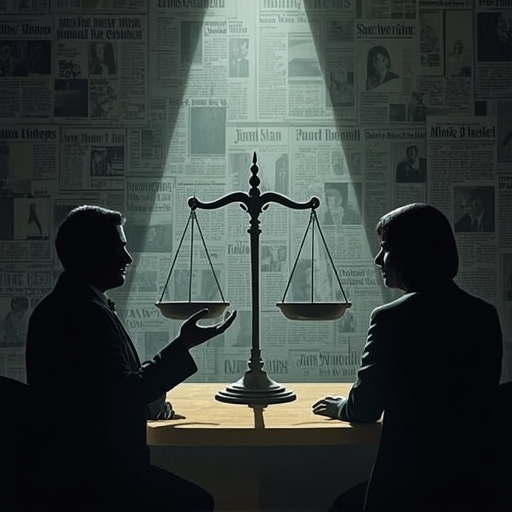
On Monday morning, under the gray skies of Lower Manhattan, dozens of curious citizens stood shoulder to shoulder outside 100 Centre Street, each hoping to secure one of the few coveted seats inside the courtroom. Their goal was simple yet fervent: to listen firsthand to the testimony presented by the state against Luigi Mangione, the man accused of fatally shooting UnitedHealthcare CEO Brian Thompson exactly one year earlier. The atmosphere buzzed with anticipation—some were loyal supporters, others mere spectators—but all were drawn to witness the unfolding of a case that had gripped the nation’s attention.
Despite the case’s enormous media footprint—countless articles, memes, and viral images reaching millions—the in-person crowd had diminished substantially since the initial court appearance in February. Back then, throngs of spectators and activists had packed the courthouse, spilling into corridors and public spaces. What remains now is a smaller, more streamlined group, joined by a modest protest organized by the healthcare reform coalition People Over Profit NYC. Their chants and placards have grown more coordinated, their messaging more refined. I spotted many familiar faces in the line outside—people I had seen at earlier hearings—though the chaotic fervor of February has since been replaced by something more deliberate, more polished. Like many maturing grassroots movements, the effort surrounding Mangione’s case has evolved into a semi-professional operation: supporters hire line-holders to secure seats, arrive wearing coordinated T-shirts, and approach the press with a mixture of caution and purpose. When they do engage with reporters, their responses are careful and disciplined, laser-focused on affirming their central rallying cry—that they stand not just for Mangione, but for the principle of a fair and impartial trial.
While some in the public queue had camped outside for days, an even larger contingent had assembled from the media. Swarms of reporters and photographers surrounded the courthouse, outnumbering Mangione’s supporters several times over. Entire blocks of press tents sprouted up, housing camera crews and correspondents broadcasting live updates to eager audiences online. Photographers balanced phones on tripods to livestream the scene, while news organizations competed to produce the most attention-grabbing, outrage-fueled headlines. One tabloid, the New York Post, emblazoned its front page with “Mangione and the Maniacs,” encapsulating the media’s appetite for spectacle over substance.
This contest over public narrative is not new—it has existed since before Mangione’s arrest. Even in the immediate aftermath of Brian Thompson’s death, the story of the crime was inseparable from the viral discourse surrounding it. Each factual report about the killing was mirrored by commentary dissecting the disturbing wave of online “celebration” that accompanied the news. For many observers, the public’s gleeful or sardonic reactions were as disquieting as the act of violence itself. From the outset, the people—faceless, digital, and diffuse—were not passive consumers of this story. They were participants in it, indirectly shaping the cultural and moral narrative that enveloped Mangione’s name.
As the case advances toward trial, questions of perception and optics have taken center stage. The defendant’s attire, posture, and even the manner of his courtroom entrance have become topics for national debate. Supporters and detractors scour images for symbolic cues—Was his suit too somber? Did the absence of handcuffs signal favoritism or fairness? Mangione’s defense team has argued that visible restraints could subtly prejudice a jury and infringe upon his constitutional right to be presumed innocent. Their client maintains a plea of not guilty on all counts. Meanwhile, the prosecution, bolstered by parallel charges in Pennsylvania and federal filings that could carry capital consequences, continues to frame its narrative around consistency and transparency.
On the first day of pre-trial hearings, Mangione appeared wearing a dark gray suit, an unadorned dress shirt, and no visible shackles. This sober image sharply contrasted with his September appearance, when he had been brought into court in a prison-issued khaki uniform, wrists cuffed heavily in chains. Now, uncuffed and permitted to take notes, Mangione embodied a quieter dignity. Yet among his supporters, questions proliferated. Why was he ushered through a side entrance, out of view of the waiting cameras? Why did court officers stand stiffly behind him during proceedings? And why was he seated apart from his lead attorney, Karen Friedman Agnifilo? The speculation extended even to his appearance—his cropped haircut prompting online debates over whether such details were strategic or imposed. Beneath these murmured questions lies a deeper anxiety: whether each decision, each seemingly minor detail, might tip the scales toward the prosecution or the defense.
Inside, the atmosphere maintained an outward calm. Strict judicial decorum prevailed, suppressing the theatrics that so often animated the protests outside. Even so, every word uttered under Judge Gregory Carro’s watch was destined to echo far beyond the walls of the courtroom. Social media users, particularly those aligned with Mangione’s cause, followed each update in real time, parsing them like scripture. Attendees later hosted informal Q&A livestreams, translating legal minutiae into digestible narratives for digital audiences. It is as though the virtual world has encroached upon the hallowed order of the law: jurors and clerks share space—if not physically, then spiritually—with Redditors and Twitter commentators dissecting shirts, sighs, and courtroom whispers.
At the heart of the week’s hearings lay a dispute over evidence: which materials, obtained at the time of Mangione’s arrest in a Pennsylvania McDonald’s, should be admissible. His defense maintains that a notebook and handgun taken from his backpack were seized unlawfully, without a search warrant, and should thus be excluded. They also contend that statements given to Altoona police officers were improperly collected, as Mangione’s Miranda rights were allegedly withheld. The prosecution countered by calling a procession of witnesses—from a New York Police Department information sergeant to surveillance technicians, state correctional officers, and Pennsylvania law enforcement officers—all recounting fragments of the investigation that led to his capture on December 9, 2024.
In their testimony, a strangely cinematic image reemerged: the moment Mangione was handcuffed, while the Christmas standard “I’ll Be Home for Christmas” played incongruously over the McDonald’s speakers. This surreal juxtaposition lingered in the courtroom, prompting quiet, uneasy laughter from spectators.
Among the more contentious testimonies came from correctional officers stationed at the State Correctional Institution at Huntingdon. One, Officer Tomas Rivers, described unguarded conversations with Mangione as the accused awaited transfer. Rivers recalled that Mangione seemed preoccupied with the media portrayal of both himself and the broader implications of Thompson’s murder. While the mainstream press dwelled on the shooting itself, Mangione, Rivers claimed, was aware that social media discourse increasingly fixated on the healthcare system and its perceived failures. Such talk, he implied, gave the accused a strange sense of validation. Rivers also testified that prison administrators isolated Mangione to prevent any possibility of self-harm, referencing the infamous case of financier Jeffrey Epstein as a cautionary precedent.
In their private exchanges, Mangione lamented being likened to Ted Kaczynski merely because he had once reviewed one of Kaczynski’s books on Goodreads. Later evidence shown to the court included a crumpled handwritten to-do list reportedly confiscated from his belongings—part map, part calendar, containing mundane and cryptic notes alike. One entry referenced purchases at Best Buy; another, according to journalist Lorena O’Neil’s report, mentioned “archiving” his social media accounts. The image flickered briefly on the courtroom monitor before being taken down, leaving observers squinting to discern its implications.
Other witnesses, including Officer Matthew Henry, recounted fragmented statements Mangione allegedly made about possessing both foreign currency and a 3D-printed firearm. During cross-examination, defense attorney Marc Agnifilo questioned the reliability of such claims, suggesting that a man under constant observation would unlikely volunteer such incriminating information unprompted.
Beyond these procedural battles lies a subtler tension: the saturation of public knowledge. Every bizarre or chilling detail—bullets engraved with words like “delay,” “deny,” and “depose,” the memes, the parodies, the endless commentary—has turned the case into a cultural phenomenon. By the time jury selection begins, even casual observers may carry with them preformed impressions, seeded months earlier by jokes and viral posts.
By Friday, proceedings slowed to a halt; Mangione was too ill to attend. His absence sparked murmured speculation among supporters—was it a tactical decision, or mere misfortune? Did the Metropolitan Detention Center provide flu vaccines or adequate winter clothing? Concern, curiosity, and conjecture merged seamlessly, as they so often do in this case.
Public narratives around Mangione’s supporters have grown almost as polarized as those surrounding the defendant himself. Media portrayals favor caricature: frenzied, eccentric women allegedly obsessed with a man accused of murder. Yet observation reveals a more nuanced reality. Men feature prominently among attendees, many driven by sincere belief in due process rather than infatuation. Several supporters voiced irritation at the double standard they perceive—journalists lambast them as fanatics while engaging in their own voyeuristic scrutiny. One recounted witnessing a reporter use binoculars during a hearing, whispering indignantly, “If one of us had done that, we’d have been ridiculed.”
During recess, I encountered a group of women in the restroom adjusting their clothing, fixing hair, and debating small aesthetic details. They asked why their grooming should be criticized when reporters themselves touched up concealer moments later. Their question revealed the difficult intersection between appearance, perception, and gender that colors so much of the commentary surrounding this trial.
Even within Mangione’s camp, unity proves elusive. Some frame their activism around systemic reform—using the case as a launching pad for debates about healthcare inequality—while others focus exclusively on Mangione’s legal defense. Still others participate only casually, liking posts or sharing memes under the slogan “Free Luigi,” contributing to the movement’s momentum without deeper involvement. A small number attend hearings theatrically dressed, their bold costumes ensuring that cameras find them first. Meanwhile, quieter voices with slogans like “Justice is not a spectacle” or “Without a warrant, it’s not a search—it’s a violation” lament their invisibility in mainstream reporting.
One supporter summarized their motivation in plain yet fervent terms: “He has a right to a fair trial, and we feel that right is under threat. Our presence is a protest against that unfairness.” Yet, as the week progressed, even the line between advocacy and fandom blurred. When Judge Carro announced his intent to seal exhibits—body camera videos, police photos, and 911 recordings—both journalists and supporters erupted in frustration, albeit for different reasons. Media organizations argued for transparency; fans, suspicious of prejudice, interpreted it as another sign of injustice. Online, indignation swelled, culminating in vitriolic posts accusing reporters of colluding with prosecutors.
Nevertheless, when court filings were later unsealed in part—documents jointly approved by both prosecution and defense—the same online communities eagerly reuploaded them to forums and social networks, dissecting every page for insight. In that contradiction lies the essence of the Mangione phenomenon: a movement torn between distrust of the system and dependence on its every leaked artifact. What transpires inside 100 Centre Street is a mirror for a digital age in which the search for truth competes endlessly with the desire for spectacle.
Sourse: https://www.theverge.com/policy/839054/luigi-mangione-evidence-suppression-new-york-internet-fandom-media