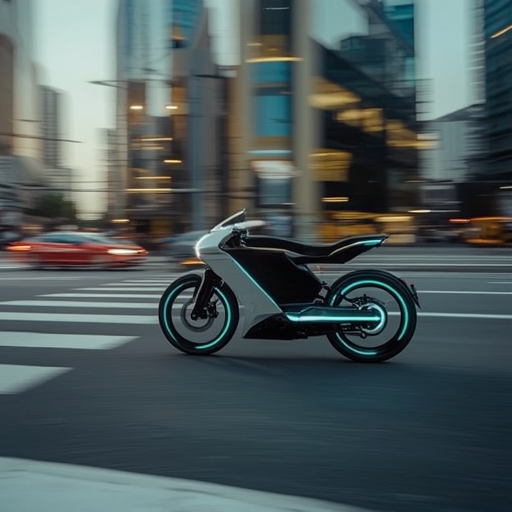
For countless people across the United States, the automobile remains a deeply ingrained symbol of necessity — a default assumption for modern life and mobility. Yet for a growing number of us, myself included, the bicycle represents not merely an alternative but an equally essential means of transportation. My sturdy steel Fuji road bike, which feels almost like an extension of my own body, carries me everywhere I need to go: to work in the morning, to the grocery store for everyday necessities, and across the city to meet friends. It functions as both a practical vehicle and a personal companion. When fatigue strikes or the weather shifts abruptly from sunny to stormy, I can simply lift it onto the subway and continue my journey seamlessly. Beyond its flexibility, it is remarkably economical to maintain and effectively doubles as a fitness machine that eliminates the need for a gym membership.
In New York City—my home and an ever-evolving arena for experimentation in urban transportation—the streets are now teeming with e-bikes, the electrically enhanced counterparts to traditional road bicycles. These agile machines, widely used by more than 135,000 members of Citibike’s bike-share network, have also been wholeheartedly adopted by local businesses. Delivery workers value them for their ability to glide past the city’s notorious traffic snarls, and major corporations, including Amazon, view them as an efficient tool to deliver goods while simultaneously curbing carbon emissions.
So when I learned that one of my colleagues had been receiving messages from a new e-bike company intriguingly named “Also,” I found it impossible to resist the opportunity to investigate. Having long contemplated purchasing an e-bike myself, I was immediately curious when I read that the company’s TM-B model promised distinctive technological features. My interest deepened upon discovering that the brand had spun out of Rivian, the $21 billion electric vehicle manufacturer renowned for its sleek design philosophy and commitment to sustainability. Rivian had wisely retained a minority stake in the venture — a linguistic nod to the company’s philosophy: if you can drive a car, you can *also* ride a bike.
The young firm draws on Rivian’s advanced battery technology, incorporating the same cells found in Rivian vehicles while adopting the carmaker’s “simplicity-first” design ethos. Unlike most bicycle brands, which straddle both mechanical and electric product lines, Also focuses exclusively on battery-powered mobility. According to Pitchbook, the company has already amassed $305 million in funding, signifying strong investor confidence in the growing urban e-mobility sector.
Just before Thanksgiving, I arranged to meet Saul Leiken, Also’s director of product, for an in-depth look at their new $4,500 TM-B. We convened in Manhattan’s Chelsea neighborhood so that I could not only discuss the machine’s many features but also experience them firsthand. The test ride left me genuinely surprised by the bike’s versatility and confirmed its potential as both a supplementary and—potentially—a primary mode of transportation for countless households throughout the United States.
Like modern electric vehicles, the TM-B is profoundly computerized. While all e-bikes contain electronic components, this one operates on a more sophisticated level. Traditional pedal-assist bikes measure how hard a rider pedals and then regulate motor assistance accordingly; that process requires sensitive communication between sensors and the motor itself. Yet the TM-B—short for “Transcendent Mobility Bike”—takes this concept several evolutionary steps further. Rather than relying on a conventional chain, the pedals power a generator whose output is interpreted by an onboard computer—the heart of a proprietary system called “DreamRide.” This computerized intelligence then directs the motor, determining the exact level of assistance required. Like a modern smartphone or electric car, the TM-B can receive software updates wirelessly, ensuring that owners always have the latest refinements and performance improvements. “Everything’s software-defined,” Leiken commented during our ride, underscoring how the boundaries between transportation and technology have largely dissolved. Indeed, just as internal combustion engines have transitioned to “drive-by-wire” systems, this bike introduces the concept of “pedal-by-wire,” where mechanical linkages give way to digital communication.
When I began to ride in the “All Purpose” setting—one of several modes for varied conditions—the sensation was astonishingly natural. Despite relying on pedal assist, the system never felt intrusive or artificial; it responded smoothly, almost intuitively, as if the bike and I shared an unspoken understanding. Tapping a small display positioned atop the head tube allowed me to alter the level of assistance with ease. Manhattan’s terrain in our test area was mostly flat, and given the crisp, chilly weather, I realized I would not have perspired much even on a standard bike. Still, I appreciated how the DreamRide system would make traversing long-distance routes or steeper inclines—such as the climb over the Manhattan Bridge toward Brooklyn—effortless on warmer days.
Switching to “Sport” mode transformed the experience yet again. The system simulated the dynamic resistance and cadence of a traditional geared bicycle but replaced mechanical gear shifts with subtle haptic pulses transmitted through the pedals—a sensation remarkably reminiscent of a smartphone vibration that provided real-time feedback to my effort. It felt futuristic yet organic.
From a regulatory standpoint, e-bike classifications vary by jurisdiction, but most U.S. states recognize three categories. The TM-B qualifies as a Class 3 e-bike, meaning it can reach an impressive top speed of 28 miles per hour, roughly equivalent to an average car’s velocity on many New York streets—excluding major highways or late-night stretches of the outer boroughs. During our half-hour excursion, I neared that top speed several times. With the pedal-assist level dialed up, I easily maintained speeds in the mid-20s and found myself gliding past congested traffic lanes until a red light forced me to stop. Later, I experimented with the bike’s throttle—an orange button just under my right thumb—which propelled the machine to 20 miles per hour almost instantly. The burst of acceleration felt exhilarating, evoking the thrill of motorbiking but with the silent elegance of electricity. Yet the experience also demanded attentiveness and respect for safety, both mine and that of pedestrians around me.
The e-bike marketplace, as Leiken reminded me, is fiercely competitive and rapidly evolving. Analysts estimate that between one and two million e-bikes are sold annually in the U.S., although accurate figures remain elusive due to incomplete customs data and the broad categorization of imports. Nonetheless, growth projections remain robust—industry observer eCycle Electric anticipates a steady 14 to 25 percent annual expansion through 2030. Not all companies, however, have weathered this boom unscathed. Some, including Rad Power Bikes—boasting over half a million customers—face financial challenges, while VanMoof, the Netherlands-based icon of minimalist design, declared bankruptcy in 2023. Against this backdrop, Leiken believes that Also’s cautious timing and independent business model provide important advantages, ensuring that the company is not burdened by overproduction or reliance on unstable partners. What struck me most was the TM-B’s versatility: it can navigate urban roads, uneven terrain, and park trails with equal ease, functioning as both practical transport and exercise equipment.
The company is already iterating on its innovations. Some prototype components remain in flux: the digital bell, for example, emits sound via an integrated speaker and may soon evolve to include variable tones—one soft and another honking sharply, akin to a car horn. This effort mirrors the automotive industry’s requirement to design custom alert sounds for electric vehicles operating at low speeds. Additionally, Also has introduced the Alpha Wave helmet, a technologically advanced piece of protective headgear featuring integrated lights, speakers, and a noise-canceling microphone. Beyond traditional impact protection, it incorporates a novel “Release Layer System,” designed to mitigate the rotational forces that can lead to traumatic brain injuries.
Perhaps the most striking element, however, is the TM-B’s adaptable construction. The bike’s modular “top frames” allow for seats and accessories to be swapped effortlessly—whether to accommodate riders of different sizes, to convert the back into a larger bench, or to add a rack for hauling groceries or even a child seat. These attachments click securely into place using a sturdy mechanical lock coupled with an electrical connector that powers the rear lighting system, a thoughtful innovation virtually unseen in today’s e-bike market. Such flexibility directly supports the company’s mission: to reframe the bicycle as not merely a vehicle of recreation but a full-fledged substitute for the automobile in local mobility ecosystems.
Leiken summarized this vision succinctly: their goal is to make “bikes as transportation” a realistic standard. While a $4,500 price tag places the TM-B firmly in the premium range, its advanced feature set rivals models nearly twice as costly. Considering that an average used car in America now costs approximately $25,000—and new ones hover around $50,000—the proposition begins to look far more economical. Personally, I have long believed that e-bikes hold enormous societal promise, capable of replacing myriad short car trips while reducing emissions and congestion. Though my loyalty to my trusted Fuji remains intact and I remain undecided about buying an e-bike myself, testing the TM-B reinforced how transformative such machines could be. With car prices climbing and cities striving for cleaner, quieter, and more flexible mobility, a well-designed, robust e-bike like this might be precisely the kind of vehicle that thousands of Americans soon find impossible to live without.
Sourse: https://www.businessinsider.com/also-rivian-tmb-ebike-review-new-york-city-2025-12