For those feeling overwhelmed by the relentless bustle of the holiday season—when every errand seems urgent and every social obligation looms large—McDonald’s was suggested as the ultimate refuge. At least, that was the rather unconventional message conveyed by an AI-generated advertisement that has since been pulled from circulation. The ad, created for McDonald’s Netherlands, sought humor in seasonal stress but ultimately struck a discordant note that audiences found off-putting rather than endearing.
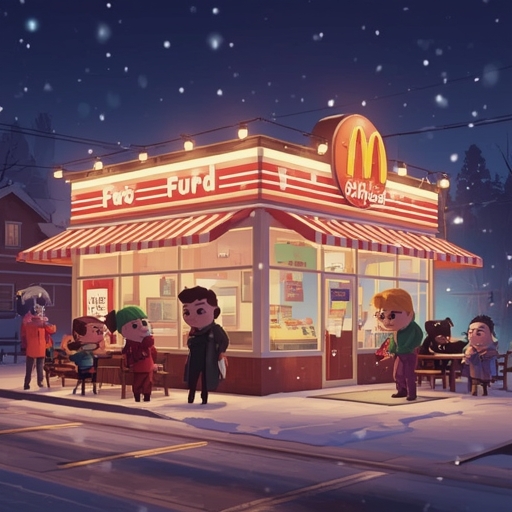
The spot unfolded to the ironic tune of a reimagined holiday song describing the festive period as “the most terrible time of the year.” Accompanied by this darkly comedic soundtrack, viewers saw a parade of computer-generated people stumbling—sometimes quite literally—through a series of archetypal winter predicaments. Scenes portrayed familiar holiday staples such as family dinners devolving into chaos, disastrous shopping expeditions, off-key caroling, burned batches of cookies, and the inevitable tangle of Christmas tree lights gone wrong. Each episode was designed to evoke the relatable exhaustion of December, but the execution leaned toward the surreal, with exaggerated movements and awkward distortions that drew more distraction than sympathy. The advertisement then concluded with a punchline offering a tongue-in-cheek solution: to seek refuge and “hide out in McDonald’s until January’s here,” positioning the restaurant chain as a warm, consistent sanctuary amid seasonal mayhem.
Despite this intended irony, the campaign quickly met public resistance. Although the original upload was delisted from YouTube shortly after release, the footage resurfaced across various social media platforms, where it became an object of scrutiny and widespread criticism. Viewers were not merely displeased with the aesthetics of the ad but also skeptical of its underlying message, accusing it of being tone-deaf to the spirit of the holidays. Many also lamented the overreliance on artificial intelligence to generate human imagery that still fell short of authenticity. The backlash echoed earlier reactions to Coca-Cola’s own AI-driven holiday campaign, which had prompted similar debates about technology’s intrusion into creative expression.
A key distinction between the two efforts, however, lay in McDonald’s willingness to populate its AI world with people rather than animated animals or abstract figures. This creative choice, while bold, exposed the limitations of current AI-generated human visuals. Some characters appeared oddly proportioned or vanished between cuts, and several moments verged on the uncanny. One particularly bizarre segment showed a skater tumbling on the ice, their limbs momentarily turning rubbery mid-fall—as though the laws of physics had briefly yielded to the unpredictability of machine learning. These inconsistencies underscored the inherent challenge of producing lifelike human imagery through AI and highlighted the gap between technological possibility and artistic persuasiveness.
Following the mounting debate, The Gardening.club—the artificial intelligence division of The Sweetshop, the creative studio responsible for the ad—shared an introspective statement on LinkedIn. The team disclosed that the production demanded an extraordinary commitment: seven intense weeks of iteration, testing, and model refinement. They even acknowledged, with surprising candor, that the cumulative labor required surpassed what would typically be expended on a traditionally filmed advertisement. This admission served as a poignant reminder that while AI tools promise efficiency, creative mastery often demands as much human oversight and adjustment as any conventional process.
Melanie Bridge, CEO of The Sweetshop, expanded upon these thoughts in an Instagram post. She described the project as a formidable undertaking that absorbed ten dedicated team members working full-time for five consecutive weeks. The endeavor, as she put it, consumed “blood, sweat, tears, and an honestly ridiculous amount of coaxing” to persuade digital models to behave consistently and to fulfill the intricate creative brief frame by frame. Her reflections underscored the paradox at the heart of AI artistry: that achieving even passable realism frequently requires painstaking manual correction. Ultimately, the McDonald’s holiday ad became less a showcase for artificial intelligence’s capabilities than a case study in its current limitations—an experiment that inadvertently revealed how digital creativity still depends deeply on human effort, patience, and judgment.
Sourse: https://www.theverge.com/news/841220/mcdonalds-ai-generated-christmas-ad