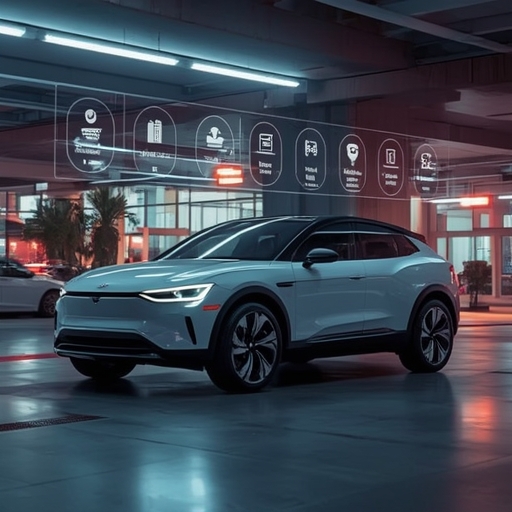
Rivian’s founder and Chief Executive Officer, RJ Scaringe, has articulated an ambitious and forward-leaning vision for the future of his company’s electric vehicles — one in which the cars possess the capability to maintain and service themselves. In a detailed conversation with *Fortune*, published on Tuesday, Scaringe was prompted to reflect on the appropriate and inappropriate roles that artificial intelligence should play within the automotive experience. Drawing upon his dual role as both technological innovator and company leader, Scaringe explained that while the topic of autonomous or self-driving systems has long dominated discussions within the electric vehicle industry, his aspiration is to see Rivian’s products push decisively beyond conventional definitions of driving automation.
Scaringe expressed strong confidence — describing himself as “very bullish” — that Rivian’s vehicles will soon reach a level of autonomy sufficient to independently manage a wide range of everyday tasks. In the near future, he suggested, a Rivian owner might find their vehicle functioning not merely as a mode of transportation but as an intelligent and highly capable assistant: a car that can deliver its owner to the airport, safely pick up children from school, or even run errands by retrieving items from the local store. These scenarios, once speculative, are now being positioned by Scaringe as practical extensions of Rivian’s technological roadmap.
However, his vision does not end with driving independence. Scaringe elaborated on an even broader ambition — transforming the mundane and often frustrating aspects of vehicle ownership, such as scheduling maintenance or coordinating repairs, into seamless, invisible processes. In his view, when a car experiences a mechanical issue, the requirement for the driver to contact a service center, arrange parts shipments, or coordinate logistics represents a distinctly negative and outdated aspect of customer experience. The ideal future, according to Scaringe, is one in which the vehicle itself manages these challenges autonomously. He envisions a world where the car uses integrated AI systems to diagnose issues, order necessary components, arrange appropriate repair appointments, and handle communication between service providers — all quietly and efficiently, operating entirely behind the scenes. “We want all of that to happen automatically,” he explained, emphasizing that artificial intelligence should serve as the invisible infrastructure enabling effortless ownership.
Scaringe’s perspective aligns closely with remarks made earlier by Rivian’s head of software, Wassym Bensaid. In a previous interview with *Business Insider*, Bensaid clarified that Rivian’s aims differ from those of many competitors in the autonomous vehicle space. “We are not necessarily chasing full self-driving capabilities or the concept of robotaxis,” Bensaid stated, underscoring instead the company’s focus on step-by-step increases in safety, convenience, and user comfort. This philosophy reveals a pragmatic approach: rather than promising a distant, fully driverless future, Rivian seeks to deliver continuous, meaningful enhancements that improve the ownership experience in measurable ways.
Currently, Rivian’s lineup does not include vehicles capable of complete autonomy. Nonetheless, the company’s next-generation offerings — referred to internally as Gen 2 models — integrate the new Rivian Autonomy Platform, a suite of advanced driver-assistance technologies. These features allow vehicles to automatically steer, accelerate, and brake along select highway routes, among other intelligent behaviors. It represents a transitional stage in Rivian’s evolution toward the more comprehensive system Scaringe describes.
As Rivian expands its product range, the company is preparing to launch its most affordable electric vehicle to date, the R2 model — a compact SUV priced at approximately $45,000. Production of this vehicle marks a critical milestone in Rivian’s broader strategy to widen access to its brand and capture a larger segment of the EV market. Based in Irvine, California, the automaker has recently experienced a notable 33% increase in its stock value since the beginning of the year, signaling renewed investor confidence. Despite these financial gains, Rivian has also endured periodic workforce reductions, including several rounds of layoffs over the last few years. The most recent, announced in October, involved a 4% reduction of employees as part of efforts to streamline operations and improve long-term efficiency.
In a further development documented by filings with the U.S. Securities and Exchange Commission, Rivian’s board approved a significant compensation adjustment for Scaringe in November. His annual salary was increased from $1 million to $2 million, and his new performance-based stock options carry the potential to be valued at up to $4.6 billion — an acknowledgment of his pivotal role in steering the company through both opportunity and turbulence. These measures underscore Rivian’s confidence in Scaringe’s long-term vision: a vision of vehicles that not only transport their owners but think, act, and ultimately take care of themselves.
Sourse: https://www.businessinsider.com/rivian-ceo-rj-scaringe-self-driving-cars-grunt-work-2025-12