Over the past year, the frequency with which my eleven-year-old daughter has pleaded to be allowed access to Messenger Kids has increased quite dramatically. What once seemed like an occasional request has now become a recurring conversation in our household, reflecting the powerful pull such platforms exert on children her age. While I have always felt that my decision to refuse her request rested on well-considered and reasonable grounds, from her youthful perspective, the situation seems incredibly straightforward — to her, Messenger Kids is nothing more than an innocent tool to communicate with friends, an effortless way to stay connected after school hours. She wonders, with genuine confusion, what possible harm could come from that?
I have tried, often at length, to help her understand that the issue extends far beyond that one colorful and seemingly harmless application. I explain that stepping into one digital environment frequently opens the door to others, creating a chain of gradual exposure that can lead young users toward broader online ecosystems. These digital experiences tend to foster dependency far faster than many children are equipped to handle. At eleven, she stands at an age when habits — especially those involving screens — can take hold and shape her developing sense of connection, attention, and even self-worth.
Recently, however, my position as a parent gained an unexpected ally in the form of Australia’s newly introduced legislation restricting access to specific social media platforms for children under sixteen years old. At last, I have something tangible to refer to when discussing the matter: not just parental preference or opinion, but a concrete legal framework. Now, rather than sounding like an overly cautious parent, I can simply point out that the law itself discourages children from participating in such digital environments. In this sense, the legal restriction offers parents a degree of reinforcement — a form of external validation that makes it easier to say no when peer pressure or youthful persuasion might otherwise weaken our resolve.
Yet the situation, as it turns out, is more nuanced than it appears. Messenger Kids, the specific platform that has sparked so many debates at our dinner table, is not explicitly covered by the new legislation — at least, not yet. Its older and far more pervasive sibling, Facebook, falls squarely within the scope of the ban, but the child-oriented offshoot remains in a gray area. Nevertheless, this broader regulatory move still serves a valuable purpose. For parents like me, it establishes a shared cultural reference point, a sense that the decision to limit children’s exposure to social media is both normal and sensible.
To be clear, I am not someone who opposes technology on principle. I am not a Luddite seeking to reject innovation or cling to outdated notions of analog purity. In fact, as an editorial lead for a media and communications agency in Australia, my professional life revolves around the creation and dissemination of digital content, much of it crafted specifically for social media. My livelihood, in many respects, depends on understanding the mechanics of these platforms, their algorithms, and their ability to captivate an audience. Thus, it would be disingenuous for me to deny the immense potential and communicative power technology offers. However, professional familiarity also brings awareness — and that awareness tells me that these platforms are deliberately engineered to capture and hold attention for as long as possible. The underlying architecture of apps like these is optimized for engagement, nudging users into endless scrolling, tapping, and watching. Children, with their developing brains and innate curiosity, are particularly susceptible to these persuasive design techniques.
The growing body of research surrounding social media usage among young people is increasingly difficult to ignore. Numerous studies correlate excessive screen exposure and social media engagement with a decline in emotional resilience, sleep quality, and overall well-being. Some researchers go further, suggesting that constant digital stimulation may even influence patterns of brain development, particularly in areas governing focus, empathy, and emotional regulation. As a parent, those findings weigh heavily on my mind.
Beyond the science, social influence presents another challenge. The collective pressure exerted by peers — both children and parents — can make the decision to resist digital trends far more challenging than it should be. When classmates swap usernames and talk about their latest chats, or when other parents shrug off their concerns and allow early access, it becomes increasingly difficult to hold one’s ground. For this reason, the national ban represents more than a legal measure; it is a social shift that offers parents a welcome sense of solidarity. I hope this policy change helps ease the invisible burden of resistance by showing that ‘no’ is a legitimate and even commendable answer.
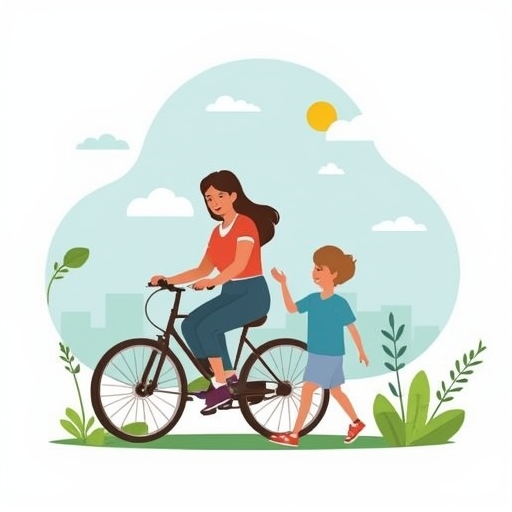
Ultimately, my goal is simple: I want my children to experience authentic, real-world interactions — the kind that involve laughter shared across a table, spontaneous games in the backyard, or long conversations during a walk. I am the father of two — one eleven, the other eight — and I am determined to ensure that their friendships take shape in the tactile, three-dimensional world rather than being filtered through pixels and algorithms. If they want to communicate, I encourage them to pick up a phone and call a friend, or better yet, ride their bikes down the street and knock on a neighbor’s door. I want their relationships to be nurtured through physical presence, not shaped by marketing strategies that turn every user into a commodity.
Yes, my children do occasionally use my WhatsApp account to make video calls to relatives or friends, and sometimes they’ll share a brief, light-hearted moment scrolling through an Instagram reel with their mother. But I see these as family moments, not digital routines, and I’m careful to draw that distinction. What I truly hope for is that the majority of their social circle interaction happens face-to-face — at school, on playdates, or around our local neighborhood.
We live on the Sunshine Coast in Queensland, one of Australia’s most idyllic regions, where the temperate climate and natural surroundings invite outdoor exploration almost every day of the year. Such an environment lends itself beautifully to a childhood rooted in nature and community. My children can, without much concern, wander down to the park, visit nearby friends, or simply spend time outdoors. It’s a privilege that I don’t take for granted. The abundance of open space here offers a kind of freedom that screens can never replicate.
Talking with other parents in our area, I sense relief and renewed optimism. Many of us view the social media restrictions as an overdue recalibration in our collective relationship with technology. By removing social media from our children’s daily lives, even partially, we also reduce the broader problem of constant screen exposure. This outcome brings several unexpected benefits: less passive observation, less algorithm-driven consumption, and far more opportunities for active play and creative imagination.
Of course, with fewer screens, moments of boredom inevitably arise — and that, in my view, is not a drawback but a developmental necessity. Boredom often serves as a catalyst for genuine creativity. When deprived of easy entertainment, children rediscover the art of making something out of nothing. Just recently, after a prolonged round of complaints about turning off the television, my kids surprised me. Within an hour, they had written a short play, devised costumes from whatever they could find around the house, and performed a lively, improvised production for the family. That small triumph of imagination might never have occurred had the TV remained on. In moments like that, my conviction strengthens: screen-free time is not deprivation — it is a gift, one that allows children to explore their worlds and themselves more fully.
Sourse: https://www.businessinsider.com/australian-dad-works-social-media-ban-kids-outside-not-online-2025-12