The holiday season has long been celebrated as a period that symbolizes hope, generosity, and, perhaps most powerfully, the opportunity for new beginnings and redemption. In much the same way, Five Below appears to be experiencing its own version of a second chance this Christmas. Under the dynamic leadership of CEO Winnie Park, the youth-oriented discount retailer is embracing a period of profound reinvention and rejuvenation. The company’s momentum is not merely anecdotal — its stock has soared nearly 85% this year, performing well above the gains enjoyed by major retail competitors and even surpassing high-tech juggernauts like Nvidia over the same stretch.
Just a year ago, however, the retailer’s outlook was far less merry. For the Philadelphia-based chain, which primarily caters to preteens and teenagers, the 2023 holiday season promised little cheer. The company was heading toward a discouraging fourth consecutive quarter of flat or negative comparable-store sales after enduring several years of tepid growth and lackluster consumer engagement. Five Below’s expansion strategy had leaned heavily on opening new locations to grow revenue, but its core existing stores were failing to energize shoppers. At the same time, the firm faced mounting industry-wide headwinds — escalating rates of theft and intense competition from emerging online discounters such as Shein and Temu, which lured value-conscious shoppers away with ultra-low prices.
As Five Below’s share price languished around one-third of its previous peak from earlier in 2023, the company’s board made a bold strategic move: it recruited Winnie Park, then the CEO of Forever 21, to lead the brand into a new era. Her appointment in December 2024, amid the critical holiday rush, reflected both urgency and optimism among investors eager for a revival.
Industry observers initially regarded Park as an uncertain variable. “When she came in, she was sort of an unknown quantity,” explained Mizuho retail analyst David Bellinger in an interview with Business Insider. “The big question was how she would be able to transform the business — and how quickly.” Yet, though not a household name on Wall Street, Park brought with her a breadth of retail expertise encompassing decades of hands-on leadership and strategic insight. Her résumé includes tenure as CEO of both Forever 21 and Paper Source, senior roles at Levi’s and Duty Free Shoppers, and experience as a consultant at McKinsey & Company focused on retail transformation. Global Data retail analyst Neil Saunders praised her as exceptionally well-rounded: “Her career has touched so many key elements of retail — from merchandising and brand building to operations and supply chains. She was, in many ways, the complete package.”
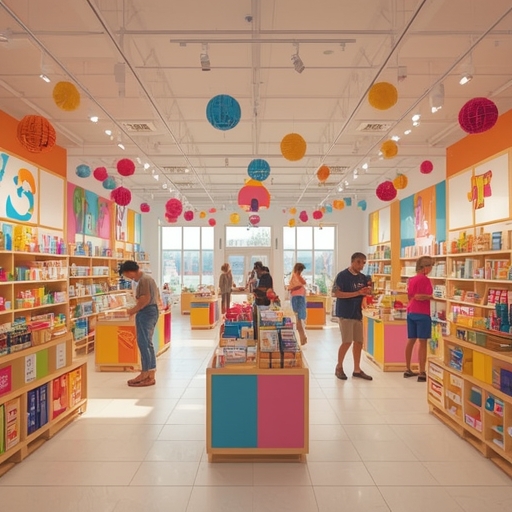
From the moment she stepped into the role, Park worked closely with cofounder and executive chairman Tom Vellios and chief operating officer Ken Bull to restore Five Below to its foundational retail strengths. One of her first priorities was a decisive merchandising reset, aimed squarely at rekindling the enthusiasm of the company’s core teen and tween customer base. According to Bellinger, Park led an overhaul of the sourcing operation — pushing buyers to identify trend-driven merchandise with the confidence to take calculated risks while phasing out adult-oriented products such as travel luggage. The results surfaced visibly across store shelves: colorful assortments of pop-culture favorites like *Lilo and Stitch*, *SpongeBob SquarePants*, and *Hello Kitty* now brighten displays, revitalizing the brand’s playful identity. “When you pack the store with recognizable, beloved brands,” Bellinger observed, “it lifts everything — the energy, the excitement, and ultimately sales.”
This refined merchandising focus was reinforced by a targeted social media strategy designed to reengage existing customers and attract a new generation of digital-savvy shoppers. At the same time, Park emphasized simplifying store operations to make shopping more efficient for customers and working more manageable for employees. The company invested strategically in labor hours to bolster in-stock rates and on-floor assistance, a move that Five Below credits with measurable improvements in both customer satisfaction and financial performance. Saunders summarized Park’s leadership style succinctly: “She doesn’t overcomplicate things. Her clarity of vision allows the team to move quickly and execute effectively.”
Beyond revitalization, Park has also demonstrated the courage to reimagine a central pillar of the Five Below identity — its long-standing five-dollar price cap. Inflationary pressures, together with shifting retail economics, have challenged many similarly positioned brands, forcing them to adjust their value propositions. Dollar Tree’s well-publicized price increase to $1.25 and the struggles of 99 Cents Only amid the disappearance of the penny highlight the difficulty of maintaining fixed low-price models. Added to that, ongoing trade tensions have only amplified cost challenges for import-heavy companies like Five Below.
To offset these pressures in past years, the retailer had developed an in-store area dubbed “Five Beyond,” reserved for items priced above five dollars. Over time, however, this segmentation introduced complexity rather than clarity. It fragmented the store layout and diluted the brand’s cohesion. Recognizing this, Park led the decision to abandon rigid price-based grouping in favor of category-based organization. The change restored logical flow to the shopping experience, allowing customers to browse more intuitively. “Before, anything over $5 was tucked away, creating a disjointed experience,” Bellinger noted. “Now, the way the store is arranged just makes sense.”
Through these actions, Park has underscored an essential distinction that resonates across modern retail: value is not synonymous with price. True value takes into account a combination of product quality, emotional satisfaction, brand relevance, and customer experience — even if that means spending a few extra dollars. As Bellinger remarked, “You can find great value in a $30 item; it’s all relative.”
In fact, the evolving Five Below increasingly evokes comparisons to members-only warehouse retailers, though with a decidedly playful twist. Its vibrant assortment of affordable, on-trend products and the sense of discovery shoppers experience as they explore the aisles invite parallels to a brand like Costco — reimagined for younger consumers. “Five Below is essentially the Costco for kids,” Bellinger quipped. “Customers come in for birthday or party essentials, and before they know it, their carts are full of unexpected finds that keep them coming back for more.”
Looking ahead, Five Below faces the challenge of maintaining this upward trajectory amid growing investor expectations. The company must now demonstrate that the gains of the past year signify more than a short-term rebound — that they represent a structural transformation capable of fueling sustained long-term growth. The average Five Below store currently generates about $2.1 million in annual sales. Analysts like Bellinger believe Park’s initiatives could elevate that figure significantly, perhaps to $3 million per store or beyond, if the newly implemented strategies continue to yield results.
As Five Below ushers in a new chapter of its corporate story, its revitalization reflects far more than a rebound in share price. It illustrates how visionary leadership, rooted in operational discipline and creative merchandising, can reinvent a brand’s trajectory. With Winnie Park at the helm, the company is rewriting the narrative of value retail — not by clinging to its old price ceiling, but by redefining what value truly means for the next generation of shoppers.
Sourse: https://www.businessinsider.com/five-below-ceo-winnie-park-had-a-transformational-first-year-2025-12