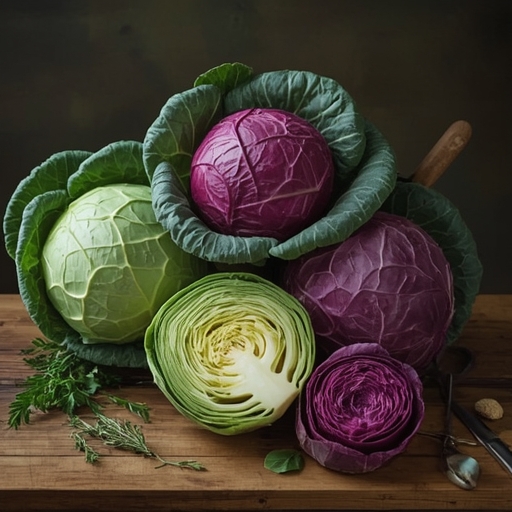
After many decades of lackluster public perception—shaped in part by unappetizing wartime recipes such as the infamous boiled cabbage of World War II and diet fads like the restrictive Cabbage Soup Diet of the 1980s—the humble cabbage is experiencing an unexpected renaissance. Once dismissed as a symbol of austerity and blandness, this inexpensive cruciferous vegetable, high in dietary fiber yet remarkably low in calories, is now quietly but firmly asserting cultural relevance. Its renewed appeal may indeed reflect broader social patterns: some might view cabbage’s comeback as indicative of economic caution—a subtle culinary signal of global recessionary moods—but this resurgence also aligns closely with modern society’s deepening fascination with health optimization, longevity, and the science of gut microbiota. In an era increasingly defined by nutritional self-awareness, people are searching for ways to increase their intake of plant-based foods and natural fiber sources that support digestive health, all while preserving their financial well-being. As registered nutritionist Rob Hobson, author of *The Low Appetite Cookbook*, observed in an interview with *Business Insider*, consumers today are seeking foods that deliver maximum nutritional benefit without straining their household budgets.
Hobson further explained that in a world obsessed with “fibre-maxxing”—a term capturing the social media-driven enthusiasm for maximizing fiber intake—and enamored with fermented foods promoted across digital platforms, the newfound popularity of cabbage seems utterly logical. He even predicts that fiber, long overshadowed by the protein craze, is poised to become the next major nutritional obsession, dethroning protein as the most sought-after macronutrient in the coming year.
For professional chefs, cabbage has evolved from an unremarkable side ingredient into a versatile and affordable carrier of flavor. In London’s culinary avant-garde, grilled or charred cabbage has secured a place on the menus of fashionable restaurants known for their inventive use of seasonal produce. Establishments such as Rochelle Canteen, Ottolenghi, and Fallow have publicly expressed their admiration for the vegetable’s adaptability, as reported by *The New York Times* in a feature boldly titled “London’s Sexiest Produce Star Is a Cabbage.” Hispi cabbage—called “sweetheart cabbage” in the United States—has become particularly beloved in these kitchens, appearing in dishes that traverse cultural boundaries, from Sri Lankan-inspired preparations to Middle Eastern and modern British interpretations. Fallow’s founder, chef Will Murray, aptly described cabbage as the “ultimate vessel for flavor,” noting how its layered leaves and neutral base absorb aromatics, spices, and umami with remarkable efficiency. One of his signature dishes exemplifies this philosophy: a confit of smoked cabbage paired with silky miso butter, tangy pickled walnuts, and earthy chestnuts, a combination that transforms a traditionally modest vegetable into a centerpiece of refined cuisine.
Across the Atlantic, cabbage is achieving comparable prominence in American food culture. Data shared by the market research firm Tastewise with *Business Insider* indicate a striking 20.65% year-over-year increase in menu mentions of cabbage between October 2023 and October 2025. The surge is largely fueled by its inclusion in Mexican and fusion cuisine, where ingredients like cabbage bring texture, freshness, and affordability to tacos, rice bowls, and noodle-based dishes. The dataset underpinning this analysis spans more than 636,000 cabbage-related menu items across nearly 167,000 restaurants and food chains, in addition to over 24,000 items featured in 5,000 educational institutions—a testament to the vegetable’s growing ubiquity in both commercial and institutional kitchens.
The digital arena mirrors this enthusiasm. Between September 2024 and August 2025, Pinterest searches for cabbage-based recipes surged dramatically: searches for cabbage dumplings skyrocketed by 110%, while those for golumpki soup—a comforting Polish dish consisting of cabbage rolls or cabbage-infused tomato broth with ground beef—rose 95%. Even experimental applications such as cabbage Alfredo, a lower-carbohydrate reimagining of the traditional pasta dish, saw search growth of 45%, according to the platform’s 2026 *Pinterest Predicts* report. This trend encapsulates the contemporary home cook’s twin desires for creativity and healthfulness—balancing indulgence with practicality and global culinary curiosity.
Wesley Allan, a consumer insights analyst at Tastewise, emphasized to *Business Insider* that the vegetable’s affordability and adaptability make it irresistible to modern diners, who crave bold, multicultural flavors without breaking the bank. In his words, today’s food lovers display an unprecedented openness to exploring international cuisines, and cabbage’s ability to assimilate into countless culinary frameworks—whether folded into tacos, stir-fried with noodles, or layered into Middle Eastern and South Asian dishes—places it squarely at the intersection of economy, health, and taste exploration.
Cabbage’s ascent also rests firmly on its robust nutritional credentials. As Rob Hobson observed, this leaf vegetable “punches well above its weight” in terms of nutrient density. It supplies ample amounts of fiber, a critical component for digestive regularity and a key energy source for beneficial gut bacteria. It is also an excellent source of vitamin C, an antioxidant essential for cellular protection and immune function, and vitamin K, which plays crucial roles in both bone metabolism and blood coagulation. Low in calories yet voluminous in texture, cabbage allows individuals striving for a calorie deficit to add substance, fiber, and micronutrients to meals without significantly increasing caloric load—a combination nearly unmatched by other staple vegetables.
The health implications extend still further. Neurologist and dementia researcher Dr. Dean Sherzai has previously commented that the routine consumption of leafy greens—including cabbage—is among the most effective dietary strategies for mitigating cognitive decline. According to Sherzai, incorporating just two servings daily can meaningfully reduce systemic inflammation, oxidative stress, and metabolic irregularities in glucose and lipid regulation, factors commonly associated with age-related diseases and neurological deterioration. In an age when preventive health and cognitive preservation dominate wellness discourse, such findings only enhance cabbage’s attractiveness.
Considering its trifecta of virtues—affordability, nutritional potency, and extraordinary flexibility in absorbing global flavor profiles—it is little wonder that cabbage is reemerging as a cultural icon of both thrift and sophistication. As Hobson succinctly put it, “If anything, it feels like cabbage has been waiting for its moment.” Now, after generations of underestimation, that long-awaited moment appears to have finally arrived.
Sourse: https://www.businessinsider.com/year-of-the-cabbage-soup-recipe-gut-health-2025-12