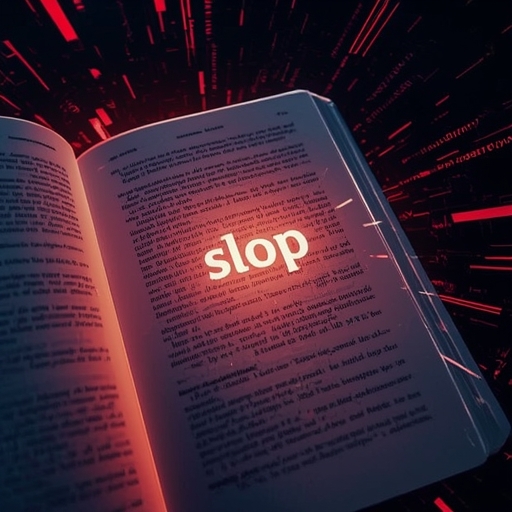
Merriam-Webster, the renowned American dictionary publisher, has officially identified a single word that encapsulates the spirit, anxieties, and patterns of linguistic and cultural expression observed in 2025 — that word is “slop.” The term, as the editors define it, refers specifically to “digital content of poor or inferior quality that is typically generated in large volumes through the use of artificial intelligence technologies.” In essence, “slop” denotes the flood of automatically produced media — text, images, and videos — that has proliferated across digital spaces as AI tools become faster, cheaper, and more accessible. This definition captures a phenomenon now deeply embedded in online culture: the omnipresence of AI-generated material, which often sacrifices originality, depth, and creative authenticity for the sake of efficiency and scale.
Throughout this past year, the internet’s leading platforms have confronted the growing saturation of such machine-made material, launching initiatives intended to preserve the integrity and reliability of the content they host. Some of the most influential digital ecosystems — including YouTube, Wikipedia, Spotify, and Pinterest — introduced new policies, technical barriers, or moderation strategies to curb what they perceive as an “infestation” of AI-generated slop. These measures reflect an increasing awareness among both users and corporations that the unchecked spread of synthetic media can dilute human creativity and erode trust in the digital commons. However, not all companies have adopted a defensive stance. On the contrary, a number of major players, most notably Meta and OpenAI, have chosen to embrace and capitalize on the trend. Both organizations launched applications designed expressly to deliver continuous streams of AI-created videos — short, endlessly scrollable, and instantly shareable — that cater to audiences accustomed to rapid consumption of novelty.
Even within the entertainment industry, the boundaries between traditional production and algorithmic generation are blurring. One striking example is Disney’s recent partnership involving Sora, a model adept at generating video content. The studio negotiated an arrangement to feature Sora-produced clips on its global streaming platform, simultaneously securing a billion-dollar equity investment in OpenAI, the entity responsible for both Sora and ChatGPT. This move illustrates how legacy media conglomerates are navigating a future in which artificial intelligence is not merely a peripheral tool but a core driver of entertainment and storytelling.
Merriam-Webster’s commentary on its chosen word also draws attention to the expressive power of the term itself. “Like slime, sludge, and muck,” the editors observe, “slop possesses a distinctly damp, unpleasant resonance — an onomatopoetic sound that evokes something messy, unrefined, and undesirable to the touch.” Through this vivid sensory analogy, the dictionary’s lexicographers underscore the cultural resistance many feel toward AI’s encroachment into artistic and intellectual domains. Their accompanying remark carries a wry undertone: when artificial intelligence presumes to replicate or replace human imagination, it does not always appear particularly ‘superintelligent.’ The statement encapsulates the tension between technological advancement and the enduring value of genuine human creativity — the capacity for intuition, emotional nuance, and originality that no algorithm has yet fully mastered.
In addition to spotlighting “slop,” Merriam-Webster also took care to note several other expressions that gained traction in the public discourse of 2025. Among them are “touch grass,” a phrase suggesting the need to disconnect from virtual spaces and reengage with the tangible world; “tariff,” reflecting renewed global attention to economic policy and trade disputes; “performative,” an adjective commonly invoked to critique insincere displays of virtue or activism; and “gerrymander,” a word that continues to symbolize the manipulation of electoral boundaries for political advantage. Collectively, these terms paint a linguistic portrait of a year defined by technological transformation, social reflection, and political contestation — with “slop” standing as the most emblematic distillation of our digital age’s uneasy relationship with the rapidly expanding influence of artificial intelligence.
Sourse: https://www.theverge.com/news/844640/merriam-webster-ai-slop-word-of-the-year-2025