The State of Texas has initiated a series of lawsuits against five of the world’s largest television manufacturers, launching a legal battle that underscores growing fears surrounding digital privacy and consumer surveillance. Filed on a Tuesday, the lawsuits—brought forward by Texas Attorney General Ken Paxton—accuse electronics giants Sony, Samsung, LG, Hisense, and TCL of secretly capturing sensitive information about the viewing habits of individuals within the supposed privacy of their homes. According to the state’s allegations, these companies have integrated a sophisticated tracking mechanism into their smart television systems, a feature portrayed as part of a vast and intrusive “mass surveillance network” operating under the guise of legitimate technological functionality. This network allegedly relies on a process known as Automatic Content Recognition, or ACR, to collect and analyze a continuous stream of personal data, which, in turn, is monetized through the sale of targeted advertising opportunities.
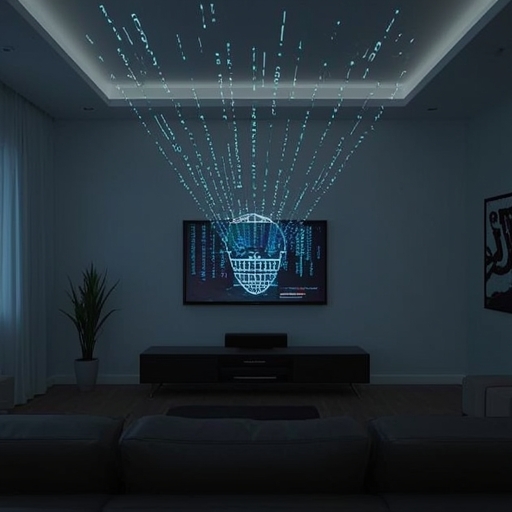
Automatic Content Recognition represents an advanced technological method through which a smart television can observe and identify virtually everything displayed on its screen. By interpreting visual and auditory signals, ACR purportedly discerns the precise titles of programs being viewed—ranging from traditional cable and satellite broadcasts to streaming platforms such as Netflix or YouTube, along with physical media like Blu-ray discs. Attorney General Paxton contends that this surveillance capability is not limited to entertainment sources. Instead, it extends to other content pipelines connected to the television, including live feeds from security systems and doorbell cameras, media cast from smartphones via Apple AirPlay or Google Cast, and even video streams played from laptops or gaming consoles through HDMI connections. The implication of these claims is profound: any device that interacts with the television could inadvertently expose private visual information to external corporate servers without user comprehension or approval.
The lawsuits further accuse the manufacturers of deceiving consumers into activating these tracking features. Paxton asserts that these companies employed manipulative prompts and obscure consent processes that disguised the nature of data collection behind layers of confusing or ambiguously worded disclosures. For example, evidence cited in the filings claims that Samsung and Hisense collect a snapshot of a television screen every half-second—an extraordinarily high frequency amounting to multiple images per second. Such granularity, according to Paxton’s office, allows these corporations to reconstruct highly detailed profiles of individual households’ viewing routines. The state argues that this data is transmitted surreptitiously to company servers “without the user’s knowledge or consent,” ultimately forming valuable behavioral datasets that can be resold or leveraged for micro-targeted advertising campaigns.
Beyond questions of deceptive consent, Attorney General Paxton expresses heightened alarm regarding the international dimensions of this alleged surveillance. Two of the defendants, TCL and Hisense, are headquartered in China—a fact that the lawsuit casts as a potential national security concern. The legal filings describe the devices produced by these companies as “Chinese-sponsored surveillance instruments,” suggesting they could function as conduits for foreign observation of American households. Paxton’s rhetoric emphasizes the risk that the private habits of Texas citizens might, even unintentionally, become accessible to entities outside the United States, thereby intertwining consumer rights issues with broader geopolitical anxieties about technology, data sovereignty, and state-sponsored cyber activity.
The Texas Attorney General’s Office has consequently accused all five television manufacturers of violating the state’s Deceptive Trade Practices Act. This statute was specifically designed to protect consumers from business behaviors that are false, deceptive, or otherwise misleading in the marketplace. To remedy these alleged violations, Paxton is asking the court to impose financial penalties commensurate with the seriousness of the conduct and to issue injunctions that would prohibit the companies from continuing to collect, share, or profit from ACR-derived user data belonging to Texas residents. Such actions, if approved, could impose significant operational restrictions on the companies’ data-driven advertising operations.
At the time the suits were publicized, Samsung, Sony, LG, Hisense, and TCL had not yet provided official responses or public statements regarding the allegations. However, the broader issue of smart television surveillance is not unprecedented. The legal documents reference a notable 2017 case in which Vizio—currently under Walmart ownership—agreed to a settlement totaling $2.2 million, divided between the Federal Trade Commission and the State of New Jersey, for comparable privacy infractions involving undisclosed ACR tracking. This historical context suggests that the technology industry has grappled for years with the tension between data-driven innovation and consumer privacy expectations.
In a formal statement accompanying the new lawsuits, Attorney General Paxton described the defendants’ actions as “invasive, deceptive, and unlawful.” He underscored his commitment to ensuring that Texans’ rights to personal privacy are upheld, declaring that ownership of a television should never equate to the forfeiture of one’s private information to either domestic technology conglomerates or foreign corporations. Paxton concluded by reiterating the state’s intention to defend what he characterized as a fundamental right—the right to be secure from unwarranted digital intrusion in the sanctity of one’s home.
Sourse: https://www.theverge.com/news/845400/texas-tv-makers-lawsuit-samsung-sony-lg-hisense-tcl-spying