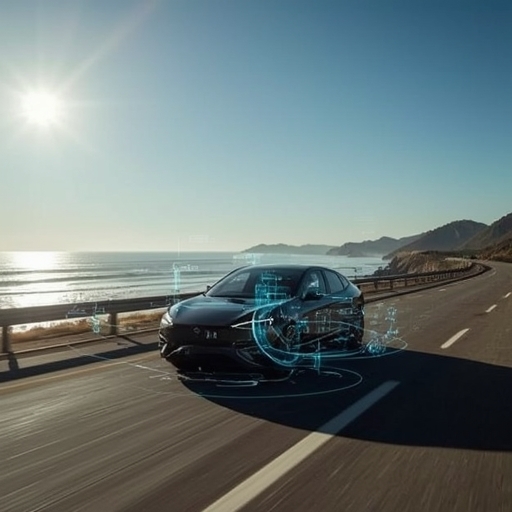
California’s regulatory authorities have taken decisive action against Tesla concerning the company’s portrayal of its Autopilot driving technology. According to a recent ruling by an administrative law judge, Tesla’s promotional materials and advertisements appear to have conveyed an exaggerated impression of the system’s capabilities—specifically implying that its vehicles were capable of complete, hands-free autonomous driving. This determination suggests that the company’s marketing may have blurred the line between driver assistance and full self-driving functionality, thereby creating a potentially misleading narrative for consumers who rely on accurate and transparent information when making purchasing decisions.
In response to this legal and ethical challenge, Tesla has been granted a 90-day period to revise, reframe, and resubmit its advertising and promotional content to ensure full compliance with California’s truth-in-advertising requirements. During this time, the automaker must refine how it communicates the scope and limitations of its Autopilot and Full Self-Driving features, emphasizing that these systems, while highly advanced, still necessitate continuous driver supervision and do not yet achieve autonomous operation. By requiring Tesla to clarify the distinction between assisted driving and genuine vehicle autonomy, state regulators aim to protect public safety, foster informed consumer understanding, and reinforce accountability within one of the world’s most rapidly evolving technological sectors.
This development marks a potentially transformative moment for the electric vehicle industry at large. The decision is not only an admonition directed at Tesla but also a signal to other manufacturers and technology firms developing automated driving systems. It underscores that bold innovation must coexist with ethical transparency and accurate representation. The outcome of this case may redefine industry advertising norms, prompting automakers to exercise greater caution and precision when describing the emerging capabilities of intelligent vehicles. In doing so, it could set the stage for more conscientious communication between technology creators, regulators, and the public as the next generation of automotive automation continues to unfold.
Sourse: https://www.wsj.com/business/autos/california-gives-tesla-90-days-to-change-autopilot-advertising-51a21bfc?mod=pls_whats_news_us_business_f