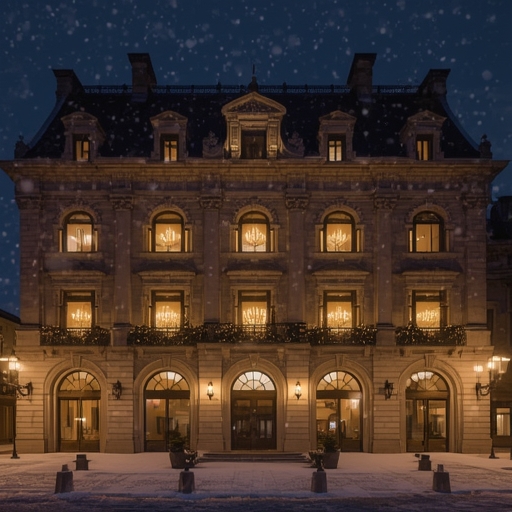
Transforming the White House kitchen into a kosher-certified workspace is not a trivial undertaking; it is, in fact, a meticulous process defined by profound attention to religious law and ritual cleanliness. The undertaking involves carefully sealing every non-kosher surface with layers of protective materials such as Saran Wrap and sheets of tin foil, ensuring that no trace of non-kosher residue remains in contact with the food preparation areas. In addition to these precautions, large vats of boiling water are brought to a rolling boil and used to scald and purify countertops, sinks, and utensils. This process—known in Jewish tradition as koshering—symbolizes both physical purification and spiritual readiness, guaranteeing that every element of the kitchen complies fully with kashrut, the rigorous code of Jewish dietary law. Once the environment has been sanctified in this way, the chefs proceed to use only ingredients that have been certified kosher by reliable authorities, leaving nothing to chance.
During President Barack Obama’s second term, Matt Nosanchuk served as the White House’s associate director of public engagement and functioned specifically as the administration’s liaison to the American Jewish community. In an interview with Business Insider, Nosanchuk recalled a revealing anecdote about the challenges of maintaining kosher standards during earlier administrations. At President George W. Bush’s Hanukkah receptions, two sets of buffet tables had traditionally been arranged—one clearly designated for kosher food and the other for non-kosher offerings—so that all guests, regardless of observance level, would feel accommodated. However, during one year of the festivities, a small but significant mishap occurred: the labels identifying the kosher and non-kosher tables were accidentally switched, creating confusion among attendees and raising concerns about the reliability of the arrangements.
This incident prompted Rabbi Levi Shemtov, a respected Chabad rabbi based in Washington, D.C., who worked closely with the White House culinary staff to oversee kosher preparations, to propose a more comprehensive solution. According to Nosanchuk, Rabbi Shemtov suggested that to eliminate the potential for such misunderstandings in the future, the entire reception—every table, serving dish, and piece of food—should be made fully kosher from the outset. His recommendation reflected both practicality and inclusivity, ensuring that no guest would ever feel uncertain or excluded because of dietary observance. Nosanchuk recounted that upon hearing this suggestion, President Bush responded with characteristic straightforwardness, saying something to the effect of, “Do whatever you need to do, it’s fine.” Yet, as Rabbi Shemtov humorously noted, such a commitment came with certain logistical implications; he told the president that one important requirement would be that the kitchen, once made kosher, would need to remain completely unused for at least twenty-four hours prior to the event. This brief period of abstention allowed time for all sanctifying procedures to take full effect.
The exchange remains emblematic not only of the complex choreography required to harmonize the White House’s daily operations with religious practice but also of a broader cultural openness within the institution itself. The story illustrates how the observance of kashrut, though steeped in ancient ritual, continues to find meaningful expression even within the highest levels of American public life, symbolizing respect, diversity, and an enduring commitment to inclusion.
Sourse: https://www.businessinsider.com/white-house-hanukkah-party-history-how-it-began