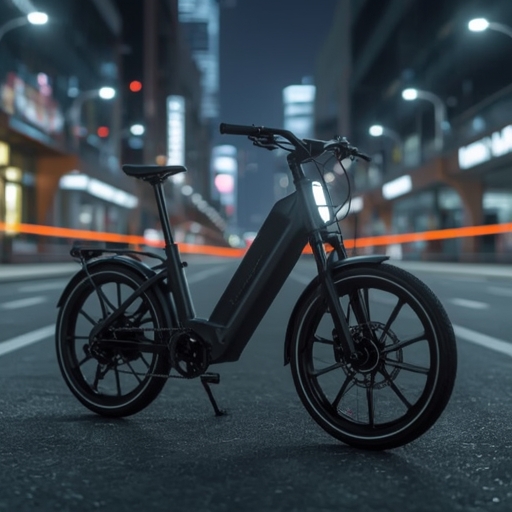
The Brussels-based electric bike manufacturer Cowboy has formally completed its acquisition process by ReBirth Group Holding, a corporate entity that already owns several esteemed cycling brands, including Peugeot, Gitane, and Solex. This moment marks a pivotal transformation in Cowboy’s journey within the evolving landscape of sustainable mobility. The newly concluded transaction does not merely signal a change in ownership but also introduces substantial financial reinforcement—comprising a combination of ReBirth’s additional undisclosed investment and a €15 million (roughly $17.6 million) contribution from Cowboy’s current shareholders. According to both companies, this infusion of capital will serve as the cornerstone for critical recovery efforts, primarily to relaunch halted production lines and systematically address the mounting backlog of spare parts that has accumulated over the recent tumultuous year.
ReBirth Group—the parent company overseeing Re-cycles, the well-established French bicycle manufacturer recognized for its craftsmanship in traditional bikes—had previously stepped in earlier this year to assume control of Cowboy’s e-bike assembly operations. That strategic intervention came at a time when Cowboy was grappling with operational instability. The company had been navigating a succession of adverse circumstances throughout 2025, including extensive delays in deliveries, slower-than-expected repair turnarounds, and an expensive recall affecting the structural integrity of its bike frames. The recall, which stemmed from quality shortcomings associated with a former manufacturing partner, brought Cowboy to the perilous brink of bankruptcy, threatening the continuity of one of Europe’s most innovative e-bike names.
Despite the shift in ownership, Cowboy will preserve its distinctive identity and maintain its internal design, engineering, and software divisions as fully independent units headquartered in Brussels. However, this transition also coincides with the departure of founder and Chief Executive Officer Adrien Roose. In a carefully worded press release, Roose expressed his confidence that this new partnership would enhance Cowboy’s dependability and ensure that its riders remain supported and mobile for the long term. His remarks emphasized not only the hope for operational recovery but also a commitment to maintaining the company’s reputation for reliability and rider-focused design excellence.
With the legal and financial components of the agreement finalized, immediate priorities have been clearly laid out. The production of approximately 1,500 new electric bikes is scheduled for January, a significant batch intended to reduce the current order backlog and reassure awaiting customers. Those who have placed orders will be contacted with updated and more accurate delivery estimates in the near future. By spring 2026, the company anticipates marked improvements in lead times, reflecting a more efficient production and logistics framework under the new partnership’s direction.
In strategic terms, this acquisition also provides Cowboy with an expanded foothold in the French market. By leveraging ReBirth’s extensive retail infrastructure—which includes 95 Oxygen outlets, 10 Ovelo specialty bike stores, and a network of about 500 independent dealers—Cowboy’s presence within continental Europe is set to grow substantially. This integration is expected to open new distribution channels and bring the brand’s technologically advanced e-bikes to a much wider community of cycling enthusiasts.
Looking toward the longer horizon, both companies foresee even deeper forms of cooperation. Cowboy’s proprietary digital platform and its expertise in connected mobility are expected to become a central innovation driver within ReBirth’s diverse portfolio. According to the official announcement, Cowboy’s advanced software systems and data-driven technologies—elements that have defined its standing within the e-bike sector—will soon be embedded across other ReBirth-owned cycling brands. This cross-pollination of digital intelligence will likely foster more cohesive innovation, enabling each brand within the group to benefit from Cowboy’s experience in integrating connectivity and analytics into smart urban mobility solutions.
ReBirth Group’s CEO, Grégory Trébaol, expressed his appreciation for the foundational work done by Cowboy’s creators. In his statement, he commended the founders’ ambition, endurance, and forward-thinking vision that allowed the company to emerge as a symbol of ingenuity within one of the industry’s most challenging markets. Trébaol described the acquisition as the beginning of a new and more stable chapter for Cowboy—a period that promises renewed growth, operational maturity, and long-term strategic sustainability under ReBirth’s stewardship.
Like many other bicycle manufacturers worldwide, Cowboy has endured the sharp fluctuations produced by the COVID-era boom-and-bust cycle, which disrupted production schedules, supply chains, and global demand patterns. The problems reached a crisis point in May when an expensive frame recall almost undermined the company’s financial stability. By August, Cowboy was forced to secure short-term emergency financing simply to maintain daily operations and keep its facilities running. Unlike other notable e-bike companies such as VanMoof and, most recently, Rad Power Bikes—which did not escape bankruptcy—Cowboy managed to weather the storm long enough to secure a buyer. Similarly, smaller boutique players such as Ampler and GoCycle took protective measures by finding investors before their own deadlines overtook them.
Now, with the acquisition finalized and financial breathing room restored, Cowboy’s independent chapter effectively draws to a close. The era during which agile, direct-to-consumer e-bike startups could independently challenge traditional manufacturers and infuse the cycling world with bold technological creativity seems to have passed. What remains, however, is a redefined business landscape—one where integration under larger industrial groups may offer smaller innovators the stability they need to survive, evolve, and continue shaping the future of electric urban mobility.
Sourse: https://www.theverge.com/news/847097/cowboy-acquired-by-rebirth-recycles-bankruptcy


