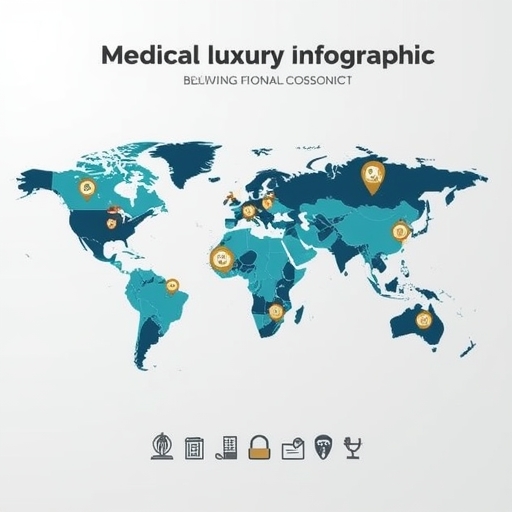
A rising wave of international wealth migration is now converging with a factor that has long been insufficiently acknowledged yet is becoming increasingly decisive: the dramatic escalation in the cost of private healthcare. What was once a secondary consideration for globally mobile high-net-worth families has evolved into a central component of their decision-making calculus. Henley & Partners, a leading firm specializing in investment migration, has revealed that new data drawn from its global client base, together with insights from a recently released comparative health index, indicates that affluent individuals and families are no longer selecting jurisdictions purely on the basis of taxation, climate, or lifestyle amenities. Instead, they are giving growing prominence to the sustained, long-term expense associated with private medical coverage and access to healthcare services of a reliable standard.
According to a press statement released earlier this month, Henley & Partners confirmed that it has, during 2025, received formal residency or citizenship applications from clients representing an extraordinary 92 different nationalities, with advisory operations now spanning over 50 global residence and citizenship programs. The company also reported that application volumes surged by 43% in the first three quarters of 2025 compared with the corresponding period in 2024 — a remarkable year-over-year acceleration illustrating the intensifying urgency among wealthy families to ensure geo-diversified protection and security.
Christian H. Kaelin, chairman of Henley & Partners, contextualized this shift by describing global mobility as an emerging pillar of risk management for the world’s affluent. He explained that clients meticulously evaluate not only the availability and ease of obtaining residence or citizenship but also the comprehensive financial burden of maintaining their preferred lifestyle abroad, particularly as it pertains to dependable and high-quality private healthcare. Kaelin warned that countries appearing financially or aesthetically attractive at first glance often become less appealing once the genuine exposure to healthcare costs is understood in full detail.
Supporting this analysis, Henley & Partners drew upon authoritative data from the SIP Health Cost Index 2025, prepared by the SIP Medical Family Office in Switzerland. This benchmark report — released globally earlier this month — systematically ranks fifty nations according to the authentic cost of private healthcare, measured through international private medical insurance (IPMI) premiums as of August 2025. The outcomes present a sobering view of the disparities in global medical affordability. The United States occupies the top position as the world’s most expensive private healthcare market, with an average annual IPMI premium of $17,968 per individual. Following closely are Hong Kong, at $16,175, and Singapore, at $14,231, underscoring the financial weight of quality medical care across major Asian financial hubs. China, Thailand, and Taiwan have also entered the ranks of the twelve most expensive healthcare markets, driven by a growing appetite for premium hospital care and surging inpatient service costs. Within Europe, the United Kingdom ($11,726) and Greece ($9,654) rank among the higher-cost regions, partially due to the burden of insurance taxation. By contrast, Switzerland occupies a mid-range position with average costs of $8,912, while the United Arab Emirates holds the tenth-highest ranking globally at $9,680. Meanwhile, moderately priced territories include South Africa, Saudi Arabia, and Monaco, each averaging between roughly $7,100 and $7,600 per person.
Kevin Bürchler, Chief Executive Officer of the SIP Medical Family Office — the institution responsible for the index — highlighted that private healthcare inflation is rising universally, though its velocity and distribution vary sharply from nation to nation. Speaking with Business Insider, Bürchler drew attention to what he termed “value” destinations, such as Italy, Portugal, and Austria, which manage to combine comparatively low healthcare costs with geographic proximity to some of Europe’s most sophisticated medical systems in Switzerland and Germany. He further emphasized that, although the ultra-high-net-worth segment can typically absorb steep insurance premiums without difficulty, the gulf in healthcare prices remains a meaningful factor for affluent but not ultra-rich families, particularly those approaching or planning for retirement. The difference, he explained, between paying $30,000 or more annually for private coverage versus $10,000, or facing a $500 consultation fee compared to $50, can reshape how families perceive financial security and long-term comfort abroad.
This disparity is now triggering a growing demand for what many describe as healthcare resilience — the capacity to maintain consistent, high-quality medical access regardless of geopolitical or economic uncertainty. This evolving priority, among other influences, is reshaping migration patterns, particularly among American clients. Basil Mohr-Elzeki, Managing Partner at Henley & Partners North America, noted that U.S. citizens, who represented just 5% of the firm’s clientele in 2018, now account for approximately 40% in 2025 — a striking transformation. He interprets this trend as evidence of a broader strategic hedge, in which affluent Americans increasingly include healthcare considerations within their global mobility planning framework. Mohr-Elzeki detailed that healthcare expenses explicitly factor into at least 15% of client decisions, making healthcare a top-five determinant, following the familiar priorities of minimizing geopolitical risk, enhancing mobility, preserving family legacy, and optimizing tax exposure.
As a result, interest has risen sharply in a cluster of European and Latin American destinations that combine affordability with access to competent private medicine. Portugal, Italy, Greece, and Malta now rank among the most sought-after jurisdictions, while Panama and Costa Rica have gained favor for their comparatively low-cost yet accessible healthcare ecosystems. Turkey, too, has emerged as a compelling choice, attracting clients interested in blending residence opportunities with access to inexpensive but high-standard medical tourism services. Mohr-Elzeki added that many aging clients, particularly from the United States, are actively pursuing alternative healthcare arrangements overseas — not only as a cost-saving measure but also as an avenue to explore diverse medical opinions, treatment protocols, and approaches often unavailable or financially prohibitive in their domestic healthcare system. While he praised the quality and sophistication of U.S. healthcare, he also noted its “commercial bias,” implying that the pursuit of profit can, at times, skew patient options and elevate expenditure unnecessarily.
In summarizing these shifting preferences, Henley & Partners emphasized that tools like the SIP Health Cost Index are becoming indispensable for affluent families attempting to map new patterns of residence and citizenship without falling into what the firm calls “hidden high-cost traps.” As global mobility becomes increasingly intertwined with financial prudence and health-related foresight, the cost and accessibility of private healthcare are now central to how global wealth allocates itself across borders — reshaping not only where millionaires choose to live but also how they plan for well-being, security, and legacy in a world of mounting healthcare inflation.
Sourse: https://www.businessinsider.com/how-soaring-healthcare-costs-are-changing-where-millionaires-move-2025-12