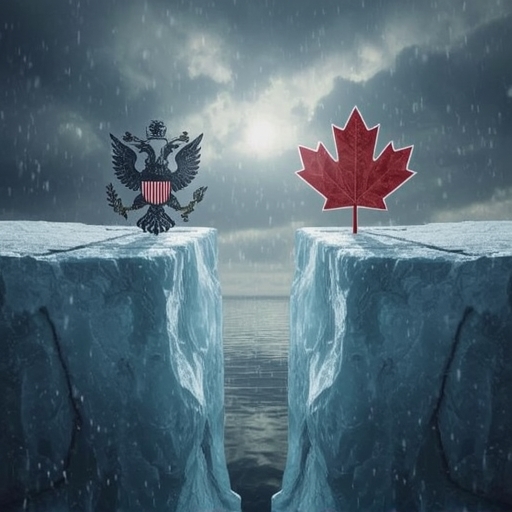
In 2025, the long-standing and seemingly unshakable alliance between the United States and Canada entered a period of profound turbulence, exposing the fragile undercurrents that even the strongest partnerships can harbor beneath the surface of diplomacy. What had once been heralded as a model of cross-border cooperation—characterized by shared economic goals, cultural alignment, and a reputation for mutual respect—suddenly found itself weathering an unexpected freeze. A series of contentious events, ranging from escalating tariff disputes to politically charged rhetoric, ignited a chain reaction of mistrust and defensive measures.
The tension between these two neighboring powers did not emerge overnight. Rather, it evolved from a gradual accumulation of grievances, each magnified by external pressures and domestic priorities. Trade disagreements that once might have been resolved quietly through negotiation began spilling into the public domain, amplified by social media, political commentary, and an increasingly divided global environment. Symbolic gestures—boycotts, verbal sparring, and the imposition of strategic tariffs—took on an outsized significance, eroding the centuries-old perception of easy cooperation.
Yet, behind the diplomatic tension lay something more intricate: the challenge of maintaining friendship amidst shifting global alliances and modern economic realities. The partnership between the US and Canada had for decades stood as a beacon of regional unity, proof that neighboring nations could thrive through collaboration rather than competition. Now, that narrative faced reexamination. Both governments found themselves forced to confront the question of how trust, once assumed, must now be actively rebuilt. Economic interdependence, while still a powerful bond, could no longer shield the relationship from ideological disagreements or divergent national interests.
Still, amid the frost of political disagreement, opportunities for renewal quietly persisted. Analysts and diplomats alike predicted that, once the initial storms subsided, the inherent pragmatism at the heart of North American relations would prevail. After all, trade routes, supply chains, and shared cultural values have interwoven the destinies of these two nations far too deeply for any rift to remain permanent. What this moment revealed most clearly is that true alliances demand not complacency but effort—a steady reinforcement of communication, empathy, and adaptability.
The story of 2025’s US–Canada tension, therefore, extends beyond politics and policy sheets. It is a reminder that even among the closest of allies, relationships must evolve to survive changing times. The bond across the northern border—tested, tempered, and reshaped by crisis—may ultimately emerge stronger, provided both sides choose to meet challenge with understanding rather than defiance.
Sourse: https://www.businessinsider.com/us-and-canadas-rocky-relationship-2025-12


