How Expensive Are Portable Power Stations?
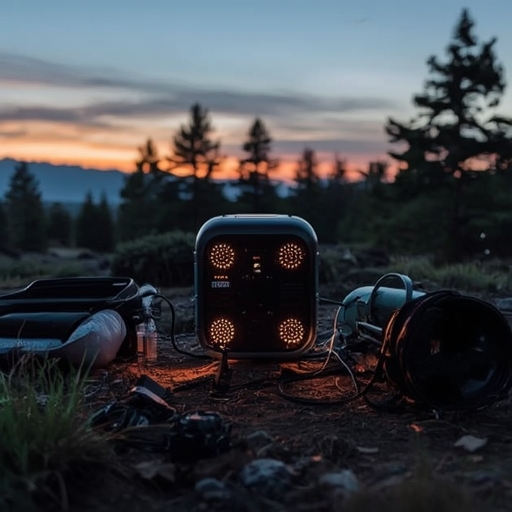
Portable power stations can vary dramatically in price, and some models cost a considerable amount due to their capacity, advanced technology, and rugged build quality. However, their high retail prices are often balanced by the fact that discounts, seasonal offers, and promotional sales are quite frequent. For a savvy buyer, patience can translate directly into significant savings; waiting for major sales events, clearance deals, or online promotions often allows you to purchase your preferred model for substantially less than its official manufacturer’s suggested retail price (MSRP). In other words, while these devices may seem steeply priced at first, opportunities to secure them at lower costs are common for those willing to wait.
What Capacity Do I Need?
Understanding how much power you require is the first and most essential step in determining the capacity your portable power station should have. Capacity is typically expressed in watt-hours (Wh) or, for larger models, in kilowatt-hours (kWh), both representing the total amount of stored electrical energy available. To make an informed decision, it’s useful to consider not only the devices you plan to power but also how long you intend to use them. For instance, running a small LED lamp for several hours consumes far less energy than operating an electric chainsaw, a refrigerator, or a laptop over the same duration. Manufacturers sometimes simplify the concept by citing examples such as “12 hours of TV usage” or “30 minutes of chainsaw operation,” but these estimates can be misleading, as the energy draw differs significantly between devices. Consequently, the most accurate method involves calculating the combined wattage of your actual gadgets and multiplying it by the time you intend to run them. This personalized approach ensures your chosen station genuinely fits your lifestyle and requirements.
How Portable Are Portable Power Stations?
The term “portable” can sometimes be used loosely in this context. Although these devices are technically transportable, their physical weight and bulk often make moving them less convenient than the name suggests. The heavier, high-capacity power stations designed for extended use are frequently equipped with wheels and retractable handles to ease mobility. Yet, even with these ergonomic additions, carrying them over uneven terrain, up stairs, or for long distances remains physically demanding. On the other hand, smaller-capacity stations—those better suited for camping, photography, and road trips—are light enough to carry by hand or in a backpack. Hence, when shopping, one must balance portability with performance: the greater the capacity, the heavier and less mobile the unit tends to be. Those who prioritize true ease of transport should be prepared to accept a reduction in overall energy storage.
What Can You Run on a Portable Power Station?
Portable power stations are designed to deliver flexibility and convenience, capable of running an impressive range of electronics depending on their output capacity. At the simpler end of the spectrum, nearly all models can charge personal devices like smartphones, tablets, or laptops, and they can power small household accessories such as desk lamps, fans, or LED lighting. Midrange and larger stations typically support appliances such as mini-fridges, televisions, or small electric cookers. However, if you intend to operate high-demand tools or appliances—power drills, air conditioners, or kettles—you will need a unit capable of delivering several thousand watts. Each station lists its maximum continuous output as well as its “surge” capacity, which allows it to briefly supply additional power for energy-hungry devices that draw extra current when starting up. Some manufacturers brand these boost modes with creative names, like Zendure’s “AmpUp” or EcoFlow’s “X-Boost.” Before purchase, always confirm that your selected model can safely support the wattage required by your devices, especially those that rely on surges during startup.
How Do I Charge a Portable Power Station?
Every portable power station includes a core method of charging—usually via a standard AC wall outlet—and comes supplied with at least one compatible cable for that purpose. However, many modern models expand the charging options for greater convenience and versatility. Depending on the manufacturer, you might have the possibility of recharging through a car’s 12V port during travel, connecting to a solar array for renewable charging, or even combining multiple sources for faster energy recovery. When assessing potential purchases, always confirm that the necessary ports and cables are included, since proprietary connectors or separately sold accessories can sometimes lead to frustration or unexpected costs. By checking these details in advance, you ensure practical, reliable charging in all the situations that matter most to you.
How Long Does a Portable Power Station Take to Charge?
Recharging time depends heavily on both the battery’s total capacity and the input power available from your selected source. Larger-capacity stations—those capable of powering appliances or sustaining off-grid living—naturally require more time to reach full charge. It is, therefore, vital to understand the charging performance of your preferred model, considering whether you plan to rely primarily on wall outlets, your car’s alternator, or solar panels. Many newer power stations provide faster recharging capabilities through high-wattage adapters, dual inputs, or even simultaneous charging from multiple energy sources. If quick turnaround matters to you—such as during emergencies or travel—evaluating the model’s official charge rate specifications can prevent unwanted surprises.
What Ports Should I Look for in a Portable Power Station?
Although most modern power stations include standard AC outlets and USB-A ports, what distinguishes one model from another is the combination of additional output options and their supported charging standards. Many now include USB-C Power Delivery outputs suitable for high-speed laptop charging, while others feature DC car ports, barrel connectors for specialized devices, or dedicated solar input terminals. To avoid compatibility issues, it’s crucial to review the maximum charging rates, voltage limits, and protocols supported by each port. Don’t assume all units provide every connector you might need—specifications must be checked carefully before buying. This attention to detail ensures your power station integrates seamlessly with your existing electronics ecosystem.
How Many Years Do Portable Power Stations Last?
A portable power station’s lifespan depends primarily on the quality of its internal battery and the care it receives throughout its lifetime. Typically, you can expect between three and ten years of reliable performance, but optimal longevity requires adherence to good maintenance practices. Avoid letting the battery fully discharge repeatedly or sit empty for prolonged periods, as this accelerates deterioration. Most manufacturers provide an estimated number of charge cycles—referring to the number of complete discharges and recharges a battery can handle before its capacity meaningfully declines. Warranties generally range between two and five years, but terms and coverage vary, so it is wise to retain both your proof of purchase and warranty documentation for potential future claims.
What Battery Types Are Commonly Used in Portable Power Stations?
The majority of contemporary portable power stations use advanced lithium-ion battery technology, though the exact chemistry can differ. The two most prevalent types are lithium nickel manganese cobalt oxide (Li-NMC) and lithium iron phosphate (LiFePO4, also known as LFP). Li-NMC batteries offer higher energy density, allowing for lighter units with greater power storage, but they tend to run warmer and degrade more quickly over repeated cycles. In contrast, LiFePO4 batteries are recognized for superior thermal stability, making them significantly safer and more resilient under stress. They also typically deliver many more charge cycles over their lifespan, though their energy density is slightly lower. Some high-end models, such as Zendure’s flagship units, employ emerging semi-solid-state battery technology. These newer designs promise enhanced durability, better safety against overheating or impact damage, and even greater overall energy density, representing a compelling evolution of portable power storage.
Can You Use a Portable Power Station as a UPS?
Certain models offer functionality similar to that of an uninterruptible power supply (UPS), while others are more accurately categorized as emergency power supplies (EPS). When connected to household power with devices plugged into their output, a true UPS continuously passes electricity from the grid until an outage occurs, at which point it switches to battery power almost instantaneously—typically within about 10 milliseconds—keeping equipment running seamlessly. An EPS system performs the same basic function but may introduce a slightly longer delay during the switchover, often around 30 milliseconds. This distinction is crucial if you intend to protect sensitive electronics, such as desktop computers or networking devices, which may require the uninterrupted current that only a UPS-grade model can guarantee.
What Is the Difference Between a Power Bank and a Portable Power Station?
The distinction fundamentally lies in scale, capacity, and intended use. A power bank is a compact, handheld battery designed for lightweight tasks such as charging smartphones, tablets, or wireless earbuds. These devices prioritize portability above all else and hold relatively small amounts of energy. In contrast, a portable power station operates on a much larger scale: it can power multiple electronics simultaneously, run substantial household devices, and even support small appliances for hours at a time. In essence, while both serve as mobile energy sources, the power station functions as a versatile, higher-capacity solution for broader and more demanding applications—ideal for camping, travel, or emergency preparedness—whereas a power bank is best reserved for everyday gadget charging on the go.
Sourse: https://www.wired.com/gallery/best-portable-power-stations/