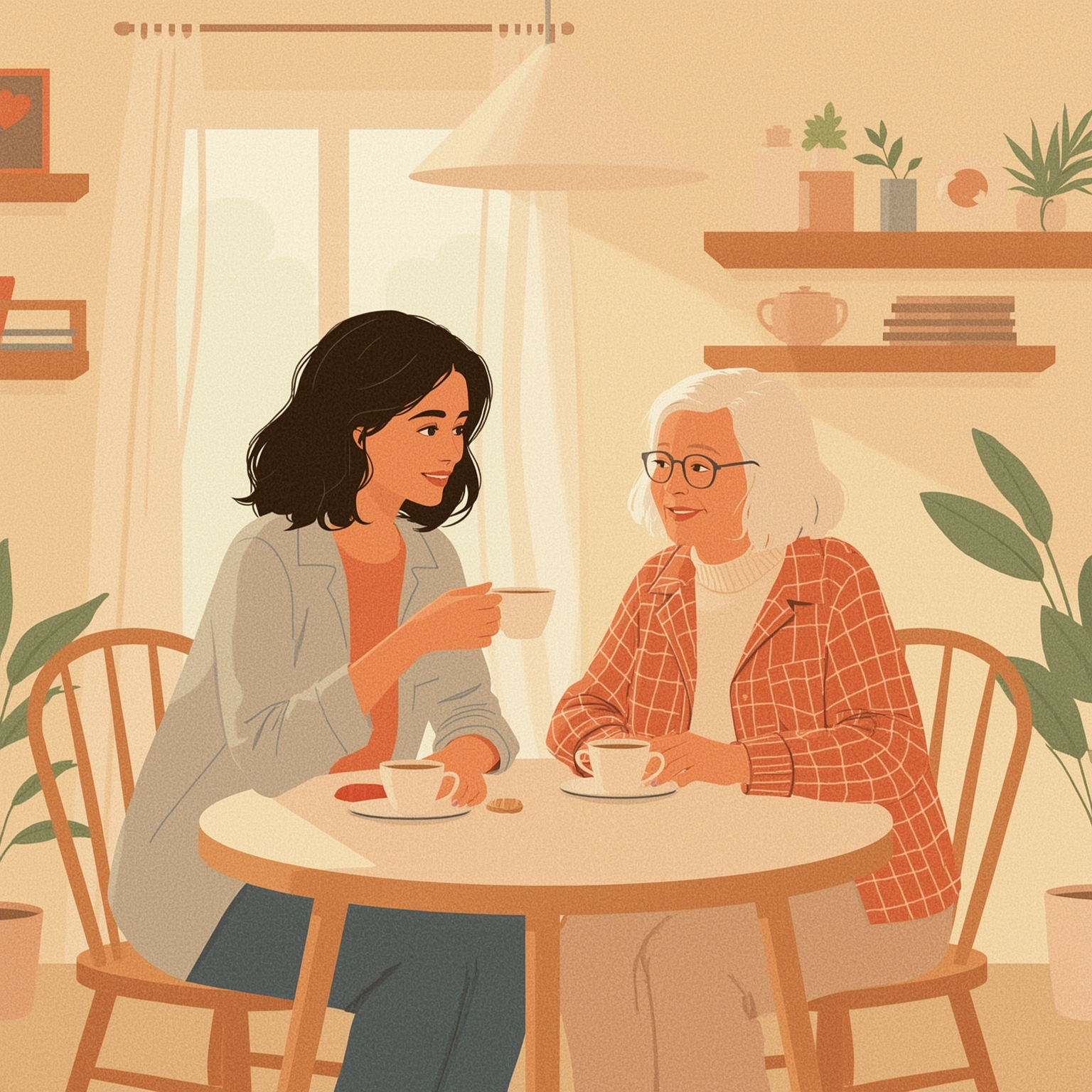
When I received the phone call informing me that my father had passed away, an invisible line seemed to divide my life into a distinct before and after. In that single moment, an entire foundation of stability and familiarity crumbled, and although I understood instinctively that everything would change, I did not yet comprehend the depth or direction of those changes. What stunned me even more than the loss itself was the way my mother’s next chapter would intertwine so intimately, and at times collide, with my own. She had not only lost her lifelong partner, the person who shared her days and decisions, but also the person who had managed the financial aspects of her world. His absence left her navigating both profound grief and sudden economic vulnerability.
Unavoidably, I found myself stepping into roles I had never imagined assuming so early: emotional anchor, financial supporter, and practical problem-solver. Housing costs were climbing relentlessly, personal bills refused to pause, and my mother’s loneliness became an ever-present shadow we could not ignore. Faced with this convergence of necessity and compassion, we arrived at a decision that felt both pragmatic and deeply human—she would move in with me. For us, this arrangement was not merely about convenience; it was a deliberate act of care and survival. From a purely financial perspective, the choice was straightforward arithmetic. My mother, newly widowed and living solely on a limited fixed income, could no longer sustain her independent living situation, while I, as a single mother, was juggling rising living expenses and the emotional weight of parenting alone. Sharing one home, therefore, emerged as the most sensible solution.
Gradually, our financial lives merged. We combined our resources, aligned our daily routines, and discovered that having one another provided tangible and intangible benefits alike. Her presence meant an extra pair of hands for meals, errands, and childcare; my presence ensured her safety, companionship, and comfort. In many ways it was mutually fortifying—a small ecosystem of shared support. For countless families, particularly within the Latinx community, such intergenerational arrangements are not extraordinary at all. Rather than being an optional lifestyle choice, they often represent a necessary adaptation to the financial and emotional realities of modern life.
However, beneath that practical logic lay a deep and complex truth: being part of the so-called sandwich generation carries subtle costs that are often invisible until you are living them. At thirty, I found myself ensnared in that very circumstance—responsible simultaneously for a young child and an aging parent. A decade later, my life looks entirely different from what I once envisioned, yet my situation is one many of my peers now share. Increasing numbers of millennials inhabit this in-between space, caring upward and downward at once, but under harsher external pressures: escalating cost-of-living expenses, limited social and institutional support, and the unrelenting tempo of modern work life.
On paper, our household arrangement appeared ideal. Sharing expenses reduced financial strain for both of us. Most importantly, my mother would not face her grief or her gradual aging alone. But the reality of caregiving—its emotional toll, logistical demands, and quiet sacrifices—proved more complex than any spreadsheet could capture. What no one prepares you for is how the emotional cost can far surpass the money saved. Suddenly, I found myself responsible for arranging her medical appointments, tracking her prescriptions, and observing subtle changes in her mood and memory. Watching her transformation from the steadfast caretaker of my youth into someone reliant on me for daily support stirred both tenderness and heartbreak. It was an inversion of our life’s natural rhythm, and accepting that shift required a depth of strength that I often discovered only through exhaustion.
Equally unexpected were the ways my own independence dissolved. As a mother who valued routine, solitude, and the ability to plan her own rhythms—work deadlines, short trips, quiet evenings—the intrusion of constant responsibility reshaped every decision. I began to calculate the cost of spontaneity: Could I travel for a weekend without reorganizing her medications and meals? Was it selfish to crave a few uninterrupted hours alone? Some days, the weight of invisible expectations was stifling. There were evenings when all I longed for was to curl up on the couch beside my daughter, to breathe in the simple comfort of normalcy, without the ever-present awareness of being needed by someone else.
Yet, even amid the strain, moments of grace pierced through. There were silver linings I had not foreseen—unexpected pockets of gratitude and intimacy that deepened our bond. Sharing meals became stories told between bites; small gestures, like my mother preparing dinner after a long day, reminded me that care is rarely one-directional. For my daughter, witnessing her grandmother’s daily presence provided invaluable lessons about love that persists through generations. Living together revealed the continuity of family—the delicate thread that connects nurture, memory, and resilience.
Through these years, I have also come to understand aging not as an abstract concept but as a deeply human process wrapped in vulnerability. Observing my mother’s evolving needs has taught me empathy at a frequency I had never before accessed. Every challenge—each reminder of how swiftly independence erodes—has grounded me in humility. It has shown me that strength sometimes manifests not in endurance alone, but in gentleness toward those we love and in grace toward ourselves when the balance falters.
Now, after a decade of sharing a home, I have learned that multigenerational living transcends financial practicality. It is, at its core, an emotional covenant—a long-term partnership requiring patience, open communication, and firm boundaries to preserve both love and individuality. It demands organization, respect, and, above all, forgiveness—both extended outward and inward. If this journey has imparted one immutable truth, it is that caring for a parent, though often overwhelming, does not mean erasing oneself. Rather, it invites us to redefine what selfhood looks like within the context of family, teaching us that loss and love, dependence and strength, can coexist under the same roof, shaping us into more compassionate versions of who we are meant to be. Rosa, now a freelance writer and content creator in New Jersey, continues to carry those lessons forward—proof that even amid life’s hardest adjustments, a shared home can still be a place of profound renewal.
Sourse: https://www.businessinsider.com/dad-died-mom-moved-in-with-me-it-changed-everything-2025-11


