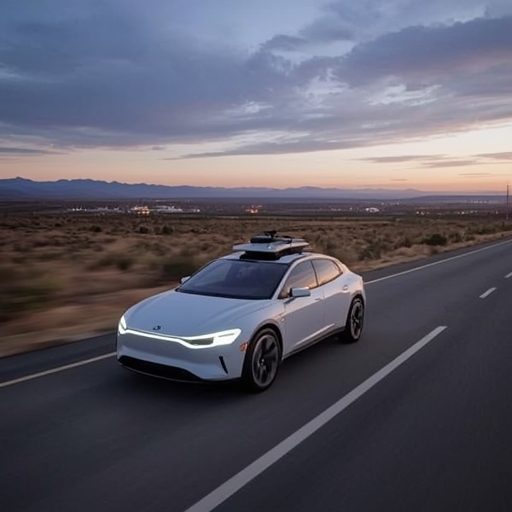
Covering an impressive distance of eleven thousand miles entirely on public roads without once placing hands upon the steering wheel, one Tesla owner has offered a remarkable glimpse into the very near future of human transportation. This lengthy cross‑country journey, achieved through the company’s Full Self‑Driving capability, represents far more than an adventurous road trip—it demonstrates the growing reliability and transformative potential of autonomous vehicle technology. For the driver, this experience was not merely about convenience but about witnessing how artificial intelligence and machine learning can now undertake responsibilities once reserved exclusively for human reflexes and judgment.
Throughout this expedition, the vehicle managed its course with precision, adapting to lanes, traffic conditions, and varying weather patterns that would typically challenge even seasoned motorists. The traveler, meanwhile, described a newfound perspective on mobility: instead of focusing on the repetitive mechanics of driving, his attention was liberated to reflect, observe, and truly experience the vast American landscape from an unprecedented vantage point. This transition from driver to passenger within one’s own automobile symbolizes an inflection point in how society might soon conceptualize travel itself.
The technology behind Full Self‑Driving has evolved from partial assistance systems into an increasingly autonomous platform capable of decision‑making in complex environments. It integrates sensors, cameras, and real‑time data processing to anticipate potential hazards before a human could react. For many observers, what was once the realm of speculative science fiction has materialized into a functional, if still-developing, reality. The implications go beyond comfort—they address safety, efficiency, and environmental sustainability by enabling smoother driving patterns that reduce energy waste.
Standing at this crossroads between present innovation and the promise of the future, one must ask: what does full automation mean for the average commuter? Imagine daily routines where the strain of rush-hour navigation is exchanged for productive or restorative moments—reading, working, or simply enjoying the journey. Such possibilities suggest that autonomy in transportation may become not just a convenience but a fundamental enhancement to quality of life. Yet this new paradigm also invites important discussions about ethics, oversight, and trust. How willingly will humans surrender control to intelligent machines that promise near-perfect precision but require absolute confidence in their programming?
As the world witnesses this convergence of technology and human aspiration, Tesla’s Full Self‑Driving serves as a tangible signpost pointing toward what lies ahead. The once-distant dream of vehicles guiding themselves over thousands of miles has, quite literally, taken to the highway. This story of one traveler’s eleven‑thousand‑mile odyssey reminds us that the future of driving is no longer approaching from afar—it has already arrived, altering our relationship with motion, safety, and the open road itself.
Sourse: https://www.businessinsider.com/tesla-owner-fsd-miles-without-touching-steering-wheel-2026-1