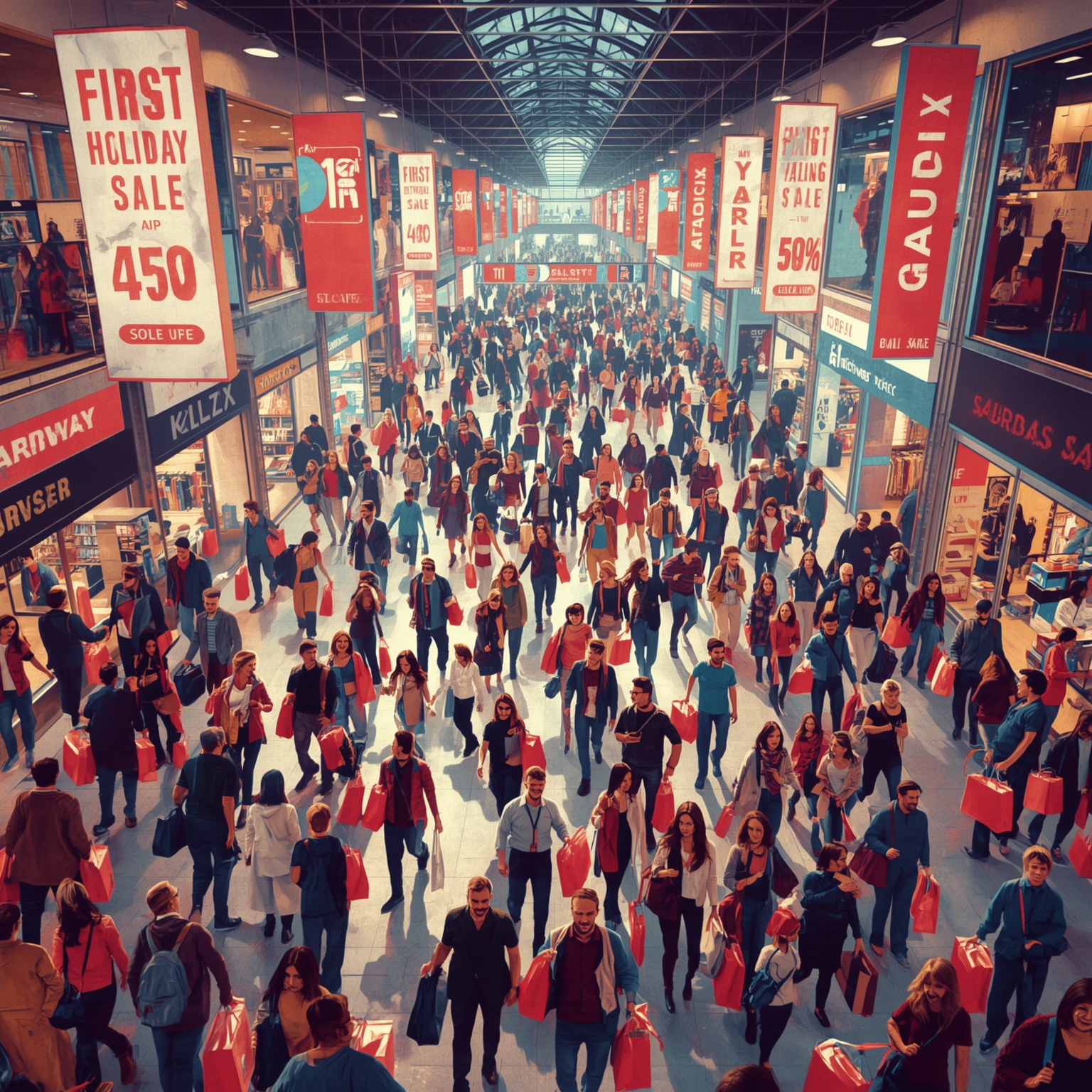
For many years, the day after Thanksgiving in the United States was practically synonymous with a kind of organized shopping pandemonium. Black Friday once embodied the height of consumer anticipation, a post-turkey ritual that pushed both shoppers and retailers to their limits. Until quite recently, the event was nothing short of a cultural phenomenon—a frenzied celebration of consumption marked by sleepless nights, marathon lines in freezing weather, and the irresistible lure of once-a-year bargains. Everything built to a feverish crescendo each November, and for many, it was as much a tradition as the Thanksgiving feast that preceded it. However, the arrival of the global pandemic in 2020 abruptly fractured this long-standing rhythm, curbing in-person crowds and forcing both consumers and businesses to reimagine the shopping experience entirely.
What was once a single, highly anticipated kickoff to the holiday shopping season has since evolved into something far more restrained and extended. Instead of one electrifying day characterized by stampeding crowds and midnight openings, today’s retail experience is dispersed across weeks—sometimes months—of online promotions. The immediacy and chaos of in-person shopping have given way to a quieter, more calculated digital approach. Before this shift, it was hardly unusual to see individuals bundled in winter coats and blankets, huddled outside electronics stores for hours, sometimes even forgoing time with family in exchange for deeply discounted televisions or gaming consoles. Retailers actively fueled this enthusiasm, advertising doorbuster deals that transformed parking lots into tent villages and storefronts into battlegrounds of retail determination.
By contrast, the era following 2020 introduced a new normal. With e-commerce booming and companies increasingly launching pre-holiday sales as early as September, the once-intense holiday rush became more measured and prolonged. Surveys from leading consultancies such as Boston Consulting Group reveal that while a large percentage of Americans still participate in Black Friday shopping, many now prefer to do so from the safety and comfort of their living rooms. And even among those who continue the physical tradition, enthusiasm appears slightly tempered compared to prior years. Meanwhile, many retail chains—some of which had once prided themselves on marathon hours—have embraced a more humane approach, choosing to remain closed on Thanksgiving to allow employees a well-deserved day off.
Photographs from the past decade vividly capture the scale and spirit of this now-evolving ritual. In earlier years, particularly around 2011, immense crowds would gather outside major department stores, united by the shared ambition of securing steeply discounted merchandise. The post-Thanksgiving routine was almost formulaic: feast heartily, watch a football game, and then venture out to hunt for bargains, often exceeding 50% off. By 2018, even flagship stores in New York City brimmed with shoppers eager to seize limited-time offers on clothing, electronics, and holiday gifts. Yet, according to more recent analyses, consumers have subtly adjusted their expectations—what once constituted a “great deal” at 50% off is now often redefined around the 30% mark.
Certain retailers became legendary destinations for the dedicated deal-seeker. Electronics giants such as Best Buy regularly drew crowds that began forming outside their doors long before the clock struck midnight. Shoppers endured numbing cold, fortified only by sleeping bags, blankets, and hot beverages, hoping to emerge victorious with discounted gadgets and newly released video games. It was not uncommon to see young children in tow, bundled against November winds, waiting for store openings that felt almost ceremonial. The excitement extended to store employees as well—teams received energizing pep talks before doors opened, priming them for the tidal wave of humanity about to pour through the entrances.
When those doors finally did swing open, the spectacle was something to behold—a heady mix of adrenaline, anticipation, and sheer physicality. The rush into department stores like Macy’s on 34th Street in Manhattan was as iconic as the parades that preceded it. Elsewhere, shoppers sprinted into Targets and other big-box stores, racing to claim the most desirable goods before shelves were emptied. What today might seem extraordinary—customers dashing into a store at midnight—was, for years, an accepted ritual of retail endurance.
Some deals reached a near-mythical status, sparking mini-frenzies as limited-quantity items vanished within minutes. Toys, in particular, showcased explosive demand as Christmas approached. In earlier years, chains like Toys “R” Us became pilgrimage sites for parents seeking the season’s must-have gifts. The very name “Black Friday” stems from an accounting metaphor: struggling businesses often operated “in the red” for much of the year, until holiday shopping propelled them “into the black,” symbolizing profit. Tragically, not every company managed to sustain that profitability—Toys “R” Us, for instance, filed for bankruptcy in 2017, later attempting to revive its presence through smaller, seasonal pop-up ventures.
Before the widespread dominance of streaming and digital downloads, physical media also held a prominent place in the Black Friday narrative. Shoppers once filled carts with DVDs, Blu-rays, and boxed video games—now largely replaced by cloud-based subscriptions and instant access platforms. Department stores, specialty shops, and luxury retailers alike participated in the event, drawing throngs of enthusiastic buyers. Victoria’s Secret, for example, was a consistent stop for fashion-focused shoppers, while electronics stores remained havens for those chasing the latest technology.
Yet, beneath the excitement lay a demanding physical ordeal. Navigating tight aisles, lugging bulky packages through crowded stores, and maneuvering overloaded carts through maze-like parking lots was exhausting by any measure. Photographs from past years show fatigued shoppers collapsing into massage chairs in shopping centers or catching brief moments of rest amid the chaos. Even after the purchases were secured, the challenge was far from over—escaping the gridlocked parking lots could take nearly as long as securing the deals themselves.
Today, the image of shoppers battling traffic and temperature extremes in pursuit of bargains feels increasingly nostalgic. The modern consumer, often guided by convenience and comfort, now experiences these deals through screens rather than storefronts. With a few clicks, holiday purchases arrive swiftly at one’s door, transforming what used to be a communal physical event into a largely solitary, digital ritual. The evolution of Black Friday thus mirrors the broader transformation of consumer behavior: from frenzied participation in brick-and-mortar spectacles to a more subdued, data-driven engagement with online retail. Still, those archival photographs of bustling doorways, towering product displays, and exuberant crowds remain a vivid testament to an era when the thrill of the deal was not only about the savings—it was about the shared exhilaration of the hunt itself.
Sourse: https://www.businessinsider.com/photos-show-how-unhinged-black-friday-shopping-used-to-be-2025-10


