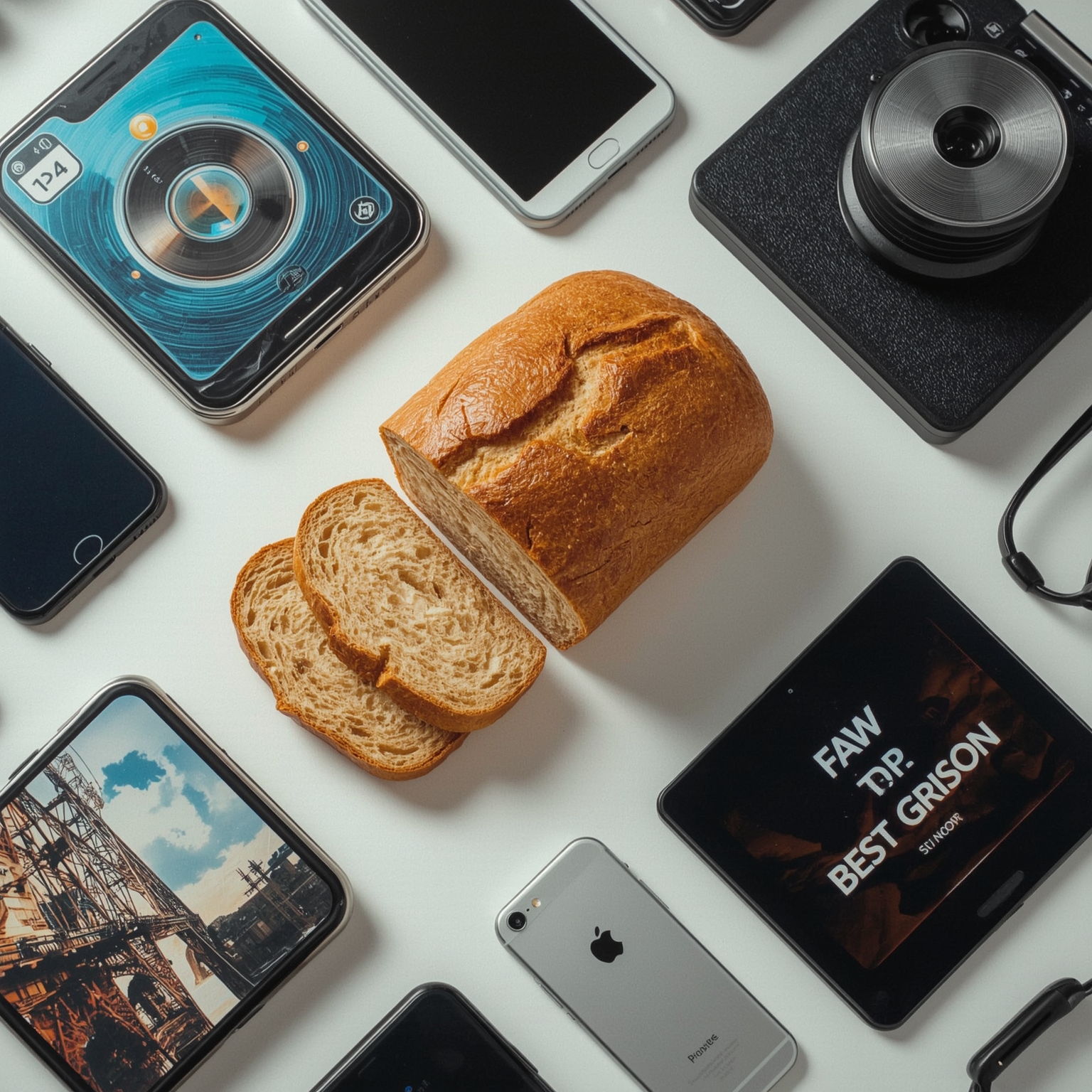
Although certain products have become so embedded in our daily routines that it feels as if they have existed for centuries, many are, in reality, quite recent innovations. Some modern conveniences are so seamlessly integrated into household life that it can be startling to realize their relatively short histories. Sliced bread, for instance—a staple in kitchens across the world—has been in existence for less than a hundred years. The devices that have come to define the digital age, such as Apple’s MacBook and iPhone, are barely two decades old. Similarly, popular products like Diet Coke, Post-it Notes, and camera phones, which many people assume have been part of modern society for generations, only entered the market within the last few decades.
In 1928, the world was introduced to pre-sliced bread thanks to the efforts of Otto Rohwedder, a jeweler from Missouri with an inventive spirit. His mechanical bread slicer revolutionized baking and household convenience, despite early skepticism from professional bakers who feared pre-sliced loaves would turn stale too quickly. Over time, sliced bread became a universal measure of innovation—so much so that the phrase “the best thing since sliced bread” entered popular culture as shorthand for practical genius.
Fast-forward nearly a century, and we encounter technological marvels like the iPhone, which, despite being introduced only 18 years ago, has come to define communication in the twenty-first century. By 2024, more than 155 million Americans owned an iPhone, representing roughly one-third of the U.S. population, with Apple maintaining a particularly strong influence among Gen Z users. A 2024 Piper Sandler report indicated that 87% of surveyed teenagers possessed one. Such figures illustrate how swiftly certain inventions can evolve from novel gadgets to cultural mainstays that shape entire generations.
Many other everyday products share similar relatively recent origins. The pull-tab tops on beverage cans, for example, were first patented by Ermal Fraze in 1977, replacing older removable tabs that posed health and environmental risks. These easy-open innovations soon became a global standard, marking a quiet revolution in packaging design. Likewise, Post-it Notes, introduced globally in 1980, emerged from the collaboration between 3M researchers Spencer Silver and Arthur Fry. Silver’s accidental discovery of a low-tack adhesive, paired with Fry’s insight to apply it to small pieces of paper, gave rise to one of the most ubiquitous office supplies of the modern era.
Food products, too, remind us that time and tradition do not always walk hand in hand. Sriracha hot sauce, now the second most popular condiment of its kind in the United States, was first produced by Huy Fong Foods founder David Tran in 1980. Its meteoric rise reflects America’s growing appreciation for bold, global flavors. In another corner of consumer life, Procter & Gamble’s Febreze, launched in 1996, transformed household cleaning habits with odor-neutralizing ingredients like cyclodextrins—simple chemical compounds capable of encapsulating unpleasant smells rather than merely masking them.
Other innovations dramatically changed how people interact with machines. Car keys that operate remotely—technically known as remote-entry systems—originated in the 1980s, with the 1983 AMC-Renault Alliance among the first vehicles to utilize such technology. By the early 1990s, remote key systems had become common across most automobile brands, offering improved convenience and security. Similarly, the introduction of built-in GPS navigation systems by Mazda in 1990 marked a milestone in personal travel technology, even though it took another decade for such systems to become widespread in the U.S. following the declassification of military GPS satellites.
Throughout the 1990s and early 2000s, a wave of notable consumer products emerged that today define modern comfort and entertainment. Sony’s 1994 PlayStation redefined video gaming with advanced graphics and immersive storytelling, while Starbucks’ 1995 national rollout of the Frappuccino transformed the coffee industry and helped spark a global cold-beverage phenomenon. Around the same era, plasma flat-screen TVs, refined by Panasonic engineer Larry Weber in the 1990s, transitioned television from bulky cathode-ray boxes to sleek, high-definition displays suitable for contemporary homes.
The late 1990s also saw the debut of Diet Coke (1982), McDonald’s McFlurry (1997), and Sierra Mist (1999)—each a symbol of how rapidly new products can achieve global recognition. By the time the new millennium arrived, new categories of technology were reshaping daily life. IBM’s launch of the first USB flash drive in 2000, capable of storing just 8 megabytes, signaled the dawn of portable digital storage. In the same year, the Toyota Prius was released globally, establishing the hybrid car market that continues to evolve today.
The early 2000s delivered yet more milestones: the proliferation of camera phones such as Samsung’s SCH-V200 (2000), the introduction of hand dryers like the Xlerator in 2002 capable of cutting drying times dramatically, and the appearance of an entirely new energy product—5-hour Energy—in 2004, which soon dominated retail shelves. In 2005, Taco Bell unveiled its now-iconic CrunchWrap Supreme, a product so successful it became part of the permanent menu within a year.
Even more familiar twenty-first century items have surprisingly short histories. The MacBook line of laptops, introduced in 2006, quickly redefined portable computing, while the iPhone, launched in 2007, completely transformed the concept of communication and mobile technology. Confectionery fans might be surprised to learn that Hershey’s Take 5 bar also made its debut only in 2004, eventually rebranded under the Reese’s name to highlight its peanut butter core. Meanwhile, Stride gum, celebrated for its tagline promising “Ridiculously Long Lasting” flavor, arrived in 2007 but has since been discontinued in the United States, though it remains available in some international markets.
The evolution of household convenience continued into the 2010s. Kellogg’s introduced Krave cereal in the United States in 2012, offering a distinctly chocolate-centric breakfast option that quickly became a favorite among younger consumers. Then, in 2014, Amazon unveiled Alexa—first available to Prime members before expanding to the wider public. This digital assistant inaugurated a new era of voice-controlled technology, leading to a nationwide embrace of smart-home systems. Though Alexa once dominated the field, forecasts suggest that by 2025, Google Assistant will lead with over 92 million users, followed by Apple’s Siri and Alexa herself, demonstrating the ever-shifting dynamics of the tech industry.
Taken together, these examples underscore a profound insight: what feels timeless is often young, and innovation continuously reshapes the landscape of ordinary life. From bread slicers to smartphones, hybrid cars, and voice assistants, these inventions collectively reveal humanity’s ceaseless drive to simplify, enhance, and redefine how we live. The perception of permanence, therefore, is an illusion—today’s essentials may only be tomorrow’s beginning.
Sourse: https://www.businessinsider.com/everyday-products-that-havent-been-around-long


