During the early 1990s, when audiences were swept up in the cultural storm that was *Power Rangers* mania, Saban Entertainment saw an opportunity to further capitalize on its relationship with the prolific Japanese studio Toei. The company aimed to replicate the explosive success of *Mighty Morphin’ Power Rangers* by adapting and reimagining additional Tokusatsu properties for American television. Precisely thirty years ago today, Saban unveiled its ambitious reinterpretation of one of Japan’s most celebrated superhero sagas: *Kamen Rider*. Executives hoped that this new series would serve as the “next great phenomenon,” one capable of inheriting the mantle of *Power Rangers*. What American viewers ultimately received, however, was *Masked Rider*, a production that would chart a far more circuitous path to introducing *Kamen Rider* to the West over the ensuing three decades.
Much like *Mighty Morphin’ Power Rangers* and *VR Troopers* before it, *Masked Rider* was constructed around a distinctive hybrid format. The show drew heavily on visual elements—costume designs, action choreography, and numerous battle sequences—lifted directly from the Japanese series, while also incorporating wholly new scenes featuring American actors. This intricate interweaving of footage allowed Saban to craft an almost entirely fresh storyline, one intentionally distinct from its Japanese origins. The material adapted here was taken from *Kamen Rider Black RX* (1988), itself a continuation of *Kamen Rider Black*. In its original incarnation, the Japanese narrative followed Kotaro Minami as he gained evolved abilities in order to protect Earth from the extraterrestrial forces of the Crisis Empire. The Americanized version, however, heavily altered that premise.
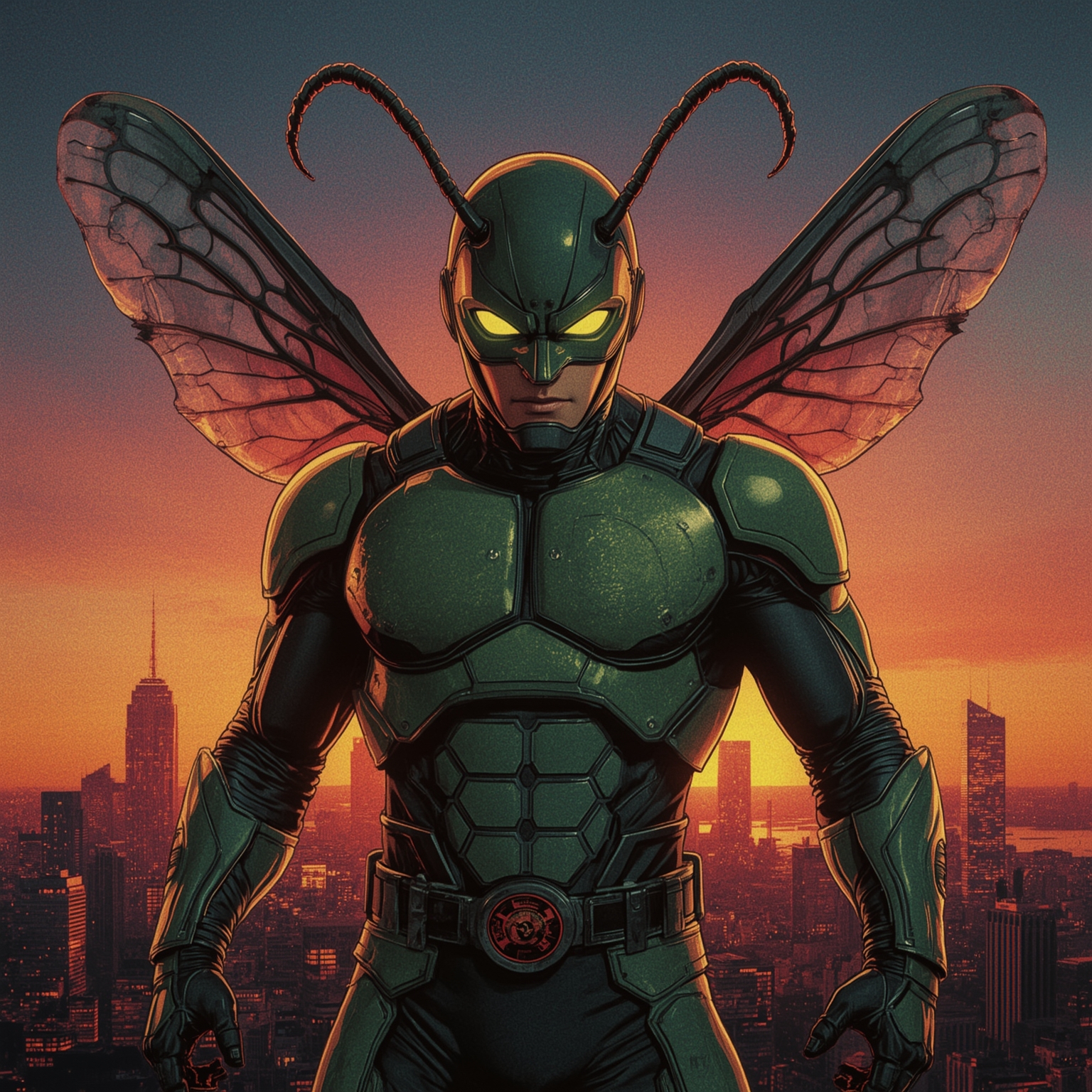
Far from being a straightforward translation, *Masked Rider* introduced concepts intentionally tied to Saban’s growing interlinked universe. It was explicitly designed to connect to the mythos of *Mighty Morphin’ Power Rangers*, which had been reimagined from Toei’s *Kyoryu Sentai Zyuranger*. The link was made overt through a special three-episode crossover event at the beginning of *Power Rangers*’ third season. Within this arc, viewers were introduced to Prince Dex, an alien royal from the planet Edenoi—coincidentally, the homeworld of Alpha 5, the beloved robotic ally of the Power Rangers. After his grandfather, King Lexian, was dethroned by the tyrannical Count Dregon, Dex inherited the mystical Masked Rider powers and escaped to Earth, the next target of invasion. Once on Earth, Dex took on the identity of an ordinary teen named Dex Stewart and was fostered by the Stewart family in the small town of Leawood. There he struggled to balance the duality of his new life: a seemingly typical adolescent on one hand, and on the other, an insectoid superhero tasked with thwarting Dregon’s insect-like Insectivore monsters.
While *Mighty Morphin’ Power Rangers* diverged considerably from its Japanese counterpart, *Masked Rider* strayed even further. Unlike the somewhat earnest action-adventure tone of *Black RX* and even compared to the occasionally campy *Mighty Morphin’*, Saban’s adaptation leaned dramatically into slapstick humor and lighthearted comedy. This comedic approach widened the cultural distance between the American show and its Japanese predecessor. Furthermore, although Dex’s story debuted directly out of the *Power Rangers* continuity, Saban quickly minimized and then severed these explicit narrative ties. Part of this decision stemmed from declining ratings for *Power Rangers* itself, which had peaked earlier in the decade. As a result, after the initial crossover introduction, the Power Rangers were never referenced again in *Masked Rider*’s storyline.
The tonal dissonance, combined with waning enthusiasm for *Power Rangers*, proved disastrous. Commercially, *Masked Rider* failed to capture the imaginations of its target demographic, and the accompanying toy line could not achieve anywhere near the success enjoyed by *Power Rangers* merchandise. After a brief run of just over a year and approximately forty episodes, the series was quietly cancelled. Ironically, while *Masked Rider* came to an abrupt end, *Power Rangers* itself demonstrated resilience; by 1996, the franchise reinvented itself through *Power Rangers Zeo* following the conclusion of the original *Mighty Morphin’* era and the transitional *Alien Rangers* miniseries. That same year, Saban tried once again to localize a non-*Super Sentai* Tokusatsu show, launching *Big Bad Beetleborgs*. Yet the commercial disappointment of *Masked Rider* cast a long shadow, effectively preventing *Kamen Rider* itself from finding a substantial U.S. foothold for years.
The story did not finish there. Although the *Kamen Rider* franchise lay dormant on Japanese television throughout much of the 1990s, it experienced a powerful rebirth in 2000 with the premiere of *Kamen Rider Kuuga*, heralding a new era of creative vitality. Nearly a decade later, in 2009, another attempt was made to adapt *Kamen Rider* for American audiences with *Kamen Rider: Dragon Knight*, a live-action series co-produced with The CW and based on Toei’s *Kamen Rider Ryuki* (2002). While the show won critical recognition, even earning a Daytime Emmy, it encountered the same difficulties that plagued *Masked Rider*. Ratings proved insufficient to sustain production and the broadcast concluded prematurely, with the last two episodes never aired on American television.
Now, with the passage of thirty years, history has taken a fascinating turn. *Masked Rider*’s anniversary aligns with a new phase in *Kamen Rider*’s transnational journey—this time approached more deliberately, without the heavy-handed alterations of earlier adaptations. Over the past several years, Toei has gradually begun granting English-speaking audiences access to *Kamen Rider* in its original form. Selected older entries in the franchise have become available through official streaming channels, and ambitious spinoffs such as *Kamen Rider Black Sun*—a darker, mature reinterpretation of *Black* and *Black RX*—and celebrated auteur Hideaki Anno’s cinematic reboot *Shin Kamen Rider* have expanded its profile.
Most significantly, earlier this month the newest installment, *Kamen Rider Zeztz*, premiered simultaneously in Japan and the United States. For the first time in the franchise’s half-century history, American fans are engaging with a brand-new *Kamen Rider* series in real-time alongside their Japanese counterparts. This simultaneous release represents a dramatic shift in attitude by Toei, acknowledging both the enthusiasm of overseas fans and the commercial potential of cultivating a global audience through official channels, rather than leaving international fans reliant on fan-subtitled imports or waiting years for localized releases.
Whether *Zeztz* finally allows *Kamen Rider* to secure its long-sought breakthrough in America remains uncertain. It might yet become the elusive “Power Rangers moment” the franchise has been chasing since *Masked Rider*’s ill-fated debut thirty years ago. Still, there is undeniable poetic symmetry in the fact that *Kamen Rider*’s boldest foray into the West coincides with a retrospective glance back to its first venture into American living rooms. Three decades later, it seems the Rider is prepared once again to rev up engines, summon its heroic insectoid spirit, and stride confidently into the hearts of new generations of viewers.
Sourse: https://gizmodo.com/masked-rider-30th-anniversary-power-rangers-kamen-rider-2000659559