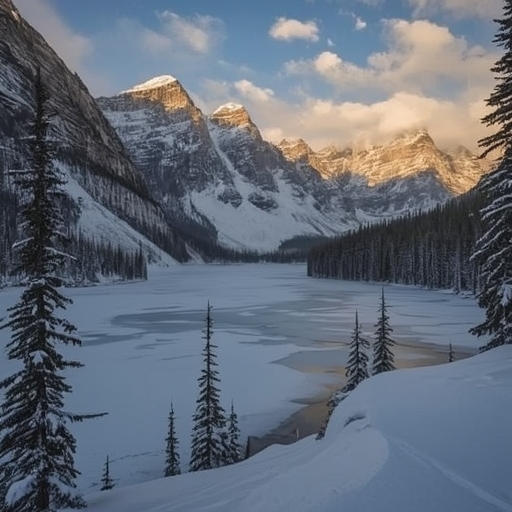
Visiting Glacier National Park during the winter months unveils an entirely different dimension of this legendary wilderness. When deep snow muffles every sound and crystalline ice covers the sweeping lakes, the park transforms into a refuge of profound tranquility that contrasts sharply with the bustle of summer. Travelers who venture into this frozen expanse are rewarded with breathtaking panoramas of snow-crowned peaks lit by the soft golden rays of low winter sunlight, where silence reigns except for the distant rustle of wind moving through pine-laden slopes.
Yet such beauty demands respect and forethought. Winter in Glacier is not merely cold — it is a season defined by shifting weather patterns, unpredictable storms, and isolation that tests one’s preparedness. Roads that are busy in July become impassable for vehicles by December, with only limited access through maintained corridors such as the Apgar and Lake McDonald areas. Because of these restrictions, visitors must plan with great care, checking in advance for route closures and avalanche advisories. Only through vigilant preparation can one safely experience the rugged serenity that this park offers beneath its blanket of snow.
Proper equipment is indispensable. Even a short excursion requires insulated, moisture-resistant clothing, traction devices for boots, and the ability to navigate limited daylight hours efficiently. Layering for warmth and bringing essentials such as emergency food, a thermos of hot liquid, and navigation aids like maps or GPS allows travelers to explore responsibly. The stark beauty of the park rewards those who come ready, offering unrivaled vistas of ice-shrouded waterfalls and forests that seem sculpted entirely of frost.
Equally important is understanding the timeless rhythm of Glacier’s winter ecology. Wildlife is far less visible now, yet traces of its life are etched in the snow—tracks of elk, snowshoe hares, or the rare wolverine appear briefly before a new snowfall conceals them again. These fleeting signs remind visitors that the park remains alive, humming quietly beneath the stillness. To observe without disturbing this delicate winter balance is the essence of sustainable exploration.
Ultimately, a journey to Glacier National Park in winter is not simply a trip through a remarkable landscape; it is a reflective encounter with solitude and endurance. The traveler who enters with preparedness and humility will find peace amidst the still white expanses, discovering a Montana that breathes in slow, crystalline silence. In this cold season of isolation, Glacier reveals its most introspective and hauntingly magnificent self — a world as challenging as it is unforgettable.
Sourse: https://www.businessinsider.com/tips-for-visiting-glacier-national-park-in-winter-from-local