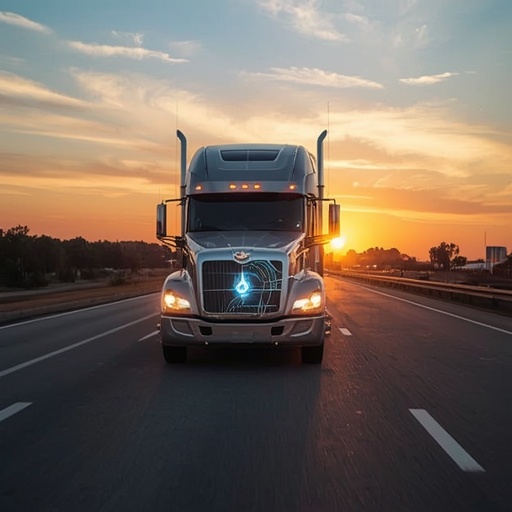
Over the course of nearly half a century behind the wheel, a lifetime of experience has intertwined with rapid technological change, revealing a fascinating evolution in the world of trucking. The modern freight landscape reflects a remarkable balance between human skill and mechanical intelligence: seasoned drivers bring an understanding of terrain, timing, and instinct that technology can only aspire to replicate. Over time, innovations such as advanced safety systems, real-time navigation tools, and artificial intelligence–enhanced operations have transformed both the rhythm and security of the open road.
Technology has unquestionably made trucking far more efficient and secure. From automatic braking systems that anticipate collisions to precise GPS tracking enabling seamless communication between dispatchers and fleets, the integration of AI has not only guarded lives but also streamlined logistics. For instance, predictive maintenance algorithms can detect subtle mechanical issues long before a breakdown occurs, preventing costly delays and accidents. Similarly, driver-assist technologies continually adapt to road conditions, improving reaction times and reducing fatigue-related hazards. These advances have elevated safety standards that were once dependent entirely on human reflex and vigilance.
Nevertheless, the advent of full autonomy—trucks capable of operating entirely without human intervention—remains a frontier more complex than the promotional headlines suggest. While prototypes demonstrate impressive precision under controlled conditions, real-world highways present countless unpredictable variables: erratic weather, ambiguous road signage, spontaneous driver behavior, and fluctuating traffic patterns. Human drivers, drawing from years of perception and intuition, routinely make split-second ethical and practical decisions that current AI systems still struggle to emulate. The gap between algorithmic reasoning and lived experience is narrowing, but it has not yet disappeared.
Therefore, the journey toward truly autonomous trucking is not merely a matter of engineering excellence; it is also a test of social trust, regulatory adaptation, and transparent data governance. Autonomous systems must prove enduring reliability not only under favorable conditions but also in the messy, imperfect realities of daily transportation. The trucking community—drivers, manufacturers, policymakers, and the public alike—must collaborate to define what safety, accountability, and innovation look like in this evolving field.
In the end, technology continues to redefine the contours of modern trucking, providing tools that amplify rather than erase human expertise. While algorithms can calculate routes and interpret sensor data with remarkable precision, the deep judgment forged through decades of road experience remains irreplaceable. As the industry advances toward greater automation, the seasoned driver’s insight—the ability to sense when a machine’s logic falters—will remain a critical compass. The future of transportation, like the long roads it travels, will always require both innovation and humanity steering side by side.
Sourse: https://www.businessinsider.com/veteran-trucker-ai-safer-autonomous-trucks-not-ready-ingrid-brown-2026-7