Tesla’s third-quarter earnings report painted a complex picture that highlighted both achievements and challenges for the electric vehicle pioneer. While the company’s profits and adjusted earnings per share fell short of Wall Street’s expectations, signaling a rare miss in its financial targets, Tesla simultaneously achieved a major milestone by generating record-breaking quarterly revenue. This surge was largely driven by an unprecedented volume of vehicle deliveries, an indicator of the company’s continued dominance in the electric mobility space and its growing capacity to scale production globally.
During Wednesday’s earnings call, Tesla executives not only addressed the numbers but also delved into the company’s broader strategic trajectory. The conversation ranged from its ambitious plans for artificial intelligence and autonomy to updates on the Optimus humanoid robot project, as well as the renewed debate surrounding CEO Elon Musk’s massive $1 trillion compensation package. Despite the excitement surrounding the future initiatives, the stock market reacted sharply to the missed profit expectations—Tesla shares fell noticeably following the report and continued to drop approximately 4.5% in after-hours trading during the call itself.
Among the numerous insights shared during the discussion, five key themes emerged as the most significant takeaways from Tesla’s Q3 call.
**1. Renewed Focus on Full Autonomy**
At the start of the call, Elon Musk reiterated his long-standing ambition to achieve fully autonomous driving, describing it as a defining goal that will determine Tesla’s future. He characterized this moment as a “critical inflection point,” emphasizing that the company’s integration of artificial intelligence into real-world applications sets it apart from competitors. According to Musk, Tesla remains ahead of the curve in developing real-world AI systems, a distinction that underpins its leadership in autonomous technology.
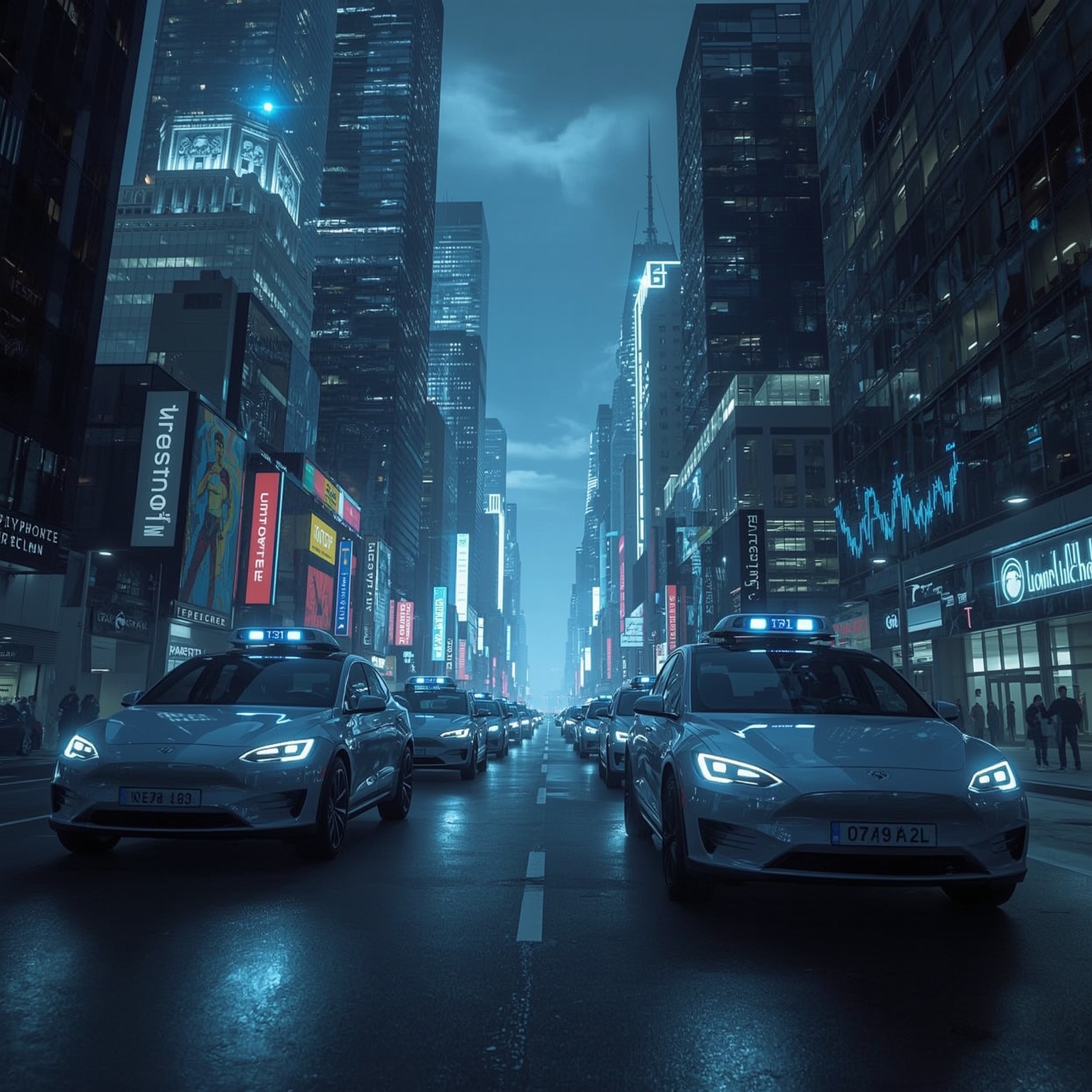
He went on to predict that Full Self-Driving (FSD) capabilities and a global fleet of robotaxis would revolutionize the transportation industry by drastically increasing road safety and efficiency. Expressing full confidence in Tesla’s ability to deliver unsupervised, fully self-driving functionality, Musk claimed the resulting system would surpass human drivers in safety by a substantial margin. He also highlighted that billions of existing Tesla vehicles already possess hardware that, once activated through software updates, could transition into fully autonomous machines. To meet anticipated demand, Musk explained that Tesla intends to expand its manufacturing output as quickly as operationally feasible. He added that by the end of this year, the company expects to operate robotaxis without safety drivers across much of Austin and aims to extend these operations to roughly eight to ten major metropolitan areas, including Nevada, Florida, and Arizona.
**2. The Controversy Over Musk’s Compensation**
The topic of Elon Musk’s proposed $1 trillion pay package dominated the latter portion of the call. Chief Financial Officer Vaibhav Taneja closed the event by urging shareholders to cast their votes in favor of the landmark compensation plan, framing it as essential to maintaining Musk’s leadership and vision at Tesla. Musk responded to critics with characteristic candor, referring to two influential proxy advisory firms—Institutional Shareholder Services (ISS) and Glass Lewis—as “corporate terrorists.” He argued that their historical recommendations, if followed, would have inflicted serious harm on Tesla’s ability to innovate and compete.
This debate arises in the aftermath of a Delaware court ruling earlier in 2024 that invalidated Musk’s previous 2018 compensation package, which had been valued at approximately $55 billion. In September, Tesla’s board introduced a new, performance-based remuneration plan that could be worth as much as $1 trillion, contingent upon Musk’s achievement of a series of demanding milestones over a ten-year period. These targets encompass growth in the company’s vehicle production, robotaxi deployment, and robotic delivery initiatives. Shareholders are scheduled to determine the fate of this proposal during a pivotal vote on November 6.
**3. Progress Toward Optimus V3**
Turning to Tesla’s robotics initiative, Musk offered an eagerly anticipated update on Optimus, the company’s humanoid robot in development. He announced that Tesla aims to unveil a working prototype of the next generation—known as Optimus V3—by February or March 2026. Describing its design with enthusiasm, Musk remarked that the robot “will not even seem mechanical,” suggesting a level of human-like fluidity and natural movement that could blur the line between machine and person.
However, Musk acknowledged that the journey to mass production is fraught with engineering difficulties. Developing a humanoid system that can eventually participate in the global economy requires solving extraordinarily complex technical problems, particularly in the intricate mechanics of replicating the human hand. He admitted that Tesla’s engineers are spending long hours—often through weekends—working to overcome these challenges. Unlike automobiles or computers, which benefit from well-established supply chains, humanoid robots have virtually no pre-existing industrial infrastructure. Therefore, Tesla must invent one from scratch before it can begin large-scale production. Musk concluded that the company’s goal is to establish a manufacturing line capable of building up to one million Optimus units annually by the close of 2026—a target that, while ambitious, underscores Tesla’s appetite for redefining the boundaries of automation.
**4. Expanding Partnerships in Advanced Chip Development**
Another focal point of the earnings call was Tesla’s strategic collaboration with two semiconductor titans: Samsung and Taiwan Semiconductor Manufacturing Company (TSMC). These partnerships aim to develop the company’s next-generation AI5 self-driving computer chips, which are expected to form the technological backbone of Tesla’s autonomous capabilities.
Musk highlighted a previously announced $16.5 billion agreement with Samsung, leveraging the corporation’s new manufacturing facility under construction in Taylor, Texas. Simultaneously, TSMC will continue its longstanding involvement with Tesla, contributing additional chip production through its plant in Arizona. Musk revealed that Tesla’s explicit goal is to maintain an oversupply of AI5 chips to ensure uninterrupted innovation and scalability. He asserted that the new AI5 chip will outperform its predecessor by a factor of forty, made possible by Tesla’s meticulous control over both hardware and software integration—allowing the company to fine-tune every level of performance and reliability.
**5. Navigating Tariffs and Global Market Pressures**
Despite Tesla’s many technological advances, external economic forces continue to challenge its operations. Chief among these are tariffs, which have increasingly impacted the company’s energy storage division as well as its automotive business. CFO Taneja reported that combined tariff-related costs for both segments exceeded $400 million in the third quarter alone, though he noted some sequential improvement in service and other divisions. Tesla’s official statement echoed these concerns, citing “near-term uncertainty” resulting from shifting trade dynamics, evolving tariff policies, and fiscal adjustments across key markets.
Although Tesla’s Shanghai Gigafactory helps mitigate some of these pressures by exporting vehicles to countries outside the United States, the company still experienced a 40% year-over-year decline in operating income. This contraction reflects not only the heavier tariff burden but also higher per-vehicle production costs and intensified competitive headwinds in the global EV sector.
Taken together, Tesla’s third-quarter disclosures reveal a company simultaneously facing growing pains and pushing the boundaries of innovation. The blend of record revenues, ambitious AI and robotics goals, strategic semiconductor alliances, and fierce debates over leadership compensation illustrates the complex interplay of vision, volatility, and relentless ambition that continues to define Tesla’s identity in the modern technological landscape.
Sourse: https://www.businessinsider.com/5-big-takeaways-from-teslas-q3-earnings-call-2025-10