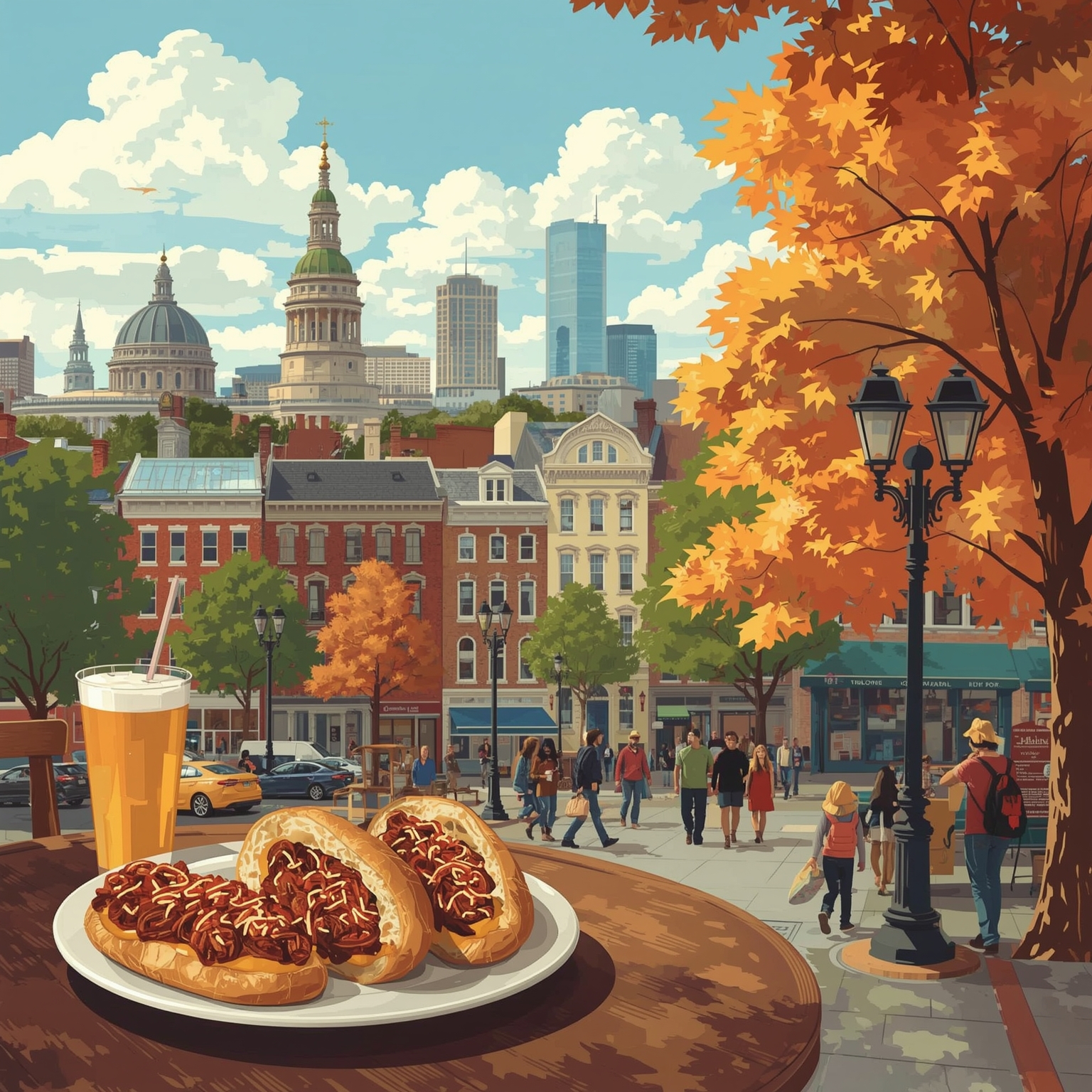
I was born and have spent my entire life in Philadelphia, the city that shaped both my worldview and my sense of belonging. Over the years, I have crossed paths with countless travelers eager to experience the City of Brotherly Love, often discovering its charm through a narrow lens of a few overhyped spots. What many don’t realize is that Philadelphia’s energy extends far beyond the predictable tourist itineraries—it thrives in its neighborhoods, in the warmth of its people, and in the seemingly ordinary streets that reveal the city’s true character.
When people think of visiting Philadelphia, food is understandably top of mind, but the city’s culinary landscape is far more diverse and layered than the fame of Pat’s and Geno’s might suggest. Locals know that beyond those iconic—but often overcrowded—cheesesteak stands lies an entire constellation of extraordinary eateries. You’ll find deeply satisfying yet affordable meals tucked in unassuming corners, where the aroma of freshly baked bread or sizzling meat spills into the street. From world-class tasting menus in Rittenhouse Square to hand-rolled tacos in South Philly’s Italian Market, steaming bowls of Vietnamese pho along Washington Avenue, and colorful Ethiopian platters in West Philly, every neighborhood contributes its own flavor to the city’s gastronomic map. Even though Fishtown receives the spotlight as a culinary hotspot, it truly represents only a single, though vibrant, slice of Philadelphia’s expansive food scene. The best advice? Ask locals where they personally like to eat—they’ll send you to places that define the soul of the city.
A pleasant surprise for newcomers is the number of restaurants that operate as BYOBs—short for “bring your own beverage.” Because liquor licenses are notoriously expensive, many dining spots choose to forgo them entirely, allowing guests to bring their preferred bottle of wine or a few craft beers instead. This practice does more than save diners money; it creates an atmosphere of casual familiarity, where friends unpack their own vintages and share them at candlelit neighborhood joints. Before heading out, it’s always wise to check a restaurant’s policy online or by phone and, if necessary, stop by a nearby bottle shop to complete your plans.
While food forms a central part of the city’s personality, Philadelphia’s pleasures extend to its walkable design and accessible urban layout. For a major American city, Philadelphia is remarkably suited to exploration on foot. Slip into a pair of comfortable shoes and you’ll discover that many of its most intriguing attractions are best appreciated at a pedestrian’s pace. The journey from West Philly to the Delaware River may span roughly ninety minutes, yet that walk weaves through an extraordinary cross-section of the metropolis—from the university-lined streets of West Philadelphia across the graceful Schuylkill River, through the elegance of Rittenhouse Square, and past history-steeped landmarks like Independence Hall and the Liberty Bell, before arriving at the cobblestoned charm of Old City. Each district along the way tells a different story, offering new perspectives on Philadelphia’s past and present.
Of course, no visitor’s checklist feels complete without addressing the eternal question of cheesesteaks. Although Pat’s and Geno’s have achieved near-mythical status in popular culture, their fame often overshadows equally deserving competitors sprinkled throughout the city. Many residents swear by lesser-known but exceptional spots such as Angelo’s Pizzeria—where the pizza is as legendary as the sandwiches—John’s Roast Pork, or Sonny’s in Old City. A friendly warning to first-timers: many of these beloved, cash-only establishments don’t accept cards, so come prepared.
Contrary to what some might expect of a densely built urban area, Philadelphia boasts a surprising abundance of green spaces that invite relaxation and exploration. The Schuylkill River Trail offers a scenic route that winds through the heart of the city toward the Philadelphia Museum of Art, offering glimpses of rowing crews, joggers, and picnicking families along the way. Farther west lies Bartram’s Garden, a historic oasis stretching over nearly fifty acres, where carefully cultivated gardens coexist with a working farm and panoramic views of the skyline. In Northwest Philly, Wissahickon Valley Park beckons hikers with wooded trails and quiet creeks, while the John Heinz National Wildlife Refuge near the airport attracts birdwatchers eager to spot herons, hawks, and egrets. Many of these retreats are only a bus or train ride away, proving that peace and nature are never out of reach, even in a city famed for its grit and dynamism.
Philadelphia’s residents, often stereotyped as blunt or unapproachable, tend to surprise visitors with their generosity of spirit once conversations begin. Yes, the city’s temperament can appear brusque at first glance, but beneath that directness lies genuine warmth and pride. Philadelphians love their home—perhaps with the intensity of their legendary sports fandom—and many are eager to share their knowledge and affection with curious newcomers. Whether offering directions, recommending a restaurant, or sharing a story about a favorite corner bar, locals frequently go out of their way to ensure visitors feel welcomed. In my own daily life, I find joy in pointing strangers toward hidden gems or explaining the best way to navigate SEPTA, our public transit system. Here, community trumps exclusivity: we believe our city’s treasures are meant to be enjoyed, not guarded.
Another hallmark of the Philadelphia experience rests on the steps famously climbed by the fictional boxer Rocky Balboa. The so-called “Rocky steps”—the long flight leading to the Philadelphia Museum of Art—appeal to travelers who relish the chance to recreate that cinematic run or snap a photo beside the bronze statue nearby. Yet, I always implore visitors not to let the pop culture moment be the end of their visit. The museum itself is among the foremost art institutions in the nation, housing an expansive and varied collection that rewards unhurried exploration. Within its galleries, you can move from Renaissance masterpieces to daring works of modern creativity, tracing humanity’s visual imagination across centuries. Those with a continued appetite for art should make a detour to the Barnes Foundation, where impressionist, post-impressionist, and early modern pieces sit curated in a world-renowned arrangement that feels as personal as it is scholarly.
Perhaps the greatest misconception outsiders hold is that Philadelphia exists merely in New York City’s shadow—a smaller, cheaper sibling perpetually defined by comparison. To locals, however, this notion couldn’t be further from the truth. Our city radiates its own distinct identity and confidence. It hums with a rhythm influenced by its centuries-old history, its thriving music and culinary scenes, and its ever-evolving cultural life. Philadelphia doesn’t need to be measured against any other metropolis; it stands proudly as a city of creators, thinkers, athletes, dreamers, and everyday people who care deeply about where they live. And as someone who has never called another place home, I can promise that once you wander through its neighborhoods, share a meal with its people, and feel its heartbeat for yourself, you’ll understand why this city keeps captivating everyone who truly sees it for what it is. This story was first shared on October 28, 2023, and most recently refreshed on October 15, 2025, yet its message endures: come to Philadelphia with curiosity, an open heart, and good walking shoes, and it will reward you many times over.
Sourse: https://www.businessinsider.com/philadelphia-things-to-know-before-visiting-tourist-tips-from-local-2025-10