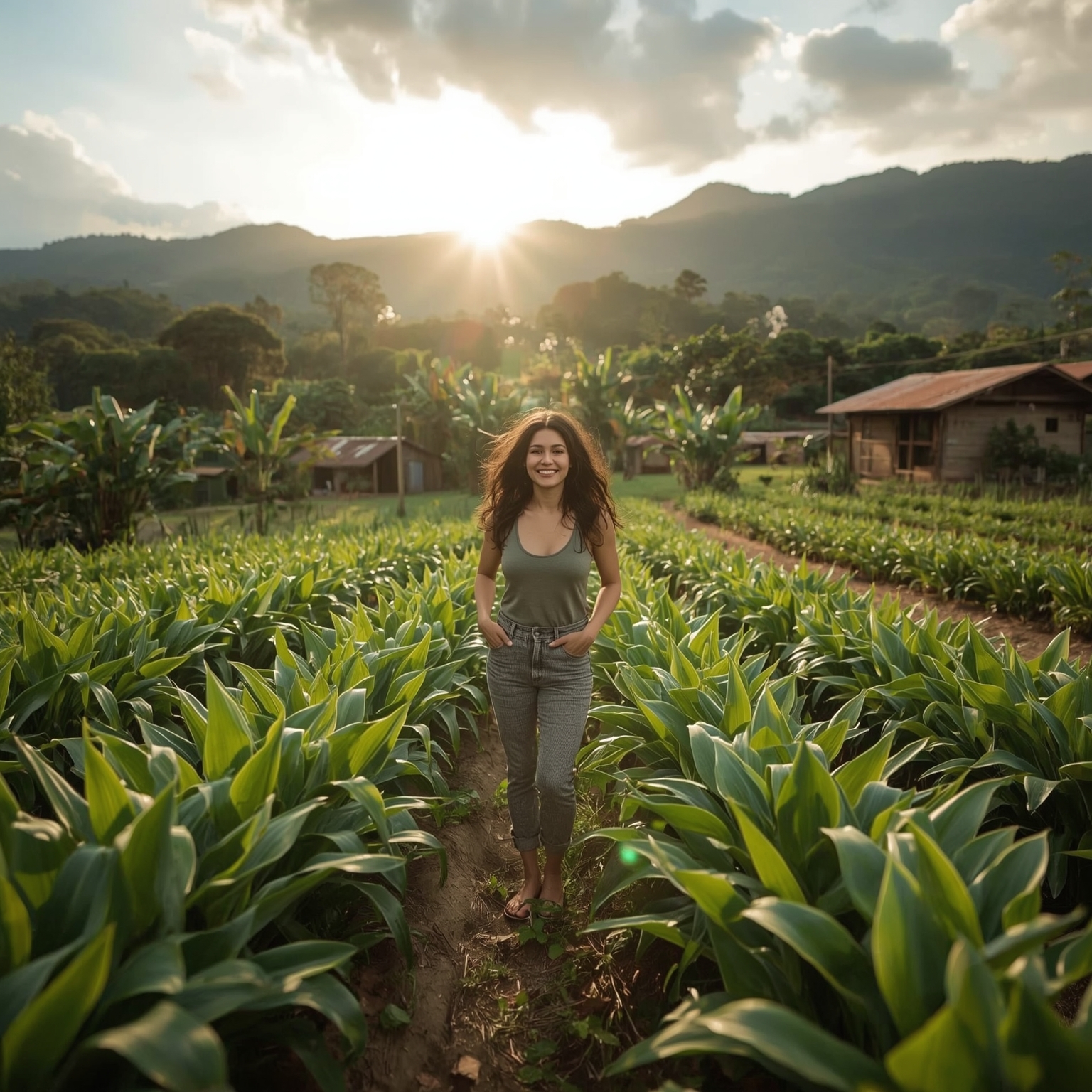
Esmeraldas, a coastal province of Ecuador enveloped by luxuriant stretches of jungle, has long been accompanied by a reputation that is equal parts enchanting and intimidating. Its beauty is undeniable, yet the cautionary tales that circulate about crime and unrest often dissuade travelers from experiencing its true spirit. For me, however, the province served as the unlikely backdrop for an essential life lesson — a reminder of the importance of movement, growth, and refusing to allow one’s personal ambitions to wither through neglect.
Just last month, I embarked on an eleven-hour journey by car, setting out from my home with the goal of spending two weeks in a remote town located on a parcel of land owned by the mother of a close friend. Part of my motivation lay in simple curiosity: the coastal scenery of Esmeraldas had always called to me, with its reputation for lush vegetation and vibrant culture. Yet another part stemmed from exhaustion with the monotony of routine — a deep yearning to reset, to breathe in a different rhythm of life, and to see what revelations might surface under the canopy of palm and ceiba trees.
Upon arrival, the farmhouse itself welcomed me like a stage set for a slower, more deliberate existence. Standing within its wooden walls, I gazed outward at the surrounding greenery, enthralled by the swaying of enormous banana leaves, almost languid in the humid air. Rows of coffee plants cascaded down the hillside with the kind of order that emerges only through years of patient care. Chickens wandered freely across the property, darting between tall grasses with high-pitched chirps, while a neighbor trotted past on horseback in a casual yet dignified rhythm that seemed to belong to another era.
This land was more than soil and timber; it was the culmination of decades of perseverance. Carmen, my friend’s mother, now approaching her sixtieth year, had grown up in Esmeraldas. After many years abroad, where she had painstakingly built a successful cleaning business in Australia, she ultimately chose to return to her ancestral home. Here, she was finally able to fulfill the dream she had carried since girlhood: to nurture her own farm and live in harmony with the cycles of nature.
For me, Esmeraldas felt not only geographically distant but psychologically remote from Toronto, the bustling Canadian city where I had spent the better part of my twenties. I left Toronto more than seven years ago when the high velocity of urban life — its pace, predictability, and staggering cost of living — became a weight I no longer wished to carry. Ecuador, where I now reside, has offered me the opposite: an invitation to slow down, to live more sensibly, and to interact closely with landscapes that feel alive and unspoiled.
Of course, much of what I had previously heard about Esmeraldas had been colored by forewarning and prejudice. Acquaintances described it as unsafe, its city plagued with danger, cautioning me to think twice before ever venturing there. Yet my Ecuadorian-Australian friend was blunt about it: “That’s racism,” she asserted one evening after we had been warned again to avoid the place. Her words resonated, reminding me that narratives about danger are often filtered through stereotypes rather than grounded in firsthand understanding. Having lived and traveled throughout Ecuador, Colombia, and much of Latin America, I knew all too well how easily reputations spread about particular regions, often with little nuance or context.
So, when the invitation arrived to spend time on Carmen’s farm, I accepted eagerly. Together with two friends, we left Cuenca — the colonial Andean city many of us now call home — and wound our way down Ecuador’s serpentine mountain highways. Hours later, as dawn painted the sky in shades of rose and amber above the Pacific coast, we were ready to immerse ourselves in the cadence of rural life, to lay down the burden of constant work, and simply listen to what the land itself might whisper.
A few days into our stay, the weather shifted, the sky silvered with overcast clouds, and Carmen guided us through the sprawling property. With her machete flashing in the humid air, she hacked away persistent weeds while urging us to gather the fruits of the farm: tangy oranges, fiery peppers, aromatic limes, and coconuts heavy with juice that quenched the heat of the day. Only a short time earlier she had teased me with an unexpected question: “Sinead, are you todo terreno — truly an all-terrain kind of person?” Bewildered at first, I had responded hesitantly, unsure of what she meant. It soon became clear: in Esmeraldas, Carmen is the embodiment of resilience, a woman both defined by her adaptability and her unwavering comfort with the land’s hardships. Her machete was not a tool alone; it was a symbol of her ability to carve out a life exactly where she chose.
Within the farmhouse kitchen, her vitality expanded even further. Breezes from the jungle drifted in through open windows as she kneaded grated yucca into dough, shaping it into rustic rounds of bread. She filled each with cheese, peppers, onions, and garlic, recreating a recipe once passed down by her grandmother. To witness this act was to see continuity across generations, a ritual of memory and sustenance shared through flavors. When the bread emerged from the oven and I took my first bite, I was struck not only by its perfection but by everything it represented: persistence, heritage, and the fulfillment of an enduring vision.
The days that followed unfolded as a quiet affirmation that life, when tended with patience and conviction, bears fruit in both literal and metaphorical forms. From steaming cups of freshly brewed coffee in the early mornings, to afternoons marveling at the hills, to evenings where Carmen presented the bounty of her ocean-sourced lobster, each moment radiated the effort and dedication she had invested over decades. What stood before us was not accidental: she had deliberately made her career choices abroad with the sole aim of, one day, returning to reclaim her land. With her own hands, she had cleared the dense vegetation, designed and built her wooden dream house, and planted groves of yucca, cacao, coffee, and an astonishing array of tropical fruits.
One afternoon, as she effortlessly peeled the skin of an orange in a single, continuous spiral — a seemingly casual act that nonetheless reflected her years of practiced skill — she smiled knowingly. “I always knew I’d get here one day,” she said quietly. Her certainty reverberated within me, sparking questions about my own ambitions. What form, I wondered, might my equivalent of her wooden farmhouse and cultivated land take? What legacy, shaped by my creativity and my choices, do I hope to build?
For now, the answer lies not in rushing toward a conclusion but in continuing to cultivate my own life in Latin America. Here I can translate the richness of these landscapes and moments into my writing, just as Carmen transforms her patch of earth into nourishment, abundance, and home. Like her, I must tend to my craft deliberately and without fear — treating each blank page not as an enemy but as fertile ground awaiting cultivation.
When, after two weeks, I left Esmeraldas, it felt as though I carried more than a suitcase. I carried with me a newfound clarity, a recognition that personal growth requires the same patience and courage that Carmen invested in her farm. Walking away from the jungle, I understood that transformation is always possible — we need only the perseverance to transform untouched soil into a flourishing garden, or a blank sheet into a story worth telling.
Sourse: https://www.businessinsider.com/woman-living-abroad-ecuador-slow-down-esmeraldas-latin-america-2025-9