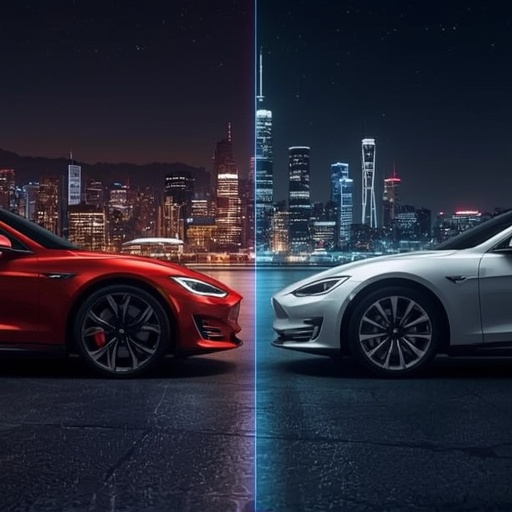
A profound transformation is unfolding within the global automotive landscape, and at its center stands Stellantis—one of the largest and most established Western car manufacturers—embarking on an unexpected yet strategically insightful partnership with a rapidly expanding Chinese automaker. This collaboration marks far more than a simple business agreement; it embodies a striking paradigm shift in how automotive powerhouses across continents perceive competition, innovation, and the very essence of progress in a highly interconnected world. By aligning with a newcomer from the East that possesses remarkable technological momentum and market agility, Stellantis seeks not merely to maintain relevance but to reinvent its role in the evolving dynamics of global mobility.
This alliance illustrates the growing interdependence between traditional automotive giants—whose expertise encompasses decades of engineering excellence and global brand recognition—and emerging Chinese manufacturers, whose strengths lie in cutting-edge electric vehicle (EV) technologies, digital integration, and dynamic production strategies. In joining forces, these two forces reconcile what were once seen as divergent industrial approaches: the methodical craftsmanship and legacy-driven reliability of Western manufacturing on one hand, and the rapid innovation cycles and technology-forward mentality characteristic of the East on the other. Together, they are crafting an entirely new model of cooperation, where efficiency, sustainability, and bold experimentation converge to redefine the automotive future.
Moreover, this partnership signals a broader reconfiguration of global industry norms, underscoring the fact that genuine innovation increasingly emerges from collaboration rather than fierce rivalry. The automotive sector—long defined by cutthroat competition and brand-driven isolation—is now being recast into an ecosystem where alliances pave the way for more sustainable and technologically advanced futures. For Stellantis, this means leveraging an opportunity to access rapidly developing markets, diversify its electric and hybrid portfolio, and accelerate its transition toward carbon neutrality. For its Chinese counterpart, the partnership facilitates global visibility, operational insight, and a powerful springboard into mature Western markets.
At its core, the Stellantis–Chinese automaker alliance embodies the notion that progress is no longer confined by geography, legacy, or corporate tradition. Instead, the future of mobility depends on the willingness of established and emerging players alike to bridge cultural, technological, and strategic divides. Through this union, East quite literally meets West in an extraordinary pursuit: to drive humanity toward a cleaner, smarter, and more interconnected automotive era. The result is not simply a new business tactic—it is a reimagining of how the world will move, innovate, and collaborate in the decades to come.
Sourse: https://www.wsj.com/business/autos/stellantis-manufacturing-china-c2c34e8f?mod=pls_whats_news_us_business_f