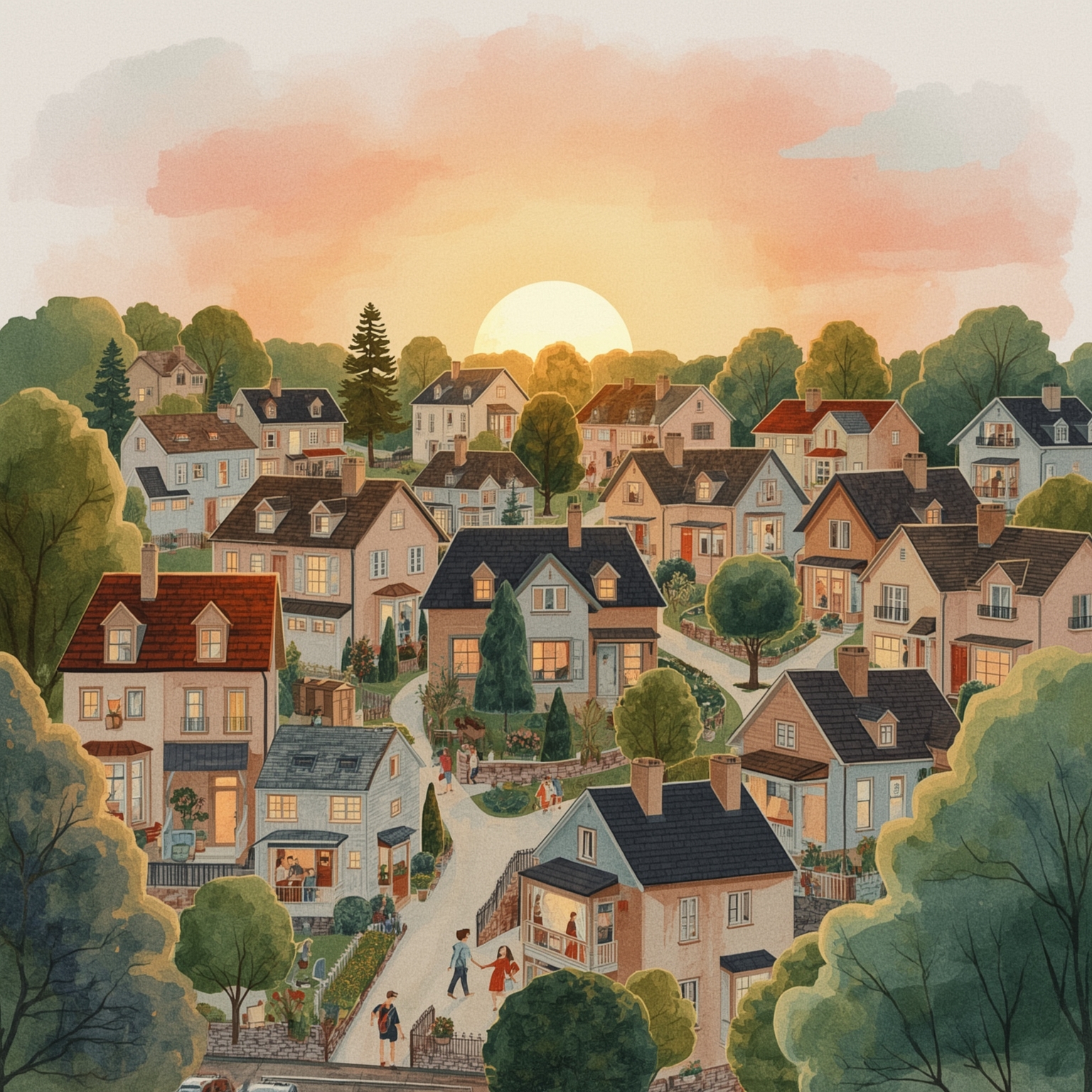
Almost immediately after discovering that I was expecting my first child, a familiar chorus of advice began to echo around me. Friends, colleagues, and even casual acquaintances repeated a phrase that would soon become almost proverbial in my mind: “It takes a village.” At the time, their words sounded pleasant yet abstract—a comforting sentiment whose depth I had not yet begun to understand. Smiling politely, I would nod along, unaware that the quiet truth nested within that simple statement would eventually become one of the guiding principles of my motherhood journey.
Meanwhile, my parents, with all their lived experience, gently cautioned me that raising children without nearby family could present unique challenges. They emphasized that nothing could truly replace the unwavering loyalty and instinctive support of kinship. Despite their warnings, my husband and I felt confident that we could build a fulfilling life in Washington, D.C., the city where we had chosen to plant our roots. In our youthful optimism, I reassured myself that if the beloved concept of a “village” truly held power, surely we could construct one of our own when the time came.
Without intentionally planning it, I began to lay the foundation for that village even before my daughter’s arrival. During my prenatal classes, another expectant mother invited me to join a small circle of pregnant women whose due dates clustered closely together. This group soon became more than a casual assembly; it transformed into a support network bound by shared questions, anxieties, and excitement. Many of us lived far from our extended families, so we pledged to fill that gap for one another—to cook nourishing meals for each other after delivery, to take turns babysitting as our children grew older, and to act as occasional surrogate aunties when needed. Even friends without children embraced roles as honorary family members, eager to offer laughter and companionship.
When my daughter was born, that fledgling village proved its strength almost immediately. Shortly after her birth, she required care in the neonatal intensive care unit, and in those vulnerable days, friends arrived with steady waves of kindness—homemade meals, words of reassurance, and the sheer comfort of their presence. Once she was well enough to come home, visitors continued to flow through our door for weeks. They held my baby so I could steal moments for basic self-care: a brief shower, a few sips of tea that stayed warm long enough to savor. Others accompanied me to medical appointments, walking beside me as I navigated the physical and emotional recovery of new motherhood. In those moments, I realized the full truth behind that once-abstract saying: the village truly worked. Even without nearby relatives, we were surrounded by care.
As the years unfolded and our family expanded—with three more children eventually joining the fold—so too did the size and complexity of my village. What began as a handful of supportive mothers grew into a well-coordinated network of friends united by necessity and shared values. A group of us who frequented the same playground decided to form a babysitting co-op, a collaborative system that allowed each parent a few hours of breathing room each week. We cared for one another’s children with the same tenderness and vigilance we offered our own. When my children entered elementary school, my woven web of relationships widened once again. Fellow parents, many also separated from their families by distance, became one another’s emergency contacts and trusted allies. In practical terms, this commitment meant we would drop everything if one of us needed help—and we did.
During times of illness or exhaustion, my friends ensured that my household remained steady. On one particularly difficult occasion when I was unwell for several weeks, they appeared with trays of food, walked my children through the park, and granted me the gift of rest. The village had grown not only in size but in reliability. At any moment, I could message a dozen people to pick up my youngest child from school or to provide after-school care if an unexpected delay occurred. Some friends became so close that I would not hesitate to call them even in the middle of the night if help were needed. When my husband was recovering from an injury and my job required travel, friends volunteered without reservation to check in on him, ensuring that he had everything he needed. Their generosity astonished and humbled me. Yet, even amidst that abundance of goodwill, a quiet longing lingered—an unshakable wish that my parents or siblings lived just around the corner.
I recognize, with immense gratitude, that I am fortunate to have such an extensive circle of support. Still, there are boundaries, both spoken and unspoken, that distinguish a village from family. Although my friends’ dedication never wavers, I often find myself carefully considering how much to ask of them. While family members might anticipate my needs instinctively and intervene without hesitation, I tread more lightly with friends, unwilling to impose too frequently or too deeply. Some requests simply belong in the sacred realm of family—the kind of favors that rest on unconditional ties rather than on the reciprocity of friendship. For instance, I could never bring myself to ask a friend to stay at my home overnight with my children unless an absolute emergency left me no other option.
Over the years, I have also learned that even a thriving village is subject to change in ways that family rarely is. A few of my once–closest companions have moved away. Others drifted naturally from my daily life as our children grew and began attending different schools. The bonds remain fond but are no longer constant—a quiet reminder that friendship, though profound, is fluid. Family, by contrast, provides a form of steadfastness that feels almost elemental, immune to the shifting currents of distance or circumstance.
I often catch myself imagining how different things might have been had we raised our children closer to family—grandparents dropping by unannounced, cousins playing together on familiar lawns, a network of relatives whose connection to our children would remain unbroken by geography. The thought carries both comfort and melancholy. My village is extraordinary; its members have become integral to the fabric of our lives. They have been there through joy and struggle, laughter and exhaustion, holding up the corners of our world. Yet, deep down, I know that even the most magnificent village, however full of love, cannot perfectly replicate the unique, enduring embrace of family.
Sourse: https://www.businessinsider.com/kids-village-community-family-2025-10


