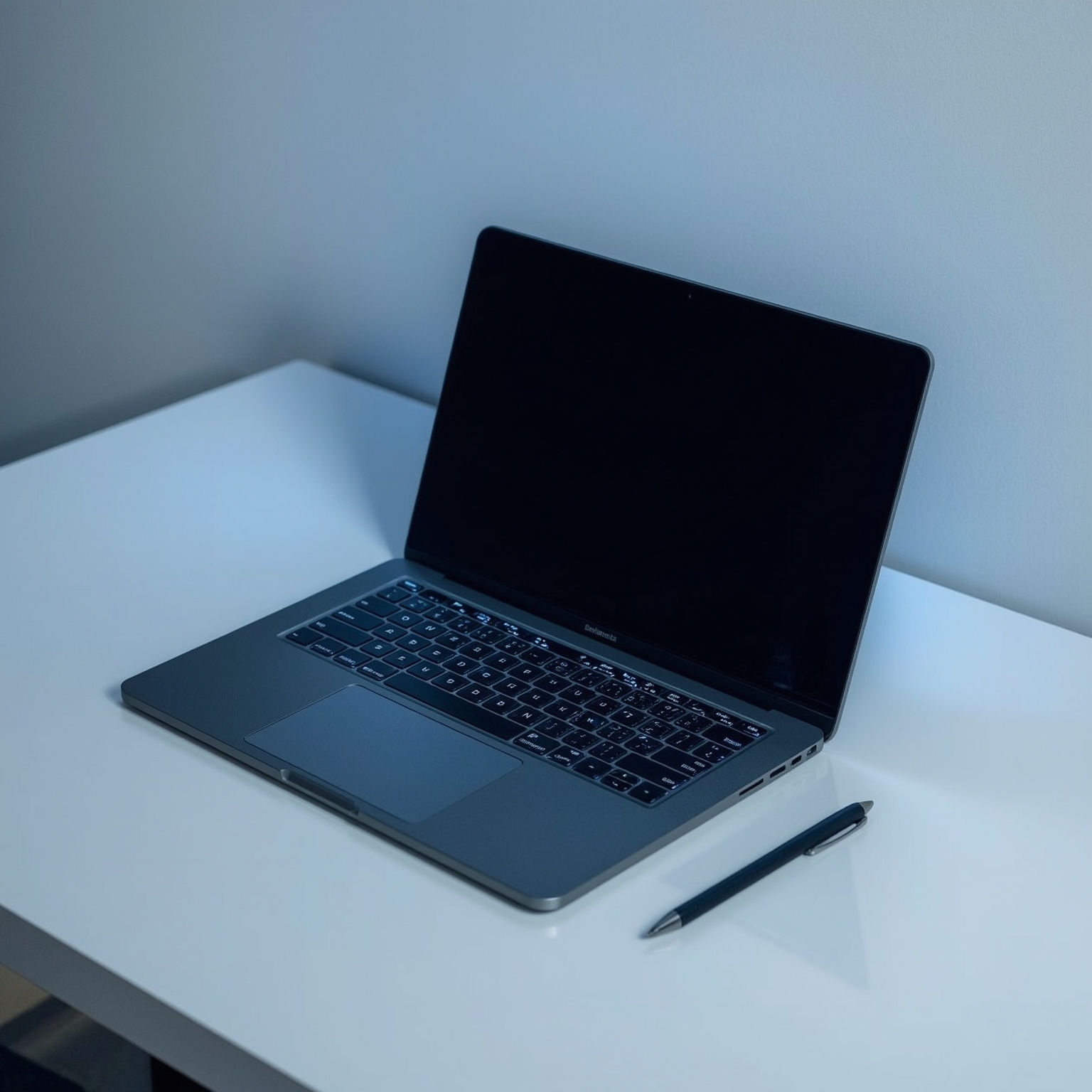
When I first had the opportunity to evaluate Acer’s Chromebook Plus Spin 514 in its preproduction form a month ago, my expectations were measured yet tinged with hope. The early version suggested potential, but final judgments needed to wait for the completed product. Now that the production-ready model has arrived, I can confidently say that Acer’s newest convertible Chromebook has largely succeeded in fulfilling its promise—though not without a few noticeable compromises.
This refreshed Spin 514 represents Acer’s continued effort to refine what a premium ChromeOS experience should feel like. As a 2-in-1 device, it aims to merge flexibility with power, offering brisk performance, exceptional endurance, and intuitive touch interaction bolstered by stylus support. The result is a machine that feels more capable than most others in its class. Its responsiveness, aided by the MediaTek Kompanio Ultra 910 processor, makes daily workflows—ranging from web-based productivity suites to multimedia consumption—smooth and efficient. Add to that an impressively enduring battery that easily spans a full working day and often stretches into the next, and you have a laptop designed for real-world use rather than just lab-bench metrics.
However, Acer’s achievement isn’t entirely unhindered. Two major drawbacks prevent this model from unseating the reigning champion among Chromebooks, Lenovo’s Chromebook Plus 14: a disappointing set of speakers that deliver muddled, uninspired audio, and the conspicuous absence of a fingerprint reader for instantaneous biometric authentication. In a device priced at $700, such omissions feel more significant, especially when competitors offer comparable or even superior hardware features—like an OLED display and additional memory—at a modestly higher cost.
The specific configuration under review embodies Acer’s base $699 version, featuring MediaTek’s Kompanio Ultra 910 processor—an Arm-based chip identical to the one powering Lenovo’s alternative. Complementing the CPU are 12GB of RAM and 256GB of UFS storage, a combination that ensures the system remains responsive even under multitasking pressures. Its 14-inch touchscreen, with a 1920 x 1200 resolution, offers a 120Hz refresh rate and brightness that peaks at 300 nits. While Acer enables USI 2.0 stylus compatibility, the pen must be purchased separately, and disappointingly, the chassis offers no integrated storage bay for it. For users desiring slightly higher specifications, Acer also sells an upgraded $799.99 option boasting 16GB of RAM and a sharper 2880 x 1800 panel brightened to 340 nits. Yet, those modifications leave the machine’s larger shortcomings—its weak speakers and lack of biometric convenience—unresolved.
Evaluating key aspects individually reveals a well-rounded though imperfect device. The screen, for instance, earns a solid but not spectacular grade. While brighter displays at 400 nits or higher would offer superior outdoor visibility, and OLED technology would yield deeper blacks and richer color contrast, the existing IPS panel is commendably pleasant to the eye. The 1920 x 1200 resolution—though not dazzling—is an acceptable midpoint for a 14-inch display, offering reasonably crisp detail so long as color balance and contrast remain accurate, which they do here. Indeed, side-by-side with the Lenovo’s OLED screen, Acer’s display appears less vivid, yet it redeems itself slightly with its smoother 120Hz refresh rate that makes scrolling and stylus input notably fluid. Stylus recognition performs admirably, with precise pressure sensitivity during note-taking sessions, though palm rejection occasionally falters, occasionally registering minor stray lines from unintentional touches. Structurally, the display is attached through a robust 360-degree hinge, maintaining sturdiness when flipped or converted into tablet or tent modes.
At the heart of Spin 514’s appeal lies its Kompanio Ultra 910 chip, an advanced processor derived from Arm architecture. This silicon enables the Chromebook to handle routine computing effortlessly—be it Google Workspace document editing, multiple-tab browsing, or light streaming—and it does so with conspicuously minimal noise and heat. Interestingly, unlike Lenovo’s fanless equivalent, Acer includes a cooling fan that, despite its presence, remains remarkably quiet. Benchmarks indicate a subtle performance edge over the Lenovo equivalent, though in day-to-day workloads such differences are scarcely perceptible. What consistently impresses is energy efficiency: during extended work sessions spanning eight to nine hours of continuous use across Slack, Docs, Spotify, messaging applications, and dozens of Chrome tabs, the notebook still retains enough power to manage nearly half the following day before requiring a recharge. It is precisely this kind of stamina that transforms convenience into reliability.
In terms of core physical interactions, Acer delivers solid ergonomics. The keyboard, while slightly less tactile than Lenovo’s best-in-class offering, provides an agreeable typing experience with adequate key travel and consistent response. The touchpad, mechanical and satisfyingly firm, offers a refinement in sound and feel that many Chromebooks overlook. Port selection is pragmatic: twin USB-C connectors operating at 10Gbps enable swift data transfer rates, outpacing those found on Lenovo’s competitor, alongside dual USB-A ports and a standard headphone jack.
Peripheral elements like the webcam and microphone speak to Acer’s incremental progress. Gone are the grainy, overly sharpened visuals of earlier Acer laptops. The new 5-megapixel sensor outputs images with genuine clarity and balanced tone—even maintaining commendable performance under dim or mixed lighting conditions. Though it occasionally struggles in overly bright environments, taking a brief moment to adjust exposure, the overall image quality stands leagues above prior efforts.
Unfortunately, the Spin 514’s Achilles’ heel remains unmistakable: its substandard speakers. Positioned on either side of the keyboard, they fail to produce the fullness, clarity, or spatial balance expected at this price tier. Their orientation becomes especially problematic when the device shifts into tablet or tent mode, as the audio disperses away from the listener. Even in conventional laptop form, the sound remains muffled and shallow, marring an otherwise immersive experience. Similarly, the absence of a dedicated fingerprint sensor—something increasingly common even on mid-range devices—forces reliance on PIN codes or proximity-based smartphone unlocking, neither of which replicate the immediacy or convenience of biometrics.
Despite these shortcomings, Acer’s Chromebook Plus Spin 514 occupies an admirable position within the hierarchy of modern Chromebooks. It doesn’t seize the crown from Lenovo’s OLED-equipped model, but it undoubtedly earns a noble title—a reliable and versatile option for those who prioritize flexibility, touchscreen convenience, and exceptional battery performance. The combination of speed, longevity, and ChromeOS simplicity makes it an appealing choice for professionals, students, or travelers who frequently switch between typing, sketching, and streaming modes.
If I were purchasing a premium Chromebook today, I would still lean toward the Lenovo Chromebook Plus 14, particularly given its OLED display, superior speakers, and integrated fingerprint sensor for just fifty dollars more. However, the Acer Spin 514 retains its relevance, especially for users drawn to the convertible 2-in-1 form factor. Its value proposition will become even stronger as the price inevitably dips—Acer’s laptops are well known for seasonal discounts, and company insiders have confirmed that this model is expected to reach $599.99 during promotional periods at major retailers like Best Buy. At its standard $699 price point, the device is already worthy of recommendation for those specifically desiring a high-quality, convertible Chromebook; at its discounted rate, it transforms into an even more compelling purchase.
Ultimately, the 2025 Acer Chromebook Plus Spin 514 proves that ChromeOS laptops can balance practicality with near-premium ambition. While its less-than-stellar speakers and missing biometric login leave room for refinement, its energy efficiency, speed, and robust hinge design reaffirm Acer’s progress in delivering hardware that feels polished, purposeful, and dependable. For anyone seeking a sophisticated Chromebook with significant endurance and convertible agility, the Spin 514 stands as one of the strongest contenders currently available.
Sourse: https://www.theverge.com/tech/791532/acer-chromebook-plus-spin-514-2in1-laptop-review