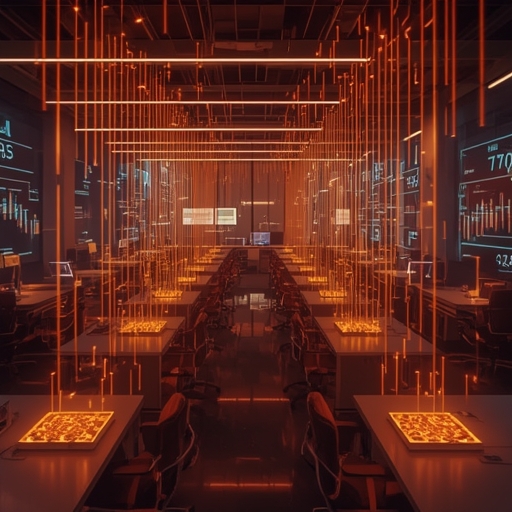
The resurgence of the so‑called ‘Pentagon Pizza’ theory, now dressed in the sleek aesthetics of the artificial intelligence era, invites a more deliberate reflection on what efficiency truly means in contemporary work culture. Once upon a time, late‑night pizza deliveries to the Pentagon symbolized heroic devotion and creative midnight breakthroughs. In this transformed landscape, that same emblem becomes an indicator of something more complicated: the simultaneous promise and burden of technological acceleration.
Recent analytical data from corporate food‑delivery networks—those silent observers of modern labor habits—suggest that although artificial intelligence tools were heralded as instruments to reclaim our time, the opposite trend is quietly emerging. Instead of winding down when automation steps in, many employees remain at their screens far into the night, echoing the frenetic energy once confined to crisis rooms and code sprints. Laptops glow against the darkness, meetings stretch across time zones, and dinner becomes an afterthought replaced by a hurried slice ordered at 10 p.m.
Artificial intelligence, for all its brilliance, has redefined the concept of productivity in less tangible ways. The algorithms delegate the mechanical components of work—data compilation, scheduling, initial drafts—yet the human mind still shoulders the creative, interpretive, and emotional dimensions. As a result, output multiplies even faster, expectations inflate, and the quiet hours once reserved for reflection or rest are consumed by perpetual availability. Efficiency, it seems, has broadened its scope but compressed our boundaries.
For business leaders, this paradox demands more than rhetorical admiration of innovation. They must ask whether AI is liberating human potential or merely stretching the workday into the night. When efficiency tools translate into unending accessibility, the cost is measured not only in minutes but in mental resilience and cultural well‑being. The modern worker, entangled in digital threads of collaboration platforms and predictive dashboards, navigates a landscape where every notification carries the subtle insistence of immediacy.
The ‘Pentagon Pizza’ of the 1980s may have celebrated extraordinary commitment within corridors of authority; its digital descendant symbolizes a dispersed yet constant engagement—a world where borders between personal time and professional duty evaporate under the soft glow of AI‑driven progress. Perhaps the real question isn’t whether we are working smarter, but whether we still recognize what smart work should feel like.
In this moment of technological transformation, the challenge before organizations is to build cultures that value foresight over sheer output, clarity over constant connection. The future of work will not be defined solely by algorithms’ capacity to quicken our pace, but by our collective willingness to use those tools wisely—to ensure that innovation restores balance instead of eroding it. The new front line of productivity is, paradoxically, human: the need to protect time, purpose, and presence from the seductive pull of endless efficiency.
Sourse: https://www.businessinsider.com/pentagon-pizza-theory-finds-new-life-in-ai-era-2026-5


