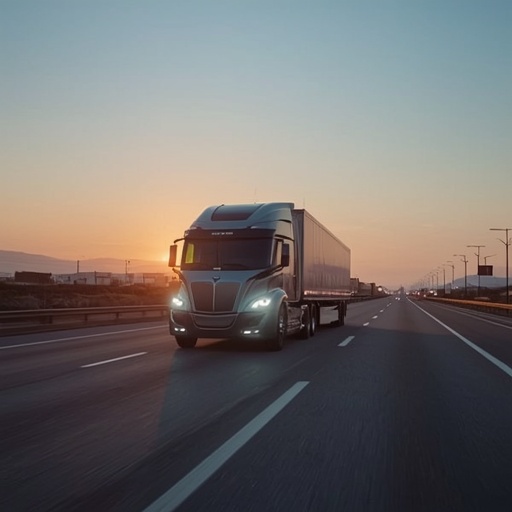
Across the vast expanse of America’s highways, a technological revolution is quietly gaining speed. The BUILD America 250 Act, a newly proposed piece of legislation, sets its sights on creating a comprehensive framework to regulate the advancement of autonomous trucking—one of the most rapidly evolving applications of artificial intelligence. While the concept of self-driving vehicles once belonged to the realm of science fiction, the transportation industry now finds itself standing on the threshold of a transformative era in which AI-driven trucks are poised to reshape logistics, freight movement, and the very nature of employment across the sector.
At its core, the BUILD America 250 Act does more than simply address technological innovation—it seeks to strike equilibrium between progress and protection. Lawmakers recognize that the rise of automation carries dual implications: on one hand, unprecedented efficiency and cost reduction, and on the other, the displacement of traditional roles within a workforce already adapting to remote and digital transformations. Therefore, the bill establishes federal guidelines intended to ensure uniform safety standards, clarify liability issues, and formalize support systems for workers affected by these sweeping advancements.
The trucking industry represents one of the cornerstones of the American economy, employing millions and keeping the flow of goods constant across every state. The introduction of autonomous systems threatens to disrupt that familiar rhythm, offering logistical precision but simultaneously prompting vital questions—what happens to the human element behind the wheel? Supporters of the BUILD America 250 Act argue that with the right regulatory measures, the transition toward AI-assisted and remote-managed fleets can occur responsibly. In this vision, human expertise is not erased but redefined: truck operators could shift toward supervisory and technical oversight roles, maintaining an active part in how intelligent machines perform their tasks.
Beyond regulation, the bill acknowledges a broader societal reality—the need for constant adaptation. The future of work is increasingly interwoven with automation, digital communication, and remote coordination. The BUILD America 250 Act anticipates this by outlining protective measures that empower workers to retrain and reposition themselves within a landscape where technology augments capability rather than replaces it wholesale. By codifying both technological optimism and human-centered caution, policymakers aim to foster a smoother coexistence between AI innovation and economic security.
Ultimately, the arrival of autonomous trucking is not a question of if but when. The BUILD America 250 Act reflects a pragmatic understanding that technology cannot be halted, but its direction can be guided with foresight and fairness. As fleets prepare to roll down AI-managed highways and automated logistics networks take shape, the nation faces an essential choice: to resist change or to shape it in a way that honors the workers who built the roads in the first place. If implemented effectively, this legislation could serve as a model—demonstrating how governance can evolve in step with innovation, ensuring that the road ahead remains as equitable as it is intelligent.
Sourse: https://www.businessinsider.com/build-america-act-autonomous-trucking-remote-workers-training-program-2026-5