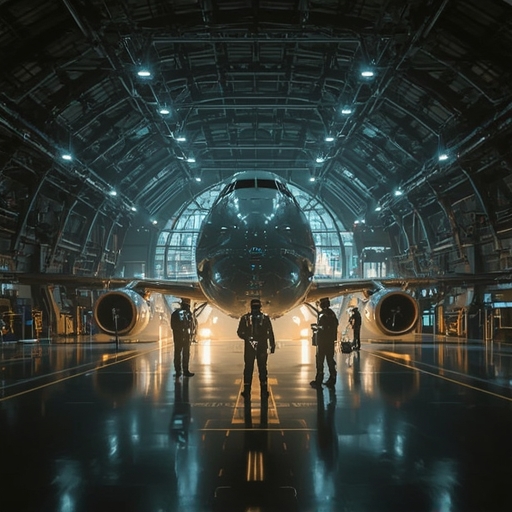
Inside some of the Air Force’s most timeworn aerial refueling aircraft, teams of highly skilled technicians perform a task that demands both physical endurance and meticulous precision. These maintainers crawl through confined, grimy cavities deep within the structure of the tankers, patiently scraping away old layers of sealant, smoothing surfaces, and tightening the countless rivets that keep the vessels airworthy. The work takes place in dark, narrow chambers that seem designed more for machines than human beings, and yet these experts maneuver through them armed with only a flashlight, a handful of specialized tools, and a tenuous line of communication to the outside world. The interior atmosphere is heavy with the sharp, suffocating scent of jet fuel, and every inhalation through their respirators reminds them that a single mistake in such proximity to volatile fuels could have grave consequences. Despite decades of service history and incremental adjustments, the overall process of refueling aircraft maintenance has remained strikingly unchanged for over half a century. Now, for the first time in generations, a comprehensive wave of innovation is reshaping this demanding craft. With the introduction of a live-video, headset-based monitoring system augmented by artificial intelligence, the once analog world of aircraft maintenance is rapidly entering a new technological era.
This transformation comes in the form of the Integrated Respirator Information System—universally known by its acronym, IRIS. Conceived and developed collaboratively by MetroStar and ActionStreamer, the system has been praised by both company officials and Air Force technicians for its immediate ability to make maintenance faster, safer, and markedly more efficient. For an organization whose global operations hinge upon reliability, such a leap forward carries significant implications. The Air Force’s refueling tankers are essential logistical assets—what leaders describe as the service’s “silent enablers.” These aircraft make possible the prolonged endurance of fighters and bombers, enabling missions that extend far beyond the limits of their internal fuel stores. Their contribution was illustrated during major operations such as Operation Midnight Hammer, in which stealth bombers struck an Iranian nuclear site earlier this year, supported by a coordinated formation of refueling tankers that sustained the long-distance strike effort.
While aircraft like the stealthy B-2 Spirit and agile F-35 Lightning II often capture public imagination, the less glamorous refueling tanker is no less crucial to American and allied air power. The KC-135 Stratotanker, a mainstay since the Cold War, continues to ensure that the entire network of fighters, bombers, and reconnaissance craft remains continuously airborne where and when needed. For this indispensable fleet to serve effectively, the aircraft must be impeccably maintained, a responsibility that rests on the expertise of technicians performing the most physically taxing jobs in aviation support.
The genesis of IRIS traces back to a pair of maintainers who recognized untapped potential in ActionStreamer’s live-streaming technology. Originally designed for athletes to capture real-time, first-person perspectives during competition, the system’s adaptability suggested a new use in the maintenance environment. Despite transferring across units and bases, the maintainers continued refining their vision, pushing for technology that could revolutionize operations from within. Their persistence coincided with the Air Force’s longstanding recognition that digital augmentation—particularly in the realm of video and data tools—could drastically improve maintenance workflow. Earlier attempts in the 2000s to integrate such tools faltered when camera sizes and wireless technologies lacked the sophistication required for this kind of demanding environment. As retired Master Sgt. Troy French of the 100th Maintenance Squadron recalled, the early prototypes were simply “too bulky to fit where we needed them.”
Today, at Royal Air Force Mildenhall—a critical hub for U.S. air refueling operations across Europe, Africa, and the Middle East—technicians are actively testing IRIS with promising outcomes. According to ActionStreamer CEO Bob Lento, there was initial hesitation among the maintainers, who were understandably wary of altering methods that had been practiced for decades. Yet within a week, skepticism had turned into enthusiasm. When developers attempted to remove the system for software refinements, the technicians protested, insisting they already depended on it for daily tasks. That reaction signaled more than acceptance; it reflected a cultural shift within an occupation that has long prized tradition and manual expertise.
The job itself remains immensely complex. The KC-135’s maintenance process begins with access through a small circular opening located under the aircraft’s wing—barely large enough for a single person. Once inside, the technician must contort into awkward positions, maneuvering through protrusions and edges in an area scarcely illuminated by a coolant-drenched flashlight beam. Protective suits shield workers from fuel exposure while preventing perspiration from contaminating the tanks. Fresh air is piped in through respirators connected to hoses that stretch outside the aircraft, where a secondary crew operates in continuous support. This external team relays tools, observes safety conditions, and responds to verbal cues or tugs on the air hose from inside. As French described, even a simple request for an overlooked wrench could require peeling back the respirator to shout, then crawling backward to retrieve it, wasting valuable minutes and breaking concentration. Each internal operation begins with a known list of problems, such as damaged rivets or worn sealant, yet unforeseen complications often arise—sometimes due to misplaced adjustments or forgotten tools.
Every significant step of the maintenance cycle must be peer-reviewed and verified. Removing sealant, cleaning surfaces, and applying adhesives demand signatures from other team members before progressing. Even in ideal conditions, these roundabout procedures extend into hours. When errors occur, such as applying material to an incorrect surface, entire days of work can be lost to correction. According to Tech Sgt. Chris Anderson from the 100th Air Refueling Wing, this structure left “a lot of room for error” and unavoidably prolonged the process. The logical remedy, as French once proposed, would be a wearable device equipped with two-way communication, an integrated camera, and built-in lighting – essentially what IRIS now provides.
The IRIS module securely mounts to the technician’s existing face mask and incorporates several coordinated features: a high-definition camera allowing real-time visual feedback, a bidirectional audio system for uninterrupted dialogue, and a hands-free illumination system. These combined elements mean that supervisors outside the aircraft can observe exactly what the technician sees, advise instantly, and document every move. The live feed streams to a portable workstation mounted on a cart near the plane, capable of handling multiple IRIS units at once. Supervisors at the station can guide repairs step-by-step, capture footage for recordkeeping, or instantly replay specific sequences to verify completed tasks. This capability has already helped resolve routine disputes, such as when consecutive shifts questioned whether a task—like draining a fuel puddle—had been completed. The recorded video proved both the first team’s diligence and that another leak was the real culprit, thus directing attention to the genuine issue instead of unnecessary rework.
Historically, when unresolved complications halted a mission-critical repair, expert personnel would be required to fly in from remote bases, causing downtime for expensive aircraft. IRIS now bypasses this logistical delay by transmitting sharp, real-time video to those experts anywhere in the world, who can then consult via live group calls. Developers envision artificial intelligence taking this digital capability even further, using data streamed from IRIS to catalog imagery, predict required interventions, and automatically handle documentation. As retired Maj. Gen. Cedric George explained, automation of such repetitive tasks frees technicians from what he termed “shallow work,” letting them focus on solving complex mechanical problems rather than filling out forms or logging mundane checklists. At the end of a shift, maintainers can simply secure their gear, tidy the workspace, and leave—confidence intact that the system has already handled the administrative side.
Currently deployed exclusively at Mildenhall, IRIS has already demonstrated performance metrics that suggest a new benchmark for maintenance efficiency. Preliminary evaluations show maintenance tasks being completed roughly sixty percent faster in controlled environments, while safety incidents have dropped to zero among participating crews. Based on KC-135 maintenance baselines, MetroStar projects these improvements could preserve over thirty-five thousand labor hours annually and increase overall aircraft availability by more than seven thousand days. Such gains translate not only into operational readiness but also into improved morale and retention among technicians who finally witness their profession benefiting from contemporary innovation.
Ultimately, the quiet success of IRIS is a testament to the ingenuity and perseverance of the Air Force maintainers who conceived and championed it. They transformed a process that had long tested the limits of human endurance into one guided by precision digital oversight. As Maj. Gen. George observed, tanker maintenance will never be glamorous—it remains physically exhausting, fuel-stained, and exacting. Yet the current generation of technicians has ensured that the next will not face those same risks without help. They have proven that even the dirtiest, most traditional corners of military aviation can evolve through thoughtful technological partnership—preserving safety, efficiency, and pride in every drop of fuel that keeps the world’s most capable air forces aloft.
Sourse: https://www.businessinsider.com/behind-new-tech-making-dirty-hard-air-force-job-easier-2025-12