The notion that the ongoing artificial intelligence boom may eventually resemble a speculative bubble is gaining traction among analysts and industry observers. Yet, according to Augusto “Aghi” Marietti, the co-founder and CEO of Kong, even if the current surge in AI enthusiasm were to taper off or collapse, the massive investments being made today would ultimately prove worthwhile. In an interview with Business Insider, Marietti argued that the capital being poured into colossal infrastructure projects—ranging from advanced data centers to high-performance computing facilities—will form the foundation on which the next technological era is built.
Marietti described this moment as a “new builders era,” a singular and transformative period characterized by unprecedented levels of capital expenditure aimed at enabling artificial intelligence to reach its full potential. He emphasized that the immense scale of investment now occurring is not merely speculative excess but a necessary step in constructing the physical and digital backbone required for AI to flourish. Companies are directing billions toward specialized chips, energy generation, and data transportation networks, all of which will serve as critical enablers when AI systems become a staple of everyday life and industry.
However, Marietti acknowledged that this ambitious pursuit is not without substantial challenges. The most pressing obstacle, in his assessment, lies in energy availability. As AI models grow larger and demand exponentially greater computational power, the energy required to sustain them has reached staggering levels. Echoing Business Insider’s investigations, Marietti noted that major AI companies are scrambling to secure reliable power sources for their massive data centers—some even going so far as to develop localized, self-contained energy supplies. “We simply do not have sufficient energy capacity to run every GPU planned for the coming year,” he admitted, underscoring the urgency of addressing this bottleneck before it begins to impair progress across the industry.
Meanwhile, investors on Wall Street have grown increasingly uneasy about the sustainability of the capital expenditure frenzy sweeping through Silicon Valley. Financial analysts point to the possibility of a looming bubble, as prominent AI-focused firms and major technology giants commit extraordinary sums to infrastructure expansion. According to a Business Insider analysis, tech titans such as Amazon, Microsoft, Meta, and Google are collectively on track to spend an astounding $320 billion in capex, with the majority of that figure devoted to meeting AI-related demands. This unprecedented scale of spending has driven both optimism and anxiety—optimism for the potential long-term payoff, but anxiety about whether such frenzied investment can continue unabated.
Even Sam Altman, the CEO of OpenAI, has conceded that the industry might be experiencing a bubble-like phase. In August, he echoed the concerns of other prominent figures who caution that the rapid acceleration of spending cannot persist indefinitely without correction. Some economists have gone so far as to argue that the extraordinary levels of capital being deployed in AI infrastructure are currently propping up large portions of the U.S. economy, fueling growth statistics that might falter should the boom subside.
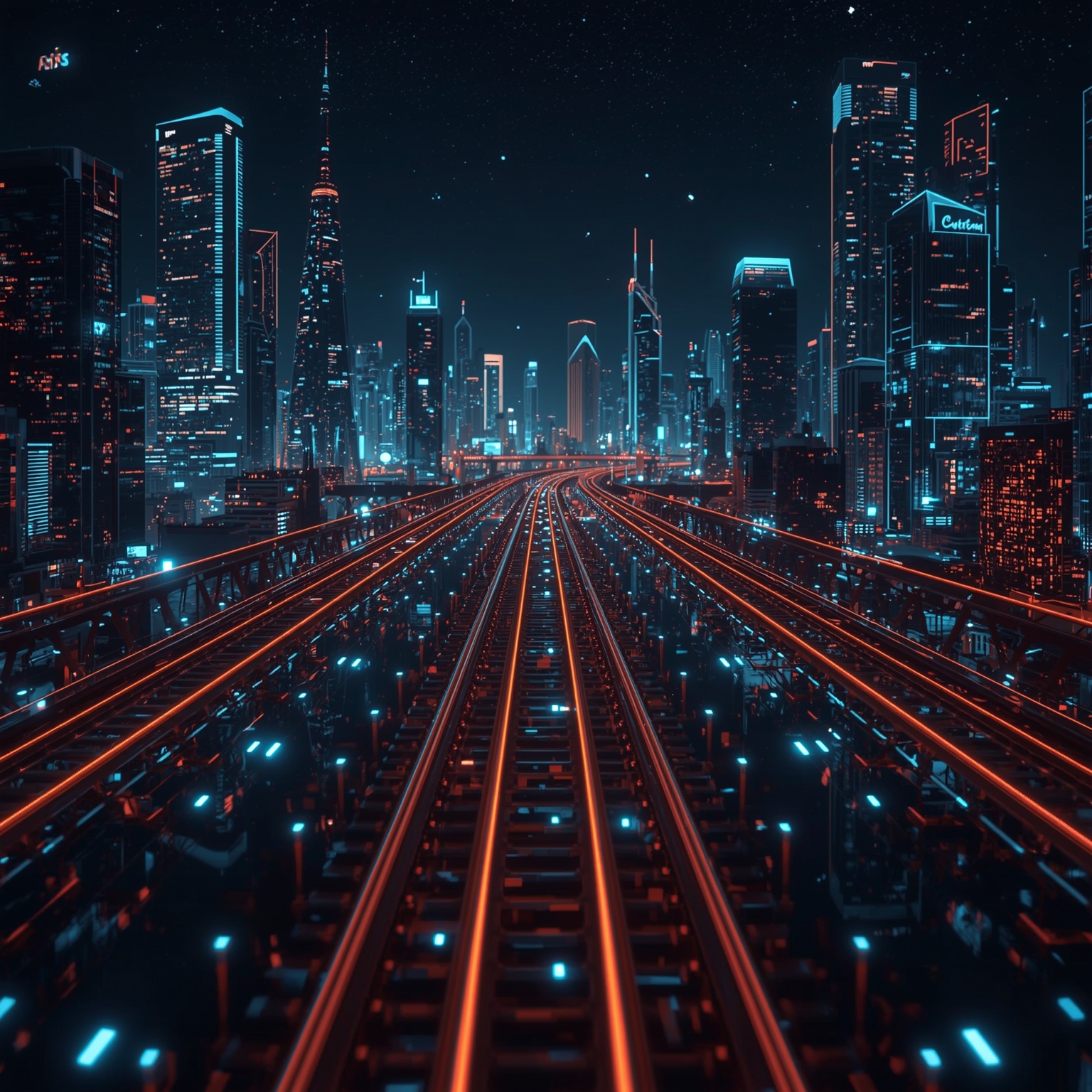
Yet Marietti, along with other AI optimists, finds meaningful precedent in history. He compared the present wave of investment to the 19th-century construction of railroads in the United States—a monumental effort that was initially met with skepticism and, in many cases, financial overreach. Though certain rail lines were built ahead of actual demand and caused temporary collapses in investor confidence, the rail network ultimately became essential to national progress. “Some railroads were deployed ahead of time,” Marietti observed, “but in the end, all of them found purpose.” The implication is clear: today’s AI infrastructure, though possibly overbuilt in the short term, will almost certainly be indispensable in the future.
OpenAI’s president, Greg Brockman, reinforced this sentiment by suggesting that we may soon reach a stage where every individual desires access to their own GPU or personalized computing resource. Such a scenario would entail an unprecedented escalation in computational demand and infrastructure scale—further validating today’s investments. Marietti concurred, asserting that even if the market endures a temporary downturn or “down moment,” the physical assets and networks constructed during this era will continue to serve the global digital ecosystem for decades. As he concluded, “Afterward, we will still use all the infrastructure that we build. Just as the railroads constructed 150 years ago still support transportation today, the systems we are deploying ahead of time will remain vital long after the immediate hype fades.” This vision positions the AI revolution not as a transient phenomenon, but as the groundwork for a transformative, enduring technological future.
Sourse: https://www.businessinsider.com/ai-bubble-energy-kong-ceo-2025-10


